 Image: Städel Museum, Frankfurt am Main, Germany
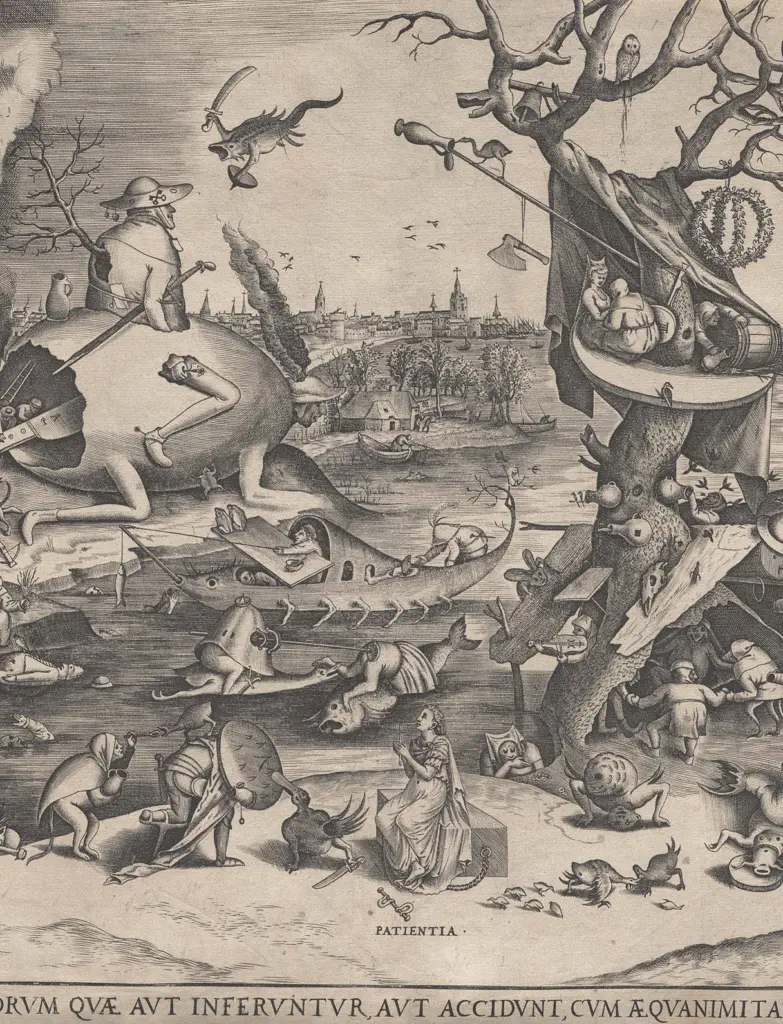
The Städel Museum in Frankfurt am Main has opened 'Bruegel', an exhibition devoted to Pieter Bruegel the Elder’s printmaking and the visual range that made his name. Running from 18 June to 20 September 2026, the presentation brings together around 60 exceptional prints, about 45 of them after Bruegel’s drawings, and focuses on the artist not only as one of the outstanding figures of 16th-century Netherlandish art but also as a distinctive inventor and storyteller.
According to the museum, Bruegel is today best known as a painter, yet he made an early reputation through graphic design and print production. The exhibition places that aspect of his practice at the centre. Its selection spans broad landscapes, secular and religious allegories, and scenes from everyday life, showing how Bruegel combined observation and imagination in images that are at once humorous, dense and often enigmatic. The museum says these prints were crucial to his dissemination and popularity during his lifetime and remain important for their narrative force and wit.
The exhibition draws primarily on works from the Städel’s own collection, where about 30 of Bruegel’s prints are shown, and adds loans from the Albertina in Vienna and the Staatliche Graphische Sammlung München. Also included are two paintings by his son Pieter Brueghel the Younger and further sheets from the Städel’s holdings of Dutch printmaking, including works after Frans Floris, Lambert Lombard and Raphael. The museum presents the show as a way to demonstrate the variety of Bruegel’s production through objects assembled from its own collection and from other major collections.
The Städel’s curatorial framing emphasizes Bruegel’s collaborative working methods. The prints were produced in close partnership with Antwerp publisher Hieronymus Cock and his wife Volcxken Diericx, whose workshop helped disseminate the artist’s imagery widely. In the museum’s account, that network helped Bruegel develop new forms from traditional subjects and turn familiar themes into scenes that could provoke laughter as well as reflection. The exhibition also highlights his use of exaggeration, his response to motifs associated with Hieronymus Bosch, and his ability to visualize human weakness, social tension and the scale of nature without losing sight of ordinary life.
In a Städel Stories interview, curator Astrid Reuter said Bruegel’s prints helped establish the artist’s reputation, noting that his more famous paintings were known to only a small circle of collectors in his lifetime, while the graphics circulated in high editions. Reuter also pointed to Bruegel’s landscape imagery as a key part of the exhibition’s interest, describing the elevated viewpoints and precise seasonal and regional observations that allow viewers to move through the scenes visually. The article notes that some of these landscapes were shaped by impressions from Bruegel’s Alpine crossing, undertaken with the cartographer Abraham Ortelius.
The exhibition is one of several projects the Städel is presenting this summer, alongside 'Monets Küste. Die Entdeckung von Étretat' and 'Stillleben mit Gemüse' by Elmgreen & Dragset, but 'Bruegel' is the museum’s current focus for Old Master graphics. The museum’s online material lists a Sunday overview tour for 'Bruegel' on 9 August at 14.00. The exhibition remains on view at the Städel Museum, Schaumainkai 63, Frankfurt am Main, through 20 September 2026.