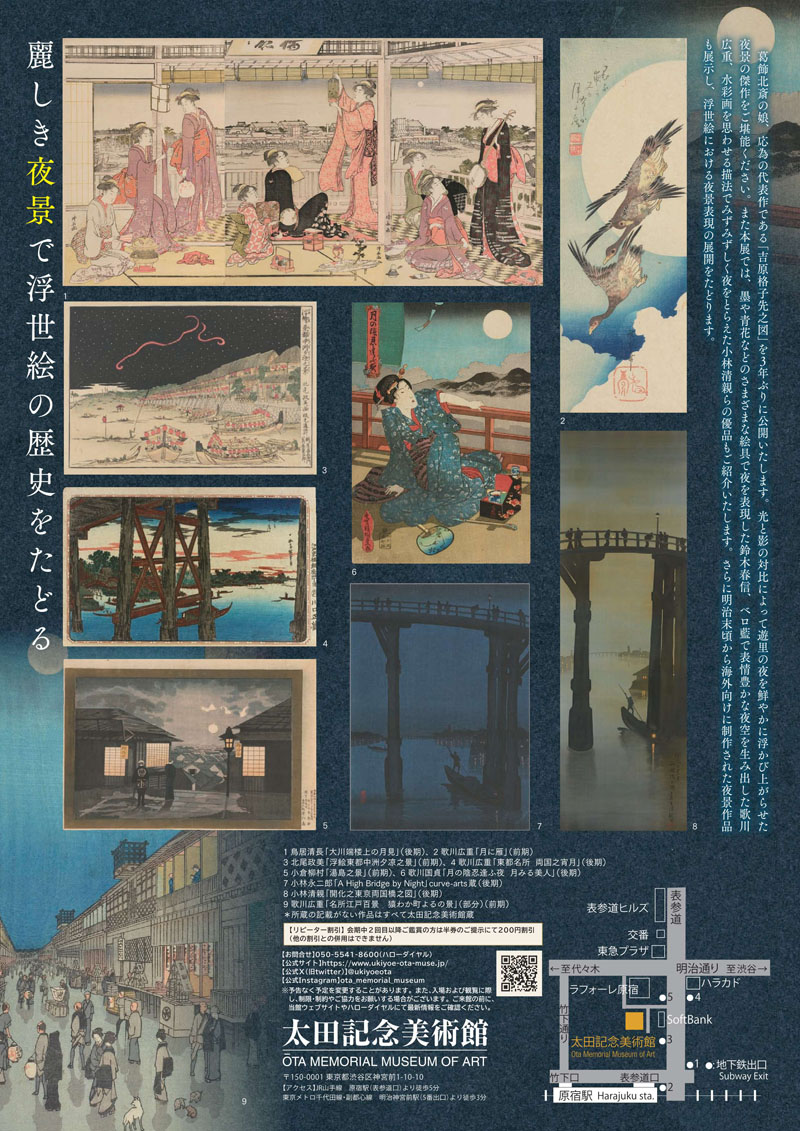
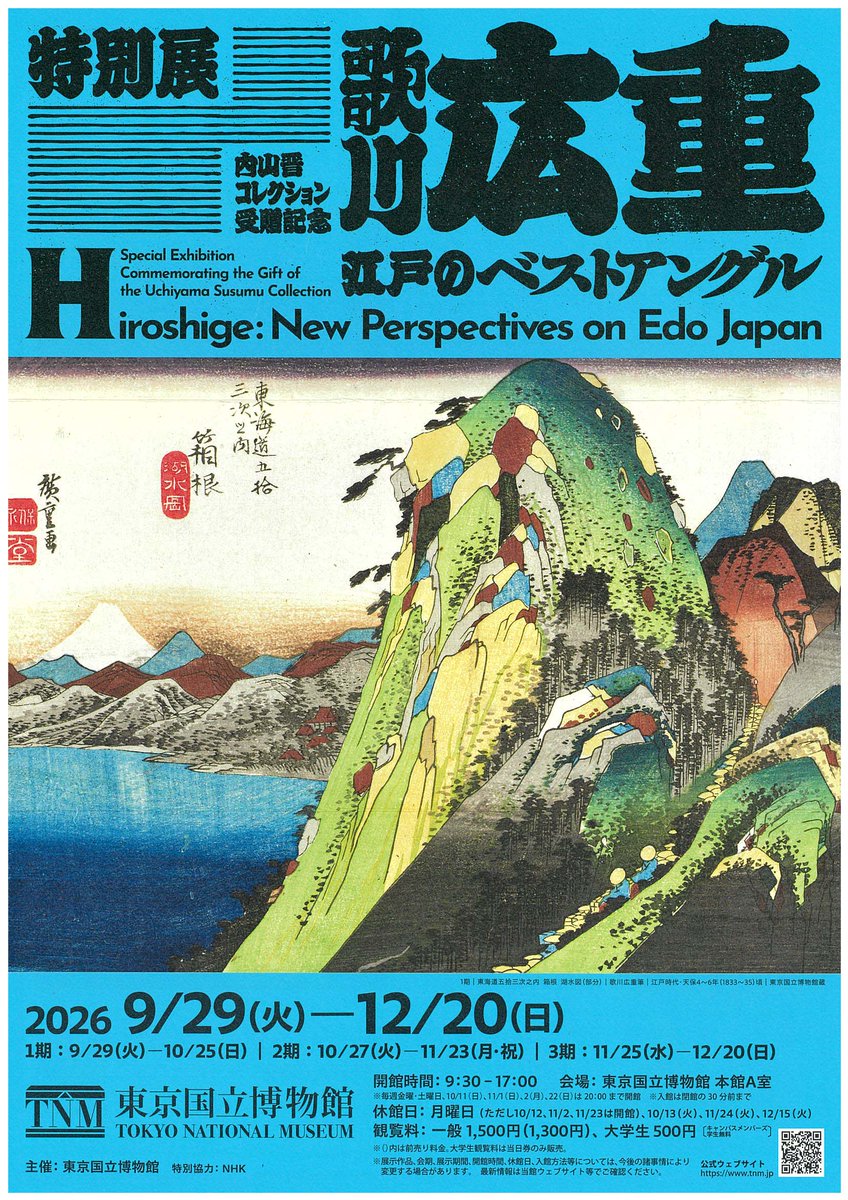
 Image: Ōta Memorial Museum of Art, Tokyo
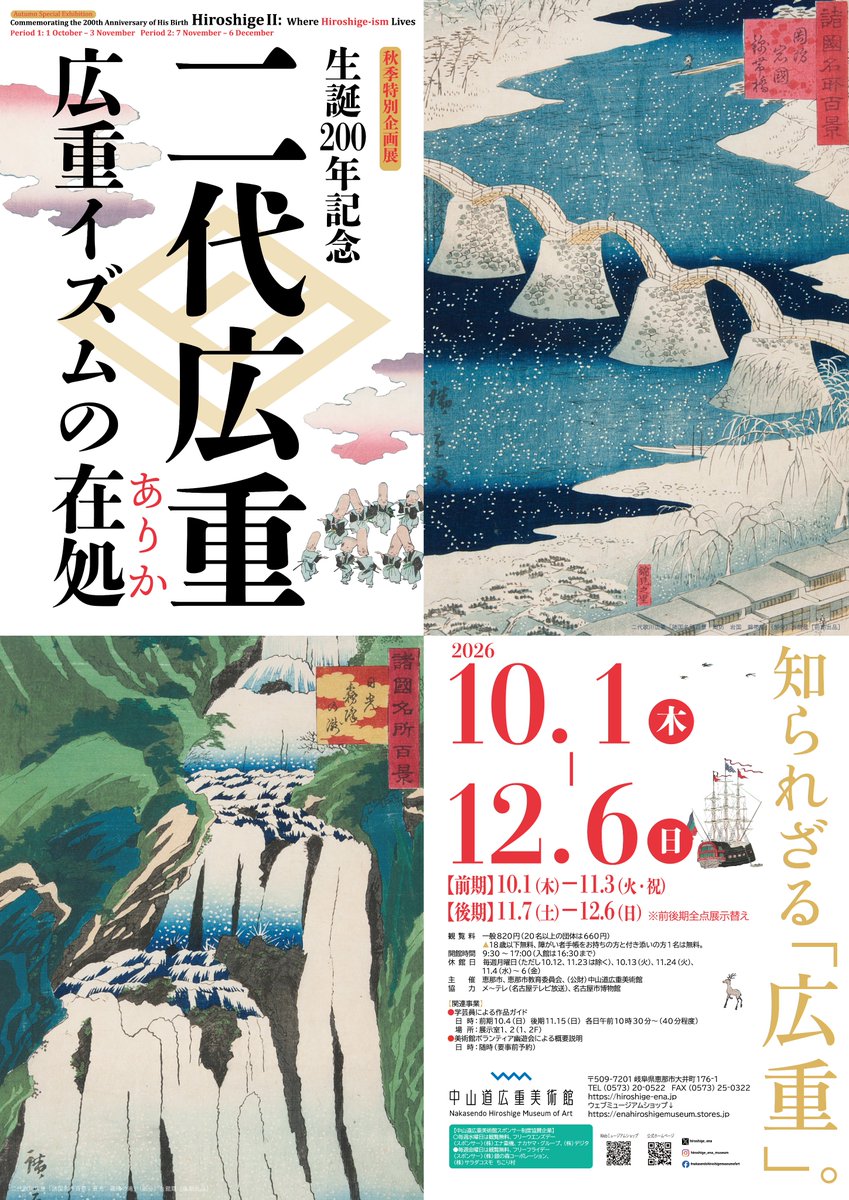
The exhibition runs from October 1 through December 6, 2026. It is divided into a first period, from October 1 through November 3, and a second period, from November 7 through December 6, with all works replaced between November 4 and 6.
Born in 1826, II Hiroshige entered Hiroshige I’s studio in his mid-teens, began working under the name Shigenobu around 1844–48, and assumed the Hiroshige name in 1859 after his teacher’s death. Utagawa Shigenobu, known as II Hiroshige, was the first successor to Utagawa Hiroshige I’s name.
II Hiroshige adopted his teacher’s signature style and pictorial manner while also pursuing new subjects and forms of expression that reflected the social conditions of the late Edo and Meiji periods. The exhibition compares 65 works from II Hiroshige’s 'One Hundred Famous Views in Various Provinces' with 42 works from Hiroshige I’s 'Views of Places in the Sixty-odd Provinces.'
In the first period, the exhibition includes II Hiroshige’s 'One Hundred Famous Views in Various Provinces: Owari, Nagoya, True View' and 'Suō, Iwakuni, Kintai Bridge'; the second period includes 'Tōto, Takanawa Coast' and 'Nikkō, Kirifuri Waterfall.'
The exhibition extends its inquiry into “Hiroshige-ness” through works by Kobayashi Kiyochika, described as “Meiji’s Hiroshige,” and Kawase Hasui, described as “Shōwa’s Hiroshige.” It argues that the familiar idea of “Hiroshige-ness” was shaped less by the artist’s entire body of work than by images formed through his best-known prints.