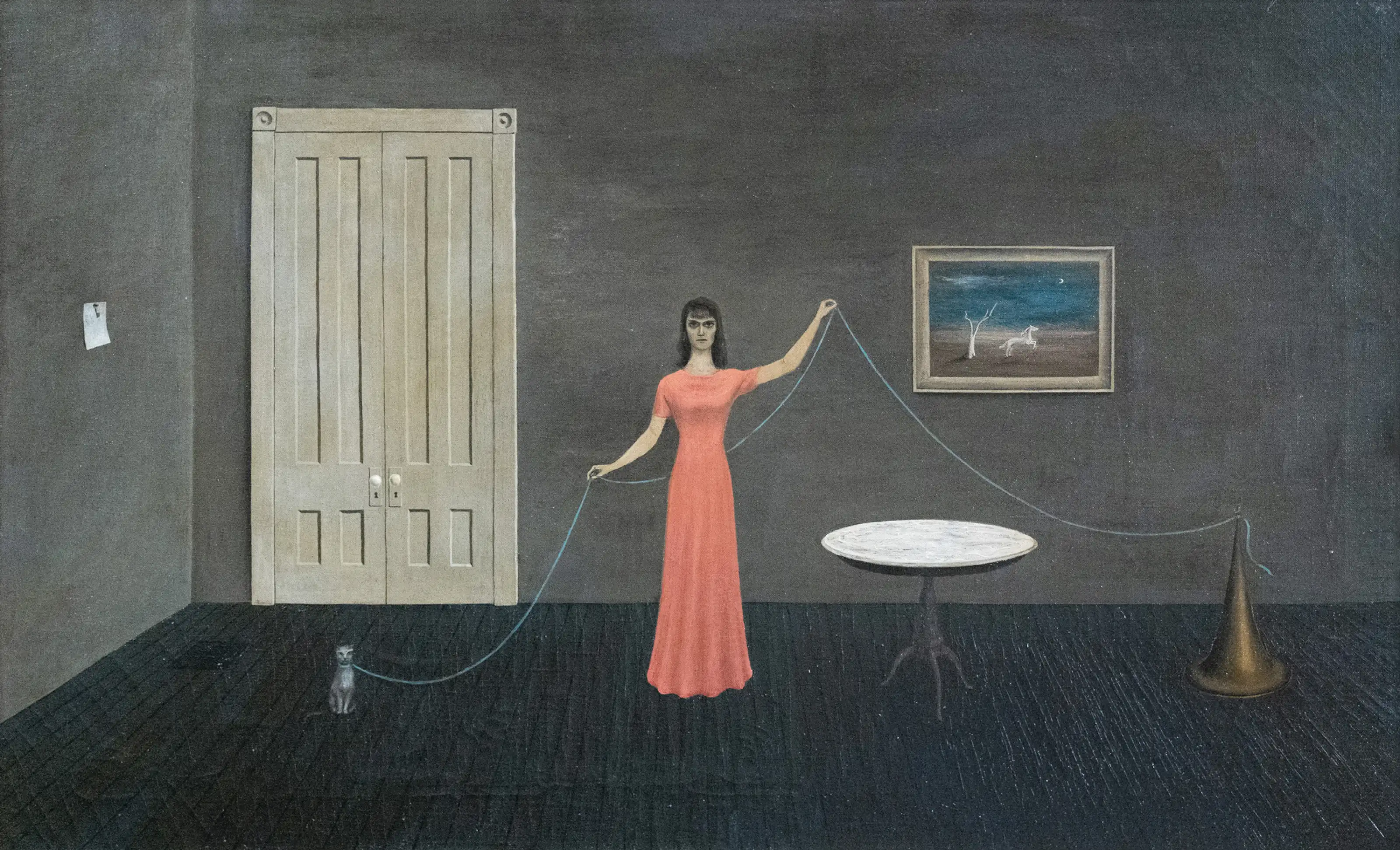
The Norton Museum of Art in West Palm Beach, Florida, will present “Gertrude Abercrombie: The Whole World Is a Mystery” from 31 October 2026 to 14 March 2027. The retrospective is co-organized by Carnegie Museum of Art in Pittsburgh and Colby College Museum of Art, and the Norton describes it as the first presentation of Abercrombie’s work to tour nationally.
The exhibition is curated by Eric Crosby, the Henry J. Heinz II Director of Carnegie Museum of Art, Sarah Humphreville, Lunder Curator of American Art at Colby, and Cynthia Stucki, assistant curator at Carnegie.
Abercrombie (1909–1977) was an American painter who played a central part in the art and jazz worlds of mid-20th-century Chicago. Over her career she made hundreds of paintings rooted in her own life, using painting as a way to give shape to her inner experience. According to the Norton, she has long been overlooked because of who she was and the way she lived and worked.
Her pictures place her in an invented world of self-portraits, landscapes, interiors and still lifes, populated by recurring personal symbols and mysterious female figures. She drew on memory and dreams and looked for the uncanny in ordinary things; in her own words, she painted “simple things that are a little strange”.
Works reproduced on the Norton’s exhibition page span almost three decades of that output. They range from “The Church” (1938) and “Self-Portrait, the Striped Blouse” (1940) through “Two Ladders” (1947), “Where or When (Things Past)” (1948) and “A Terribly Strange Tree” (1949) to later pictures such as “A Picture in a Picture in a Picture” (1955), “Doors, 4 (5 ½)” (1957), “Moored to the Moon” (1963) and “Demolition Doors” (1964). Doors, ladders and moons recur across these titles, as do references to letters, as in “Letter from Karl” (1940).