 Image: Palace of Versailles, Versailles
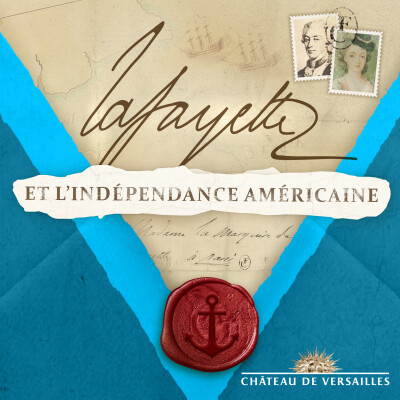
The Palace of Versailles is marking the 250th anniversary of American independence with a historical fiction project that revisits the transatlantic story of Gilbert de La Fayette and, crucially, the role of his wife, Adrienne de Noailles. The new audio narrative, titled “La Fayette et l’Indépendance américaine : de la Cour de Versailles aux champs de bataille,” follows the couple through letters exchanged between 1776 and 1784 and frames the American Revolution through both battlefront and courtly politics.
The project presents Lafayette’s departure from Versailles for the American war as only one side of the story. While Gilbert de La Fayette fought in America, Adrienne remained in France, and the source material emphasizes that her role has been historically overlooked. According to the Versailles release, she was close to the French crown, Louis XVI and Marie Antoinette, and was able to circulate messages and place them where they might matter. The narrative uses that correspondence to suggest a different reading of the war of independence, one in which a woman at court helped shape the revolutionary moment from afar.
That angle fits the broader historical significance of Versailles as a site deeply tied to power, diplomacy and the circulation of ideas. The palace is not presenting a conventional exhibition, but rather a “fiction historique” created for digital listening. In that format, the institution is using storytelling to connect one of the best-known figures in Franco-American history to the quieter, less visible networks around the French court. The result is a work that aims to widen the frame beyond military heroism to include correspondence, influence and political mediation.
The release also places Lafayette within the symbolic trajectory that made him a figure of “the two worlds.” It describes him as leaving the court in Versailles clandestinely and returning as a hero celebrated on both sides of the Atlantic. The project suggests a reversal in the movement of ideas as well: he encountered liberty in America, and years later that example crossed the ocean back to France. In that sense, the story is less a simple biography than a meditation on how revolutionary ideals traveled.
Versailles says the project is being issued on the occasion of the 250th anniversary of American independence and to retrace the first links between Versailles and the United States. It was written by Elisa Chalaye, head of digital projects at the château de Versailles, produced by Image et Stratégie and directed by Julien Rochard. The linked page also credits scientific advisers Vincent Bouat-Ferlier, Clara Terreaux and Frédéric Lacaille, underscoring the institution’s effort to ground the narrative in scholarly guidance.
For an art and heritage institution like Versailles, the significance lies in how it uses contemporary digital formats to revisit historical memory. Rather than treating the American Revolution as a distant foreign event, the project anchors it in the palace’s own political and cultural landscape. By foregrounding Adrienne de Noailles alongside Lafayette, Versailles is also participating in a broader reassessment of women’s roles in history, especially those who worked through networks of correspondence and access rather than public command.