 Image: Nakanoshima Museum of Art, Osaka
The curator’s account recalls two symposiums attended by researchers connected with Walser.
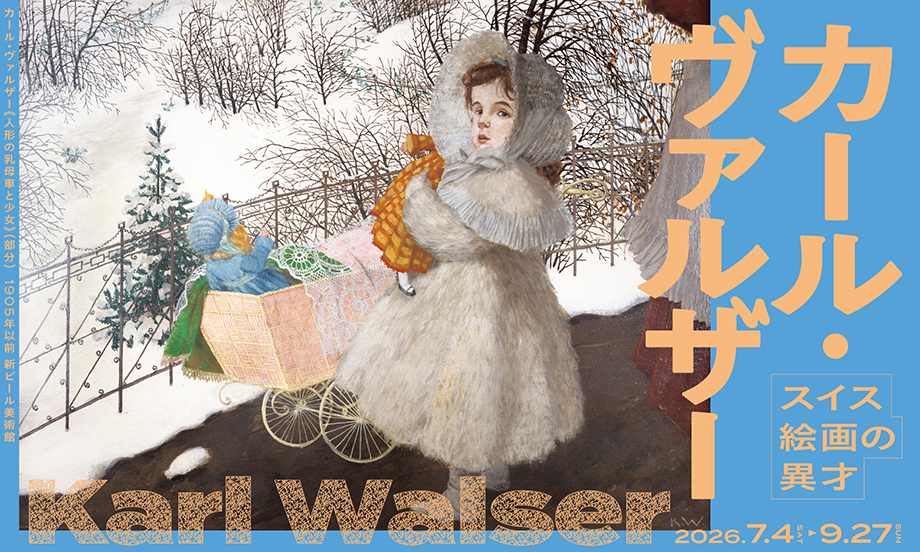
On 9 August, the Nakanoshima Museum of Art held the international symposium ‘The Multifaceted Appeal of Karl Walser’ as an event related to the Walser exhibition. According to the museum’s account, the symposium drew many listeners and offered an opportunity to introduce Walser, a painter who had long been forgotten, to a wider audience. The programme examined Walser’s painting, illustration and mural work, while also discussing whether the breadth of his activities and his ability to respond to varied client requests had delayed his reassessment within conventional art-history research.
Presentations addressed Walser’s artistic identity and his time in Japan, the relationship between his brother Karl, a painter, and Robert, a writer, the reversal in their reputations after their deaths, and Walser’s activities during his Berlin years.
After the Osaka event, the international symposium ‘Miyazu Loved by Kellermann and Walser’ was held in Miyazu, Kyoto Prefecture, on 30 August, where the Osaka exhibition was introduced. Noriko Matsuda, an associate professor at Kyoto Prefectural University, discussed the traces left by Walser and others in Miyazu, while Akira Tomita, director of the Tokyo Station Gallery and the exhibition’s organiser, spoke about Walser’s overall artistic career and his standing among foreign artists who visited Japan.
Miyazu has continued cultural projects related to Walser and Bernhard Kellermann for about ten years, including translations of Kellermann’s books and workshops for local residents; in spring, the city also held an artist residency involving a Swiss artist, and a satellite panel exhibition related to the current exhibition was continuing. Osaka, where the museum stands, was formerly a city whose rivers and canals ran throughout its urban area and whose water transport carried people and goods, linking it with Miyazu through their connection with water.