 Image: FOMU Photo Museum Antwerp, Antwerp
FOMU Photo Museum Antwerp is presenting Material Revolts: Ecosystem against Empire, a new exhibition by Ghanaian artist Kelvin Haizel that turns a 19th-century photographic archive into a study of colonial history, biological change and the instability of historical images. The exhibition is on view at the Antwerp museum from 26 June to 23 August 2026 and forms part of FOMU’s .tiff programme for emerging Belgian photography, even as Haizel’s practice reaches far beyond a local frame.
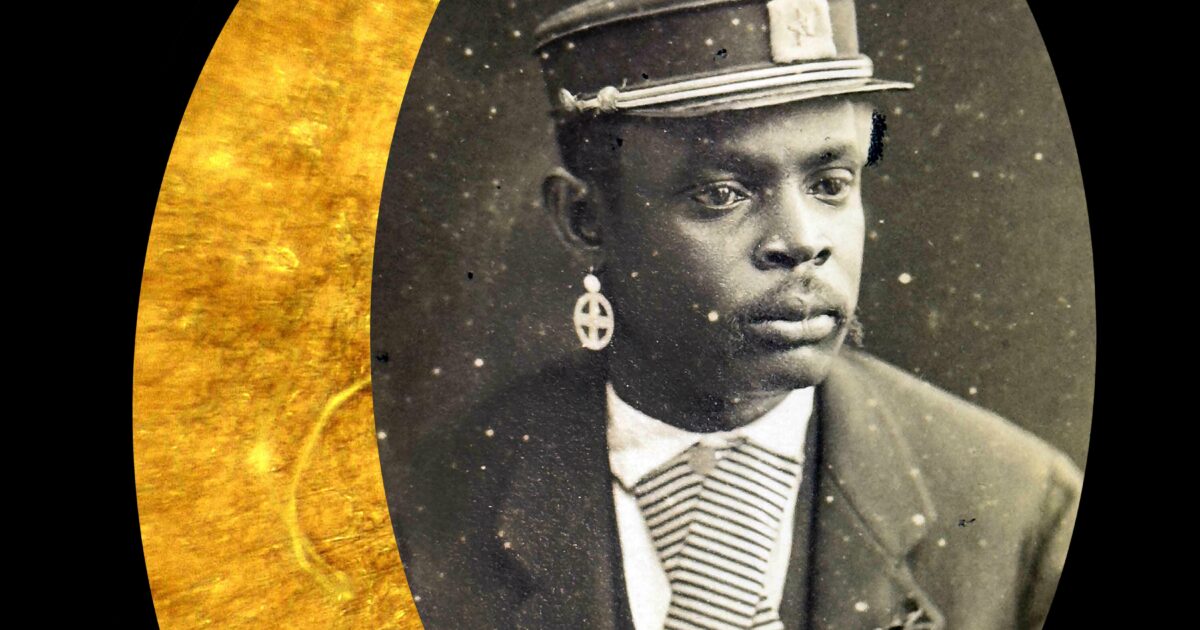
According to FOMU, Haizel begins with a photo album from the museum’s own collection. The album contains 10 portraits of Congolese men, women and children who were exhibited in the human zoo at the Antwerp World Exhibition in 1885. Rather than treating the photographs as fixed historical documents, Haizel approaches them through a microscopic lens, looking for the organic processes embedded in the material of the old albumen prints.
That method is central to the exhibition’s significance. FOMU says Haizel makes bacteria, fungi and chemical processes visible, reactivating the images and allowing them to tell another story. In doing so, the artist challenges what the museum describes as a hardened way of looking at this charged colonial past. The exhibition frames photography not only as representation, but as a material object that continues to change over time.
FOMU presents the project as a collaboration across art, science and history. The museum notes that Haizel was a guest of the research group Thinking Tools at KASKA in 2024, and that the results of a three-month residency are now being shown at FOMU. The exhibition includes works such as Silence between the Laughs: Portraits of Us. 1885-2026 and Unseen Allies. A set of ten petri dishes with cultured microbes. 1885-2026, underscoring the artist’s use of scientific processes as a visual and conceptual tool.
The project also sits within .tiff 2026, FOMU’s annual platform for 10 emerging artists and photographers who live or work in Belgium. This year’s selection includes Chloé Azzopardi, Téo Becher, Aliki Christoforou, Yaqine Hamzaoui, Tatjana Huong Henderieckx, Simen K. Lambrecht, Tom Lyon, Natalie Malisse, Anthony Ngoya and Darwin Taday Cabrera. FOMU says .tiff is designed to reflect the diversity and artistic dynamism of the Belgian photography landscape, and it includes the expo, a magazine, networking moments with international professionals and coaching sessions.
For FOMU, Haizel’s exhibition matters because it pushes a museum archive into active debate about colonial imagery and the life of photographs as objects. The work also points to a broader shift in contemporary photography, where artists are increasingly examining the material conditions of the image itself, not just what it depicts. Haizel, born in 1987, investigates the boundaries of photography and the material power of images; FOMU notes that he has exhibited internationally, including at documenta fifteen, and earned a doctorate in the arts at KNUST in Kumasi. In Antwerp, those concerns meet a museum collection with deep colonial resonances, making Material Revolts a sharply relevant intervention in both local and international photographic discourse.