 Image: Morris and Helen Belkin Art Gallery, Vancouver
The Morris and Helen Belkin Art Gallery will present ‘Jana Sterbak: Dimensions of Intimacy’ in Vancouver from September 11 to December 6, 2026. Curated by Naomi Potter and organized and circulated by Calgary’s Esker Foundation, the exhibition offers a selective overview of Sterbak’s practice, from early sculptural works and wearable structures to video, film, editions, photographs and drawings from the artist’s own collection.
For close to five decades, Sterbak has worked across sculpture, video, installation and performance, producing work that considers the body and the human condition. The exhibition foregrounds objects that merge with performance as well as works that push against conventional material and sculptural norms.
Material carries much of the force in Sterbak’s work. Granite, metal and electrical wire are used in relation to weight, permanence and restriction; chocolate and bread bring associations of food, value, tradition and decomposition. ‘Dissolution (Auditorium)’ (2001) uses ice to form chairs that slowly melt, while the video ‘Artist as Combustible’ (1987) records the ignition of gunpowder, producing a brief flash of fire above a figure.
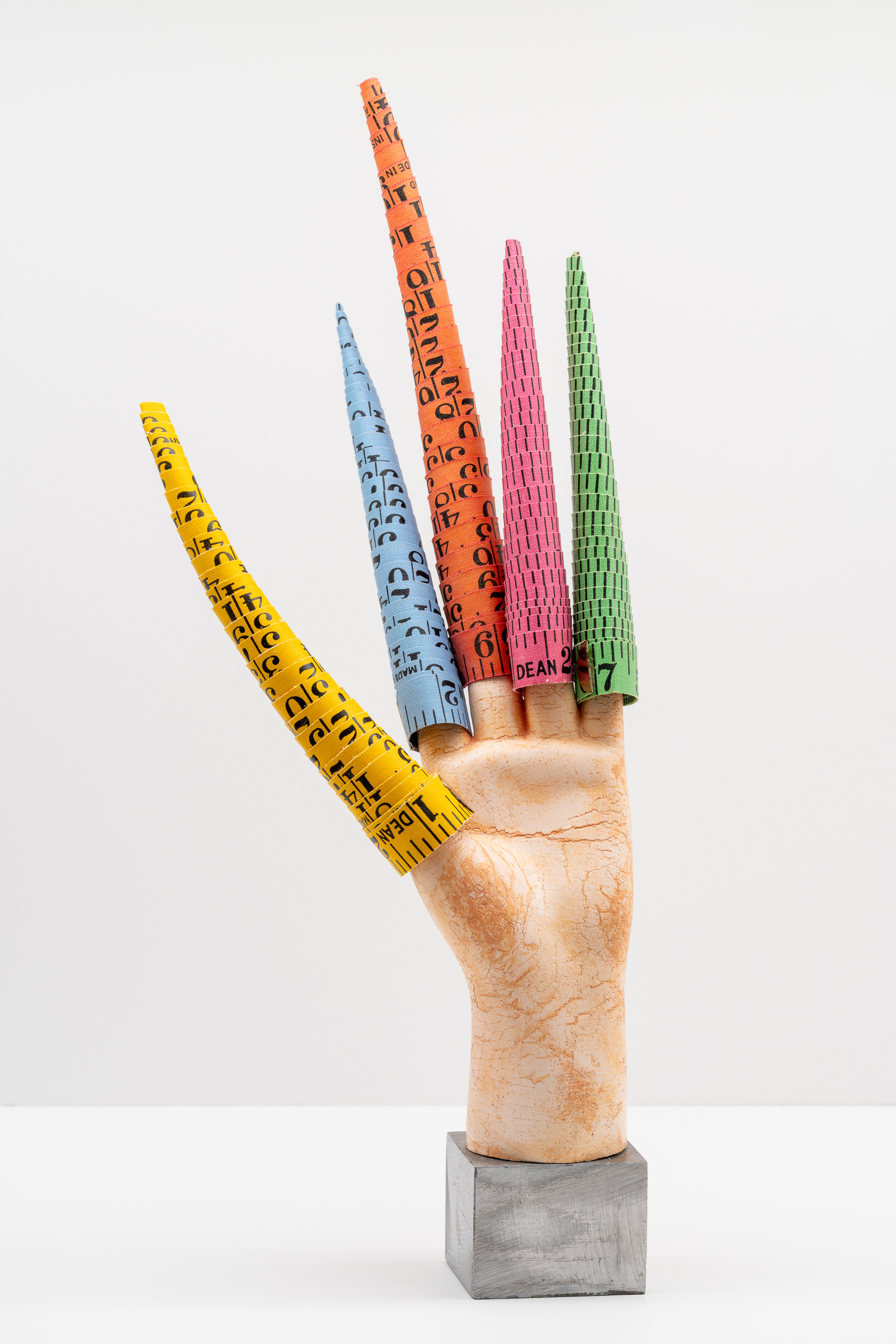
Two 1979 works, ‘Cones on Fingers’ and ‘Cones on Hand’, turn standard dressmaker’s measuring tape into eccentric prosthetic devices for fingers and hands. The transformation of a tool from domestic and fashion contexts addresses unrealistic proportions imposed on the female body.
Born in Prague, Czechoslovakia, now Czechia, Sterbak left with her parents after the Soviet invasion and settled in Canada. She has maintained a home and studio in Montreal for many years while remaining connected to Europe, where much of her professional life and exhibition history have taken place.
Sterbak has described her preference for calling her works “objects” or “situations,” rather than sculpture. “To relegate an object to the rarefied world of art negates its power to disturb and the potential for discovery,” she has said. “A really successful work of art has the ability to make us reconsider our perceptions – not only inside the museum, but also out in the world.”