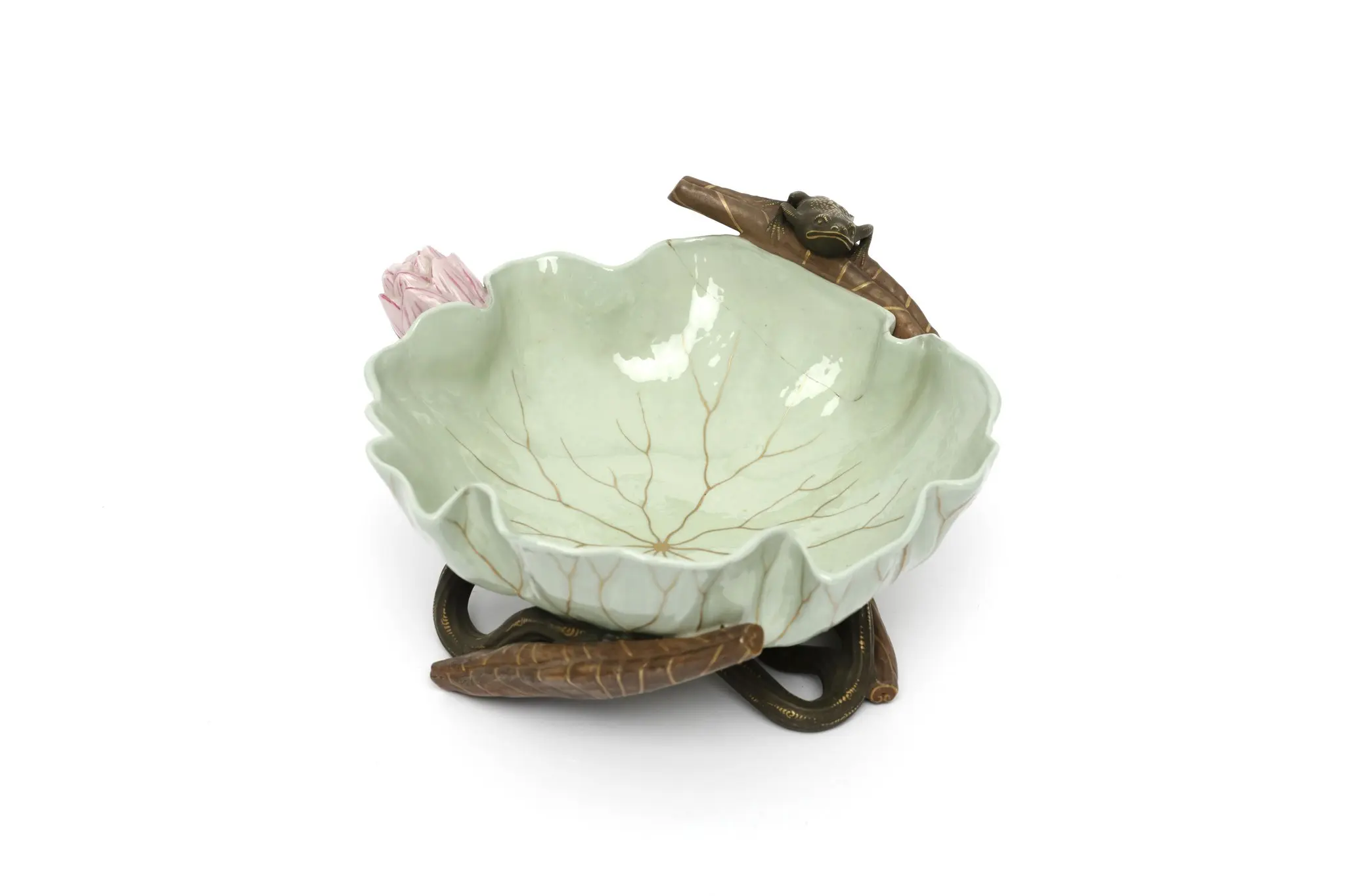
 Image: Architecture & Design Museum, Helsinki
The Architecture & Design Museum has published ‘Parasta mahdollista mallia’, an article drawing on extensive background research by art historian and docent Leena Elina Valkeapää into the museum’s earliest design collection.
Valkeapää curated a 2024 exhibition on the collection. Her research uses newspapers and other contemporary sources to examine why an applied-arts museum was established in Helsinki and what objects acquired for its new collection reveal about applied-art design 150 years ago.
She describes the first collection as diverse, broadly international and open-minded. The objects were intended as models for Finland’s emerging production sector and were also displayed to members of the public. They were meant to support the development of industry, craft and households.
Among the early acquisitions was a Japonist decorative bowl made by the English Worcester porcelain factory, purchased for the Design Museum collection from the Vienna World Exhibition in 1873. One third of the objects bought there either originated in Asia or were European works influenced by Asia. The water-lily bowl represents 1870s English ceramics and draws on natural motifs associated with Japanese art.