 Image: Allen Memorial Art Museum, Oberlin
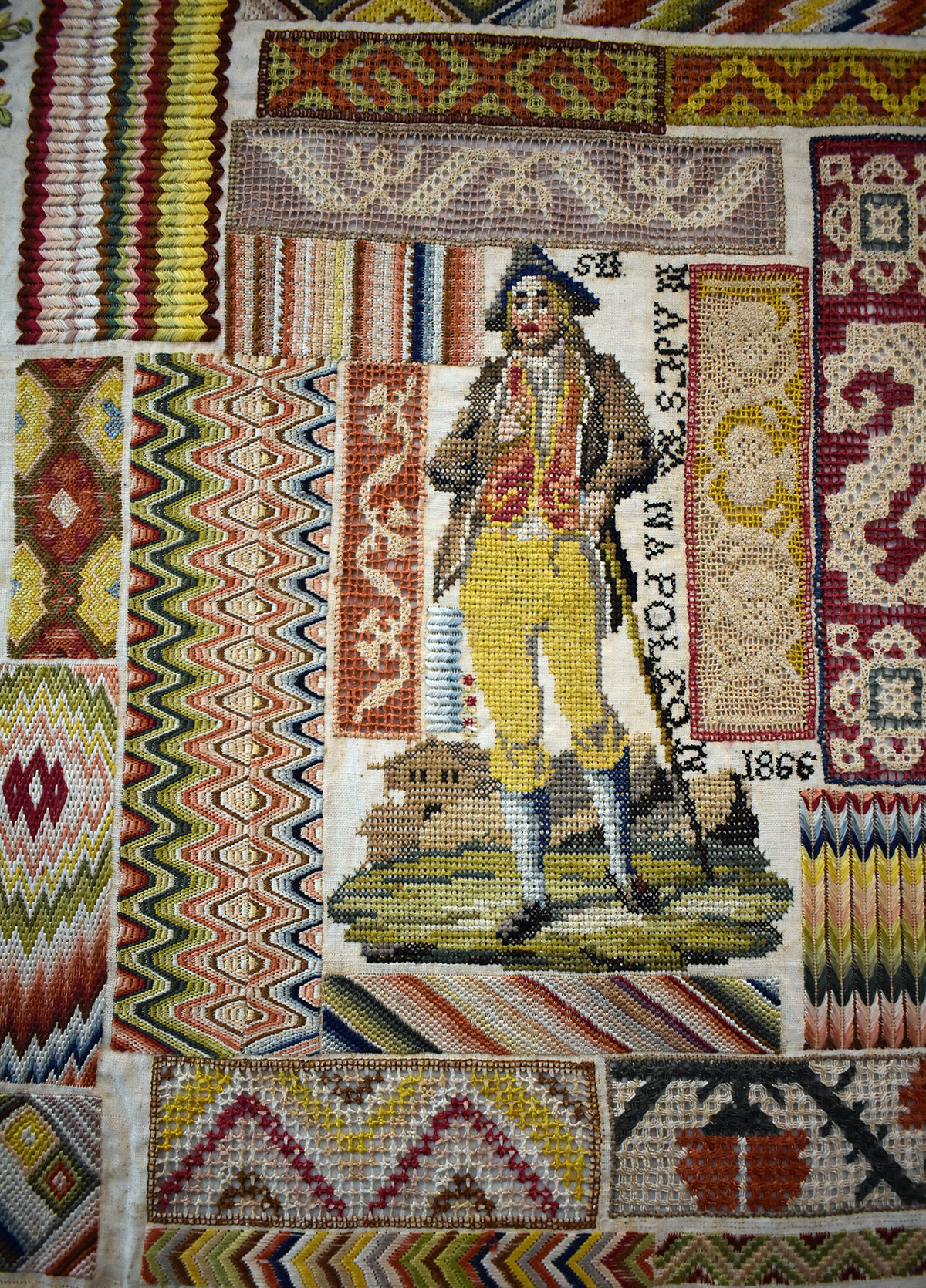
The Allen Memorial Art Museum in Oberlin, Ohio, is presenting ‘Resilient Threads: Embroidery Samplers from 19th-Century Mexico’ in the Ripin North Gallery through 23 May 2027.
The exhibition centers on Mexican embroidery samplers produced by girls in Oaxaca, Puebla and Jalisco. Embroidery samplers formed an integral part of women’s education in early modern Europe and the Americas, with girls practicing needlework by copying geometric patterns, floral motifs and lettering from printed design books and other embroidered works.
The samplers combine European and American stitch techniques with iconography and patterns originating in Indigenous Aztec visual culture. Intricate beadwork, embroidered ornamentation and vibrant patterns are presented in relation to adaptation and resistance in women’s education in colonial Mexico.
The works entered the Allen’s collection as a gift in the 1940s and carry an imperial provenance. They were given to Maximilian I, Emperor of Mexico from 1864 to 1867, and Empress Carlota, who displayed them in the imperial palace of Chapultepec. Following the overthrow of Maximilian’s reign and the restoration of President Benito Juarez, many artworks in Chapultepec were destroyed, while the samplers now in the Allen collection were spared.
The exhibition is organized by Marlise Brown, Associate Curator of European and American Art, and Natalia Alvarado, Student Curatorial Assistant in European & American Art.