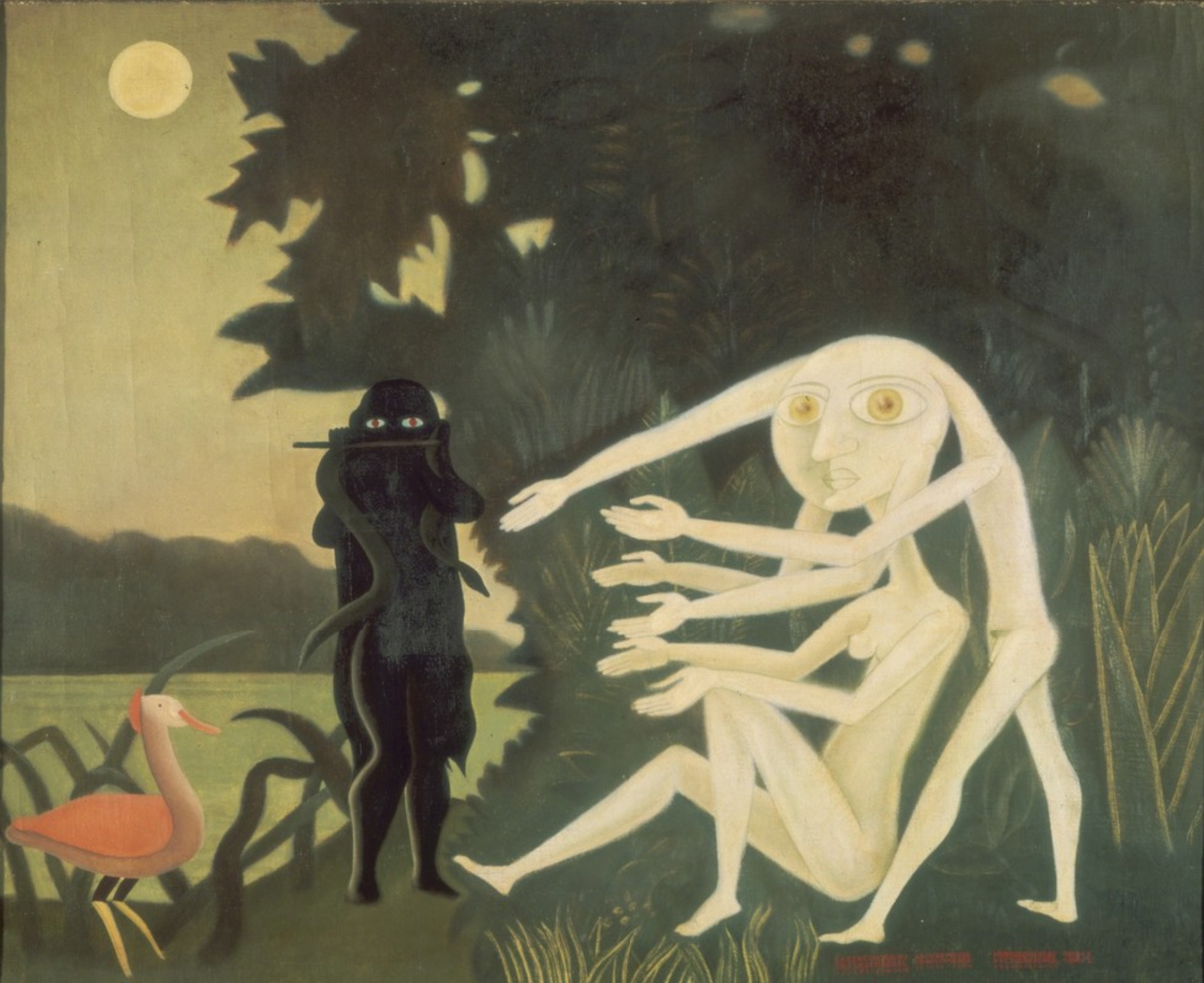
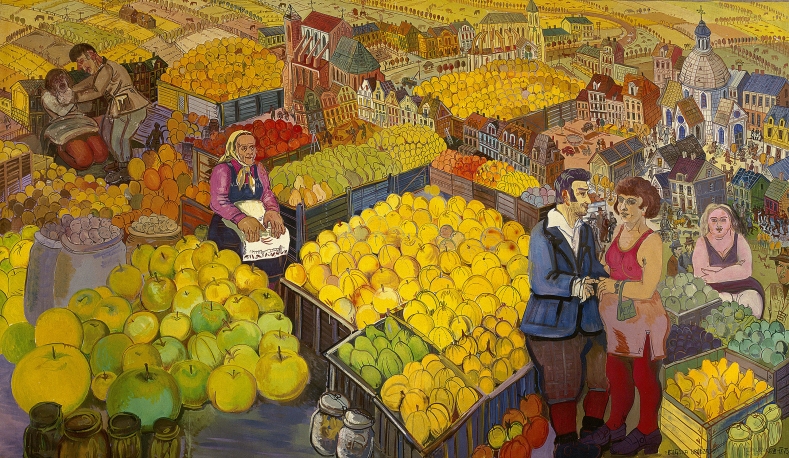
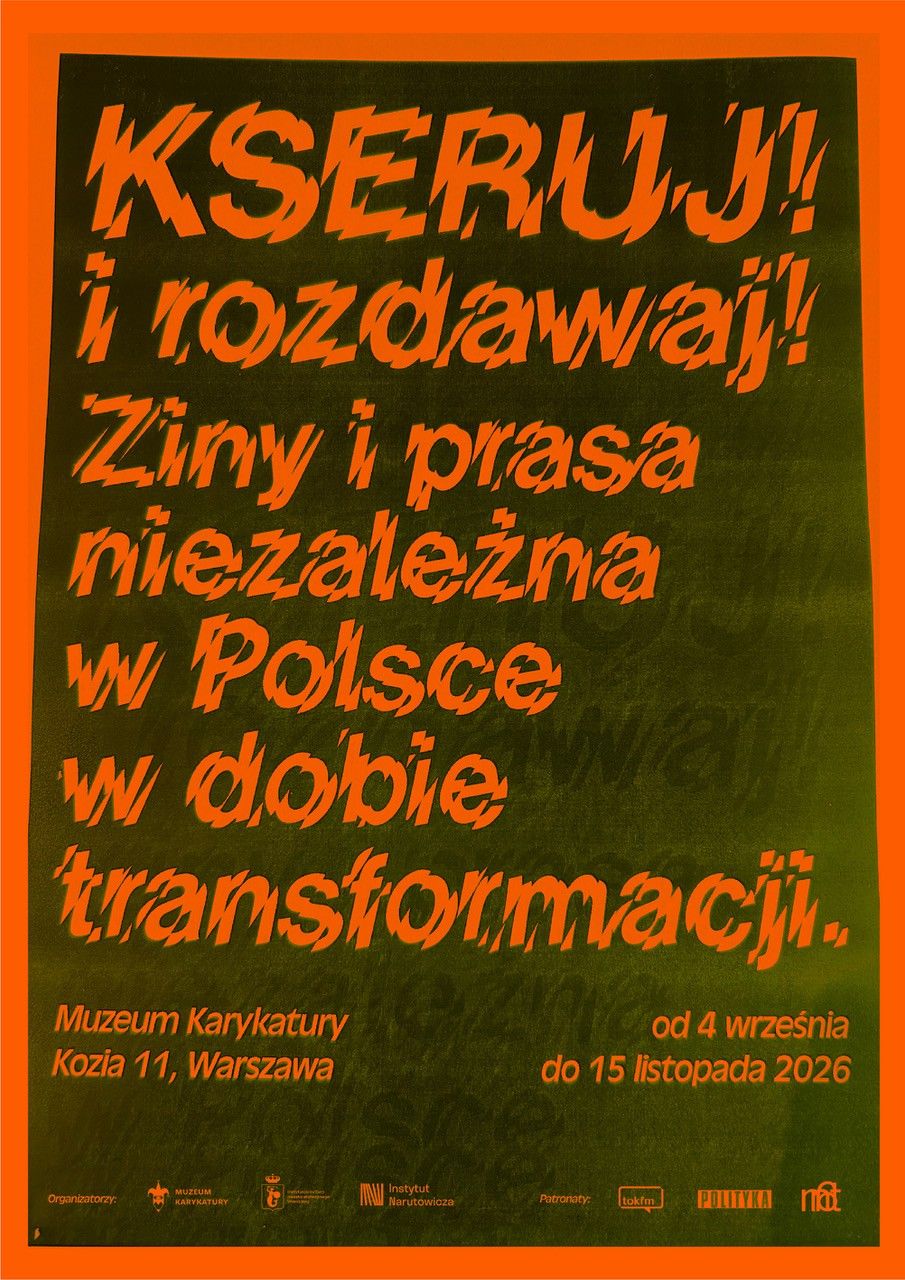
 Image: Eryk Lipiński Museum of Caricature, Warsaw
The Eryk Lipiński Museum of Caricature in Warsaw will open ‘Copy and Distribute! Zines and Independent Press in Poland during the Transformation’ on 4 September, presenting independent publications linked to the country’s social and political changes in the 1980s and 1990s. The exhibition will run through 15 November 2026 at the museum’s premises on Kozia Street.
Organized in cooperation with the Gabriel Narutowicz Institute of Political Thought in Warsaw, the exhibition focuses on the forms of publishing that developed outside official channels during a period of political and social upheaval. The museum says the objects on display come from the collections of Barbara Fatyga, Mateusz Flont, Michał Przyborowski and Michał Rzecznik.
The exhibition’s account of the period includes opposition bulletins produced on duplicating machines, as well as science-fiction publications made in cultural centres. Illegal translations of genre classics and early literary experiments circulated alongside political and artistic material. In this context, the photocopier—originally associated with office work—became a tool for distributing dissenting ideas and experimental art.
According to the museum, zines became part of Poland’s systemic transformation regardless of the political positions of their makers. Their pages provided a space for discussion about a changing society, including the fears and hopes associated with the emerging political order. The institution also notes that many people who created zines and independent press in the Third Polish Republic later moved into mainstream politics, academia and the arts.
The exhibition presents self-publishing and independent distribution as practices with different political uses. They could support emancipation and criticism of power, but could also circulate exclusionary or authoritarian ideas. For researchers of independent cultural history and social conflict, the publications therefore document not only the views of their makers but also the material and informal networks through which ideas were produced and shared.
The curators are Anna Nowakowska-Wierzchoś and Michał Rzecznik. Exhibition texts were written by Nowakowska-Wierzchoś, Julia Niedziejko and Rzecznik, with research by Nowakowska-Wierzchoś and Patryk Tomaszewski. Patryk Tomaszewski is also credited with digitizing the materials. The exhibition’s graphic identity is by Dominik Cymer, while production, scenography and film realization are credited to the team listed by the museum.
The opening is scheduled for 3 September at 6 p.m. A related programme begins on 5 September with the fifth Zine Fair, held from 10 a.m. to 6 p.m. on the green space beside the museum; admission to the exhibition that day will cost 1 złoty. A curatorial tour with Nowakowska-Wierzchoś and Rzecznik will take place on 12 September from 1 to 2:30 p.m., followed on 19 September by an adult zine-making workshop led by Niedziejko. The workshop will explore domestic photocopying techniques including enlargement, reduction, layering, displacement and distortion, with participants making their own zines.