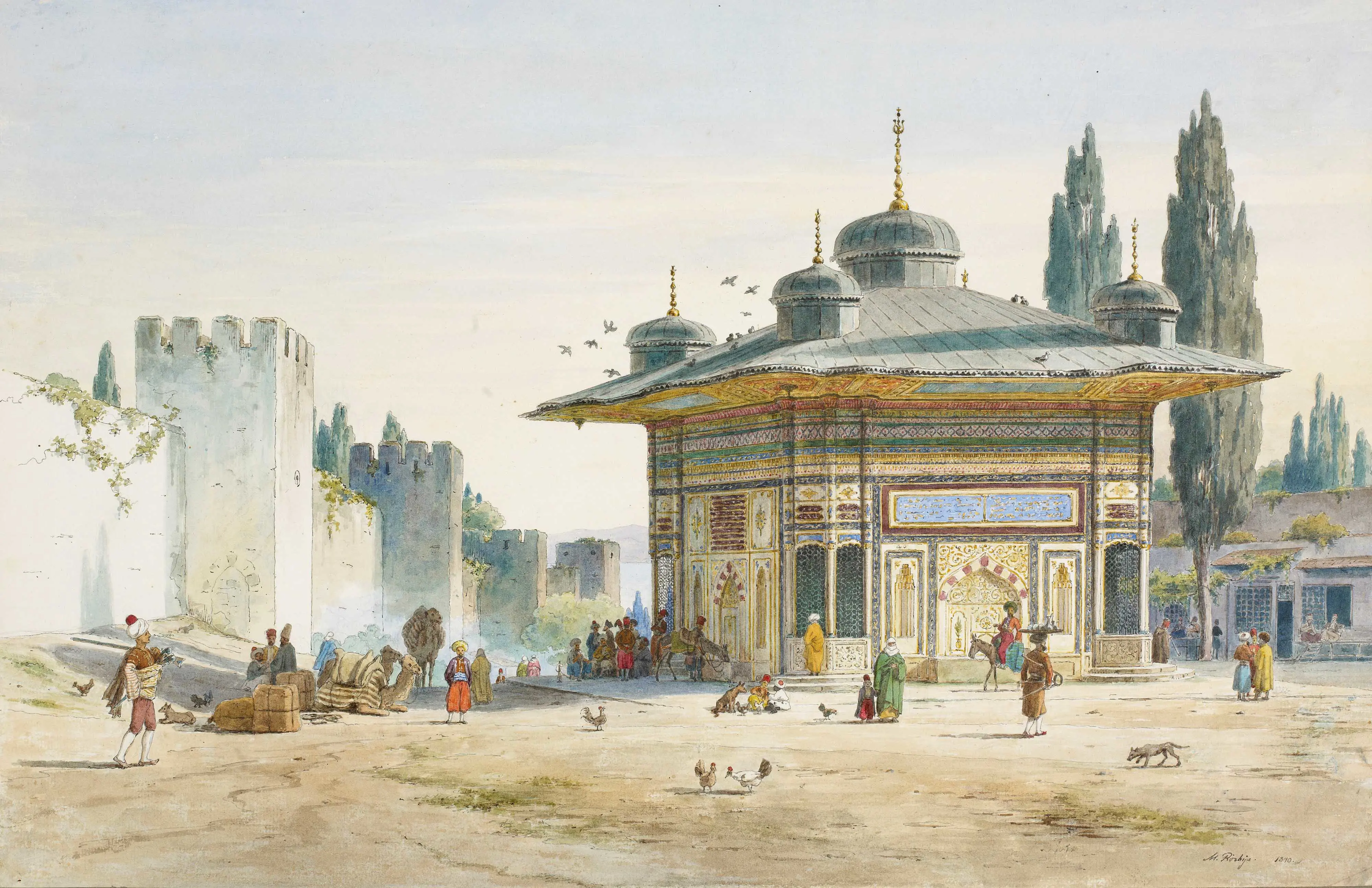
 Image: David Collection, London
The David Collection in Copenhagen is presenting the final days of ‘Rørbye & Bindesbøll. Rejsen til Konstantinopel’, an exhibition examining the 1835–36 journey undertaken by Danish painter Martinus Rørbye and architect Gottlieb Bindesbøll. The exhibition is on view through 6 September 2026 at the museum’s premises on Kronprinsessegade.
The two artists met in Italy while both were undertaking extended journeys abroad. They subsequently travelled together across Italy, to the Greek islands and Athens, before continuing to Turkey. They arrived in Smyrna—now İzmir—in mid-December 1835 and travelled on to Constantinople, present-day Istanbul, after a short stay. The pair left the city again on 1 February 1836.
In Constantinople, Rørbye and Bindesbøll each produced a substantial number of sketches, focusing primarily on scenes of everyday life and architecture. The exhibition follows their shared itinerary while highlighting their individual responses to the places, cultures and people they encountered. The museum’s announcement also describes the presentation as including numerous works on loan.
The journey became an important reference point for both artists. Rørbye was the first Danish painter of the 19th century documented by the museum to visit Greece and Turkey. Studies made during the trip informed his painting ‘Scene af det offentlige liv i Orienten’ (‘Scene of Public Life in the Orient’), created in 1838 as his admission work for the Royal Danish Academy in Copenhagen. He continued to rework material from the journey and produced further works connected with Constantinople in the years that followed.
For Bindesbøll, the experience contributed to an architectural vocabulary that extended beyond his early training in Neoclassicism. Between 1839 and 1848, he designed Thorvaldsens Museum in Copenhagen, his first major architectural work. Later buildings also reflect his study of Byzantine architecture in Greece and Turkey. The museum identifies him as a major Danish architect in the transition from Neoclassicism to Historicism.
The exhibition is shown by the David Collection, a Copenhagen museum housing one of the Western world’s notable collections of art from the Islamic world, alongside older European art and modern Danish painting, sculpture and ceramics. The institution’s rooms were created for founder Christian Ludvig David’s collection by architect Carl Petersen between 1918 and 1920; Petersen is described by the museum as having been influenced by Bindesbøll.
‘Rørbye & Bindesbøll. Rejsen til Konstantinopel’ opened on 5 February 2026 and closes on 6 September. The museum’s calendar lists a free guided tour of the exhibition at 17:00 on 2 September, while the final day also includes tours devoted to the museum’s founder and collection.