 Image: TAG ARTS, Los Angeles
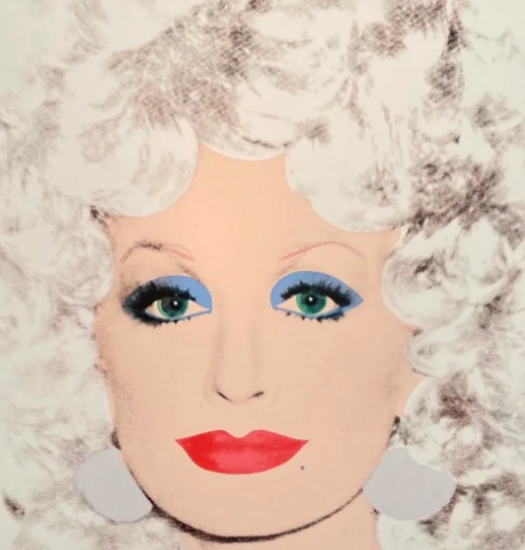
A new TAG ARTS newsletter reflects on the relationship between Dolly Parton and Andy Warhol, focusing on the portraits Warhol made of the singer in Los Angeles in 1985. The commentary considers how the images brought together two figures who understood the cultural power of celebrity, performance and carefully managed public identity.
Parton’s fame was built through music, with songs including ‘Jolene,’ ‘I Will Always Love You’ and ‘9 to 5’ making her one of the most recognizable singers and songwriters of her generation. The newsletter argues that her public image became nearly as familiar as her music: platinum hair, rhinestones, elaborate costumes, humor and a larger-than-life persona formed a visual language that she developed over decades.
That distinction between the private person and the public persona is central to TAG ARTS’s reading of the portraits. Parton’s appearance, the newsletter says, was not simply a promotional device but part of an identity she deliberately constructed and controlled. Her approach anticipated the logic of personal branding while retaining a strong connection to her musical, professional and entrepreneurial ambitions.
Warhol had spent much of his career examining the point at which a famous individual became an instantly recognizable image. His subjects included Marilyn Monroe, Elizabeth Taylor and Jackie Kennedy. By the time he photographed Parton, the singer’s appearance was already unmistakable, making her a particularly direct encounter with the kind of celebrity iconography that had long interested the artist.
The two had first crossed paths through New York’s Studio 54 social scene. According to the newsletter, Parton later recalled that she and Warhol often sat together watching the activity rather than joining it. In May 1978, Studio 54 hosted a party in Parton’s honor, transforming the nightclub with hay bales, barrels of corn and live animals in an exaggerated evocation of Nashville. Their association continued in 1984, when Parton appeared in Warhol’s ‘Interview’ magazine for a conversation about her career, films, appearance and ambitions.
Warhol’s 1985 Los Angeles portraits therefore entered an already established relationship between celebrity and self-presentation. The newsletter describes the encounter as a meeting between two different approaches to image-making: Warhol examined how popular culture produced icons, while Parton demonstrated how a performer could create and manage an instantly legible persona without allowing it to eclipse her talent, intelligence or ambition. TAG ARTS presents the portraits as a significant point of overlap between music, art, identity and American visual culture.