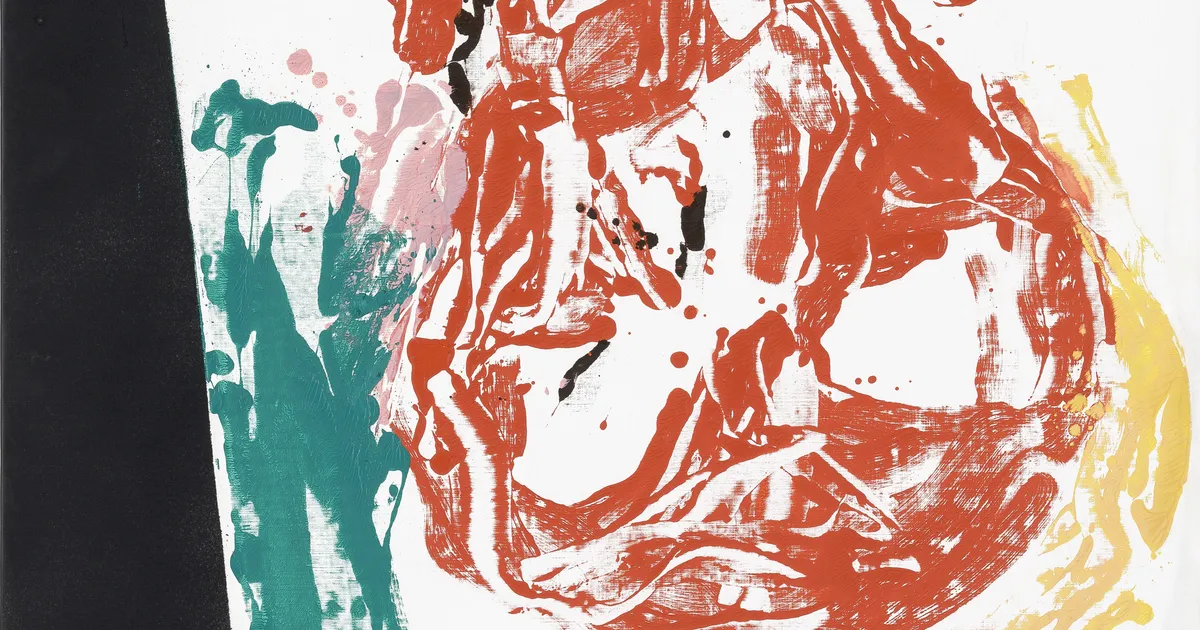
 Image: Georg Baselitz. Thaddaeus Ropac, Seoul
Thaddaeus Ropac will open ‘Per Mano’, an exhibition of Georg Baselitz’s late work, at its Seoul Fort Hill gallery on 1 September 2026, running to 14 November. The gallery says the show was conceived in close collaboration with the artist before his death in April 2026. It opens with a late viewing from 5pm to 10pm on Tuesday 1 September, held as part of Hannam Gallery Night during Frieze Seoul 2026, where the gallery is also showing at Booth C3.
The exhibition brings together two series of monotype paintings that the gallery describes as epitomising the final decade of Baselitz’s practice: the Schatten works of 2020 and the Darkness Goldness paintings of 2019, neither of which has been seen in Korea before. It is also the first presentation of the Schatten series since Baselitz’s exhibitions at the Sakıp Sabancı Museum in Istanbul in 2024 and the Museo de Bellas Artes de Bilbao in 2025. The gallery traces the engagement with mortality in both series back to the Avignon cycle he showed at the 56th Venice Biennale in 2015, curated by Okwui Enwezor.
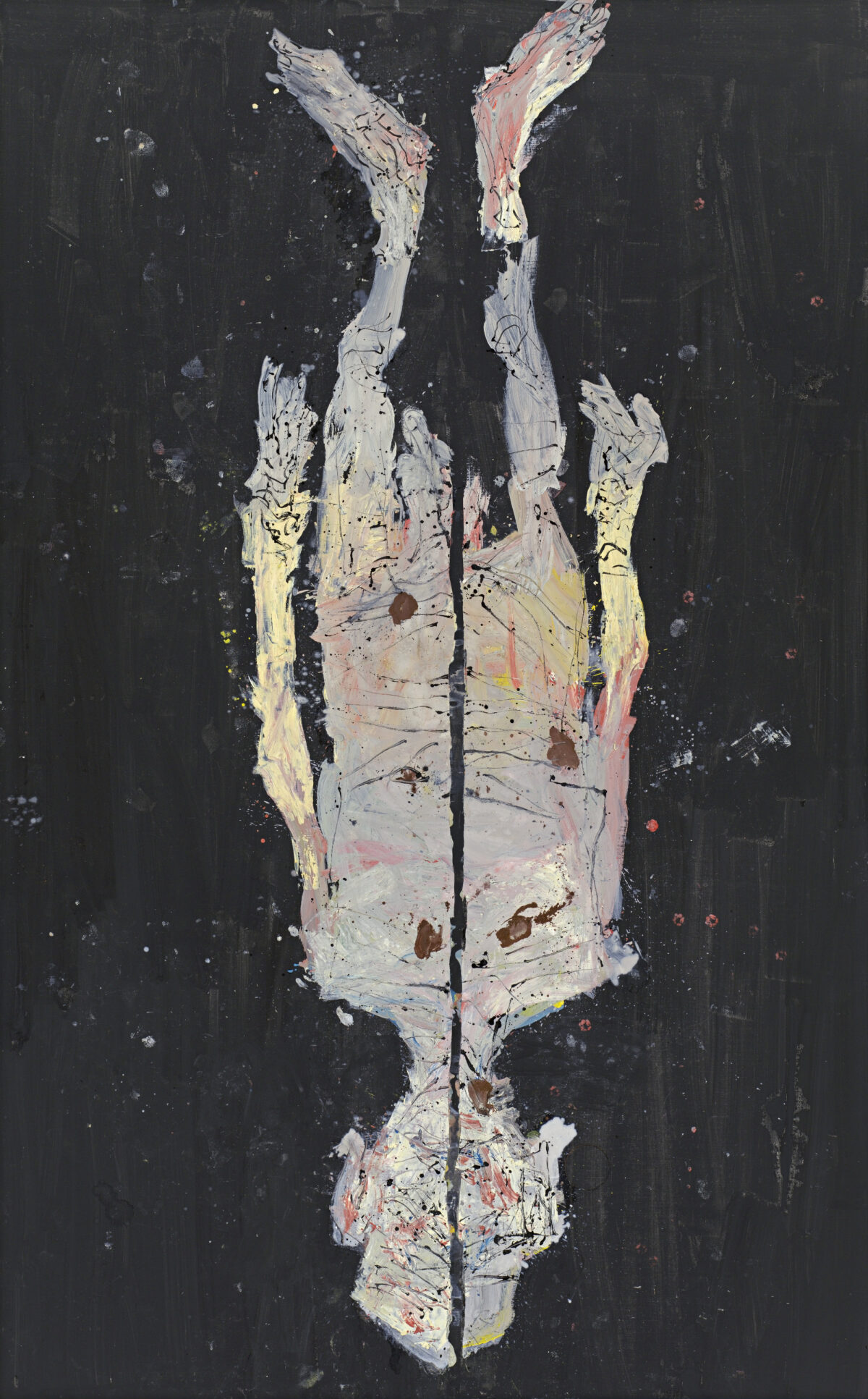
The Schatten paintings take their starting point from Titian’s portrait of Archbishop Filippo Archinto of about 1558, in the Philadelphia Museum of Art. It is the curved shadow behind the sitter, rather than the portrait’s celebrated veil, that Baselitz rehearses upside down at the left of each canvas, continuing the inversion that has been a hallmark of his work since 1969. The curator Pamela Sticht has written that the device leads viewers into a new way of seeing.
Baselitz made the works by painting on unstretched canvas laid on the floor, then pressing a primed canvas on top and transferring the image with a broom, so that every impression differs. Upside-down skulls surface at varying degrees of definition, which the gallery links both to the anamorphic memento mori in Holbein’s ‘The Ambassadors’ of 1533 in the National Gallery, London, and to the artist’s interest in Songye power figures. The skull runs through his work from the Pandämonium pictures of the 1960s to the sculpture ‘Zero Ende’ of 2013.
The Darkness Goldness paintings set monumental golden hands against pitch-dark grounds that the gallery compares to Lucas Cranach the Elder. They stand apart from the amputated extremities of the ‘P.D. Füße’ series of 1960 to 1963 and the swollen limbs of the ‘Helden’ paintings of 1965 to 1966, offering a frailer account of the artist’s own ageing hand; the art historian José María Parreño has described limbs deformed by osteoarthritis and flesh worn by age and labour. Baselitz said he wanted an apparition, something that appears out of the depth.
Works reproduced in the gallery’s announcement include ‘Der Schatten ist da, man sieht ihn nicht’ of 2018, oil on canvas, 310 by 210 centimetres, and ‘Schatten 2’ of 2020, oil on canvas, 233 by 145 centimetres, both photographed by Jochen Littkemann. The Seoul gallery is at 1-2F, 122-1 Dokseodang-ro, Yongsan-gu, and opens Tuesday to Saturday from 10am to 6pm; it has been closed since 2 August and reopens with this exhibition.
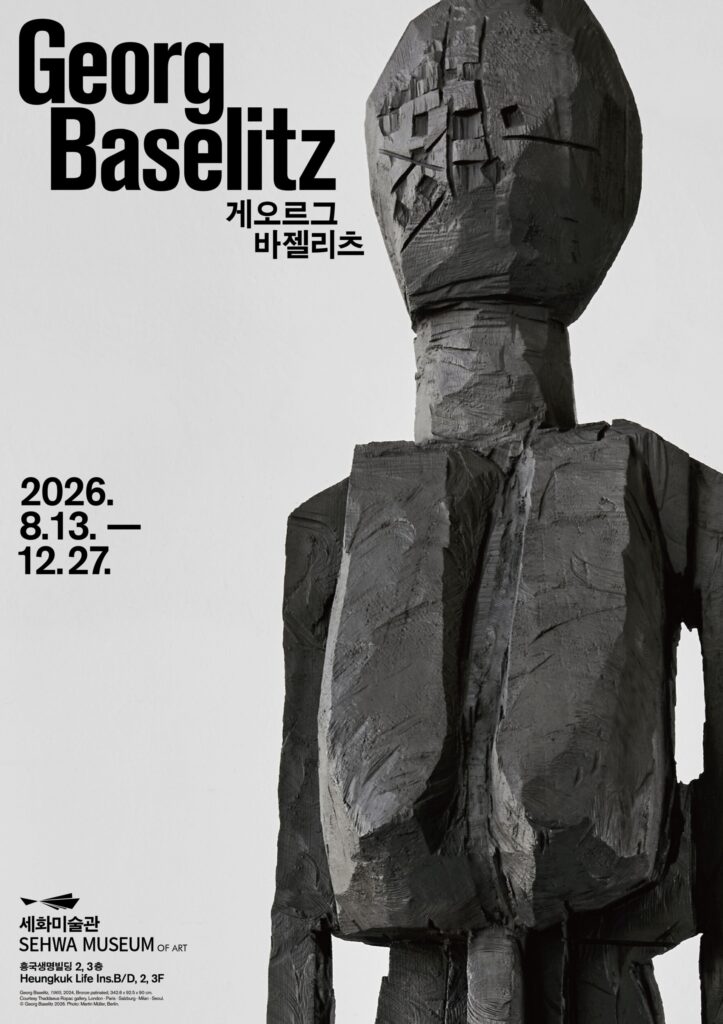
A separate Baselitz retrospective is on view elsewhere in the city, at the Sehwa Museum of Art, where it opened on 13 August and runs to 27 December 2026. Billed as the first exhibition in Korea since the artist’s death, it surveys sixty years of his work, from the recurring motifs of the 1960s to the 1980s through the late portraits of his wife Elke, the Remix series of the 2000s onwards, the fragmented bodies and eagles, and the Gold Painting series of his final years. A conversation there between the artist’s son Daniel Blau, the art historian Yoon Heekyung and the columnist Lee Hanbit is scheduled for Tuesday 1 September at 3pm, with registration already closed.