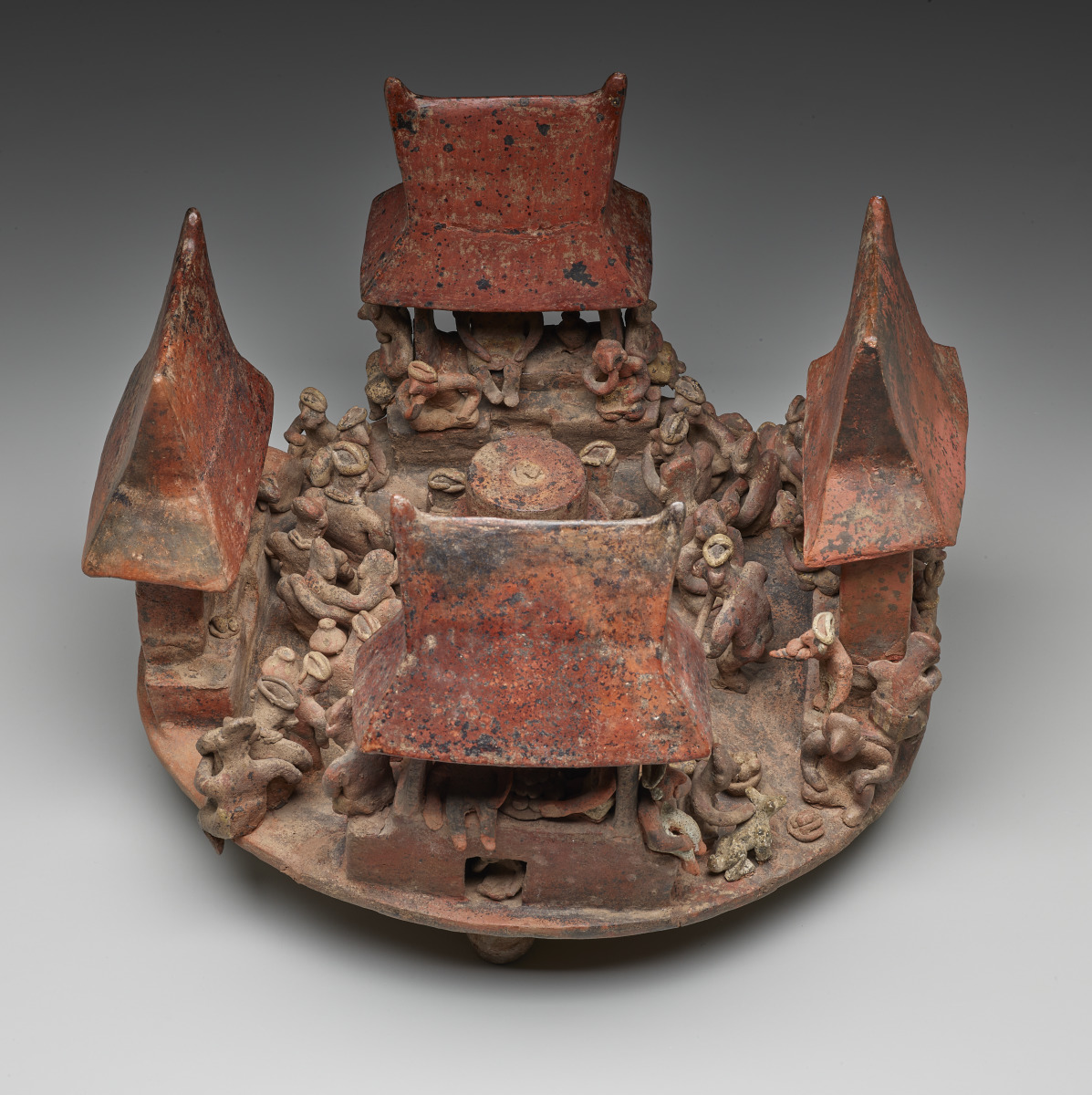
 Image: Village Festival Scene, Nayarit, 300 BCE–300 CE. Ceramic, pigments. Dallas Museum of Art, The Roberta Coke Camp Fund and The Otis and Velma Davis Dozier Fund, 2026.1
The Dallas Museum of Art will present a newly acquired ancient Mexican Nayarit ceramic model in a curatorial talk scheduled for October 16. Titled ‘New Acquisition Spotlight: Ancient Mexican Nayarit Village Festival Scene,’ the program will examine a West Mexican architectural model populated by figures engaged in food, music and communal activity alongside dogs.
Dr. Michelle Rich, the Ellen and Harry S. Parker III Associate Curator of Indigenous American Art, will lead the presentation. The Dallas Museum of Art describes the object as one of the finest examples of a West Mexican ceramic architectural model and says the talk will offer a detailed examination of the acquisition.
The event is part of the museum’s ‘Art in Thirty’ series, which offers short gallery talks. It is scheduled for Friday, October 16, from noon to 12:30 p.m. at the Dallas Museum of Art in Dallas. Admission to the program is free for museum members and the public, according to the museum’s event information.
The model’s subject is a village festival scene, with its figures shown sharing food, making music and spending time with dogs. The description emphasizes the object’s combination of architectural setting and animated human activity, rather than presenting it as an isolated ceramic vessel or a single figure.
Nayarit is part of the West Mexican ceramic tradition represented in the museum’s holdings of Indigenous American art. The Dallas Museum of Art’s Indigenous American and Viceregal Art galleries, located on Level 4, present works spanning ancient Indigenous cultures, the colonial era and the present day. The museum says these galleries address the continuing traditions of Latin America and connections among communities across generations through art.
The acquisition will be discussed within that institutional setting, although the supplied event information does not specify when the object was acquired, its date of production, its dimensions, its maker or the circumstances of its provenance. The October program will instead focus on the work as a significant example of Nayarit ceramic architecture and on the lively festival scene conveyed by its assembled figures.