 Image: Lincoln Glenn, New York
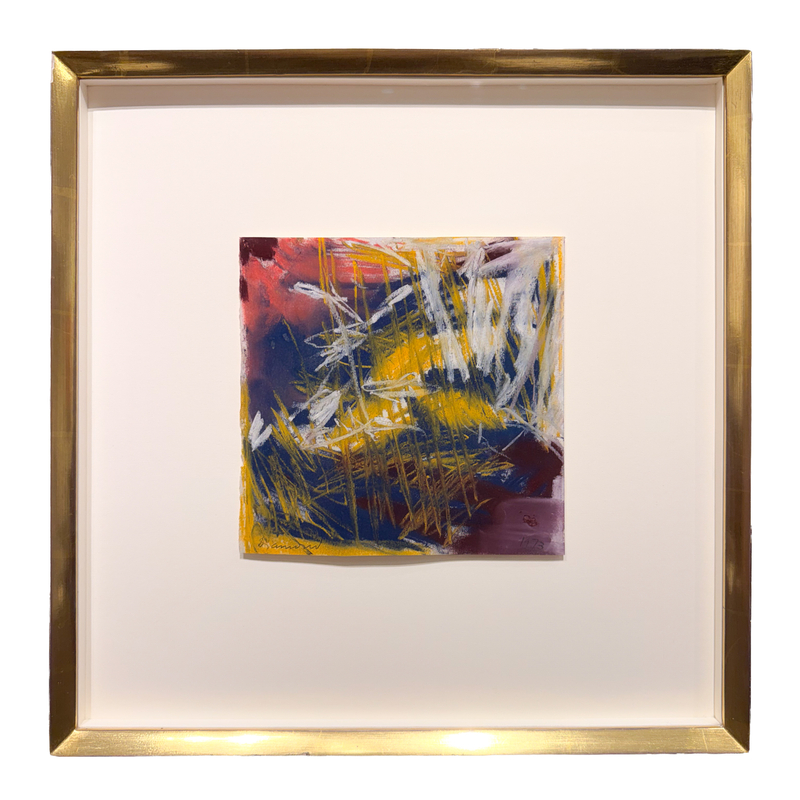
New York gallery Lincoln Glenn has announced two recent acquisitions: Martha Diamond’s ‘Untitled’ (1973), a mixed-media work on paper, and Jasper Cropsey’s ‘Moonlit Landscape’ (1888), a pastel on board. The works bring together artists from different generations and traditions in American art, linking Diamond’s postwar engagement with New York’s cityscape to Cropsey’s 19th-century landscape practice.
Diamond’s ‘Untitled’ measures 17 by 17 inches. The gallery identifies the artist as Martha Diamond (1944–2023), known for paintings and works on paper that captured the spirit of New York City while exploring the space between abstraction and the cityscape. The newly acquired work is listed as mixed media on paper and dated 1973, a period associated in the gallery’s account with the development of Diamond’s distinctive visual language.
According to Lincoln Glenn, Diamond immersed herself in downtown Manhattan’s art and poetry communities in the late 1960s. Her work drew on her surroundings as well as earlier painters including Willem de Kooning, Franz Kline and Jackson Pollock. Influenced by Abstract Expressionism and Lyrical Abstraction, she developed a style characterized by dense, expressive brushwork and vivid color.
The gallery also notes Diamond’s recurring interest in what she described as “architectural and archetypal forms.” That vocabulary situated her work between recognizable urban structures and the freedoms of abstraction. The acquisition announcement does not identify a forthcoming exhibition or public presentation for ‘Untitled’.
Cropsey’s ‘Moonlit Landscape’ is dated 1888 and measures 9 by 12¾ inches. The pastel on board reflects the landscape concerns for which Jasper Francis Cropsey (1823–1900) became known. Lincoln Glenn describes Cropsey as a prominent Hudson River School painter and one of the leading artists associated with the movement.
Cropsey initially trained as an architect under Joseph Trench, who encouraged his interest in drawing and painting. During the 1840s, he supported himself through architectural commissions, including work connected with New York’s Sixth Avenue Elevated Railway. In 1847, he traveled to Europe and settled in Thomas Cole’s former studio in Rome. After returning to New York in 1849, he devoted himself to landscape painting and eventually established his prominence within the Hudson River School.
The acquisitions align with Lincoln Glenn Gallery’s stated mission of presenting American art from the 19th century through the late 20th century. Its program encompasses the Hudson River School, American Impressionism, the Ashcan School, American Modernism and Surrealism, with particular emphasis on Abstract Expressionism and Color Field painting. The gallery says it focuses on strengthening the legacies of artists active between the 1940s and 1970s whose contributions have been under-researched and less published in subsequent decades. Lincoln Glenn lists locations on East 67th Street and West 24th Street in New York.