 Image: Magnes Collection of Jewish Art and Life, Berkeley
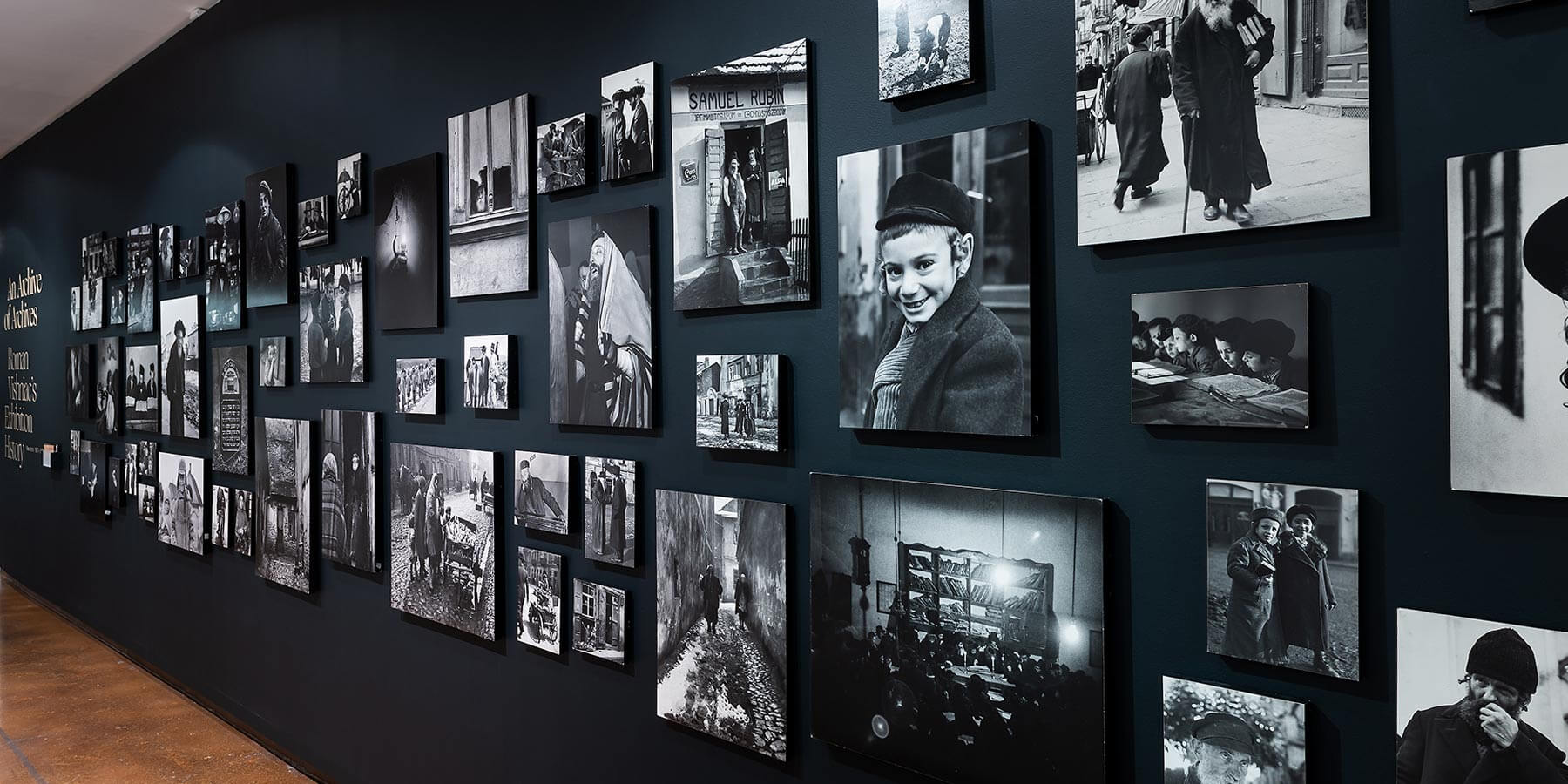
The Magnes Collection of Jewish Art and Life in Berkeley is presenting ‘An Archive of Archives: Roman Vishniac’s Exhibition History | New York, 1971–72’, an installation drawn from the Roman Vishniac Archive acquired by the museum in 2018. The presentation brings together documentation of an earlier exhibition and a selection of Vishniac’s photographs of Jewish life in Central and Eastern Europe between 1930 and 1940.
The original exhibition was held at the Jewish Museum in New York from October 19, 1971, through January 23, 1972. It subsequently traveled to universities, libraries, art galleries and Jewish museums in New York State, New Jersey, Washington, DC, Illinois and California. The Berkeley installation focuses on images from that presentation, including some of Vishniac’s best-known photographs of Eastern European Jewish communities in the years immediately preceding the Holocaust.
The 1971–72 exhibition was part of a larger project titled ‘The Concerns of Roman Vishniac: Man, Nature, and Science’. Created under the direction of photographer and curator Cornell Capa as part of the series ‘The Concerned Photographer’, the project was organized under the auspices of the International Fund for Concerned Photography. It extended beyond documentary images of Jewish life to include microscopic photography and a multimedia installation focused on Vishniac’s scientific images.
The original project has since been lost in its entirety, according to the Magnes. The surviving material in the archive therefore offers evidence not only of Vishniac’s photographic practice but also of how his work was framed, circulated and encountered in the early 1970s. The archive contains substantial documentation of some of his early exhibitions, making it possible to reconstruct aspects of a career that had already attracted institutional attention by that period.
The Magnes acquired the Roman Vishniac Archive through a gift from Mara Vishniac Kohn, who died in 2018. The collection includes thousands of original prints, negatives and archival materials documenting Vishniac’s long international career. The museum describes the acquisition as one of the most important in its history since its founding in 1962, and as a significant resource for research into 20th-century East European Jewry and related fields.
Vishniac, who lived from 1897 to 1990, was a Russian-born modernist photographer particularly noted for documenting Jewish life in Eastern Europe before the Holocaust. The Magnes is still processing and documenting the archive, and states that its materials are not yet generally available. A September 16, 2026, webinar, ‘One System, Twice the Archive: Modernizing DAM and Collections Management at the Magnes’, will examine how the acquisition prompted the institution to unify its collections and digital-asset management systems; the event is separate from the exhibition installation.
The Magnes is located at 2121 Allston Way in Berkeley. Its regular public hours resume September 2, 2026, with opening hours on Sunday, Tuesday and Wednesday from 11 a.m. to 4 p.m., and Thursday from 11 a.m. to 7 p.m. Admission is free.