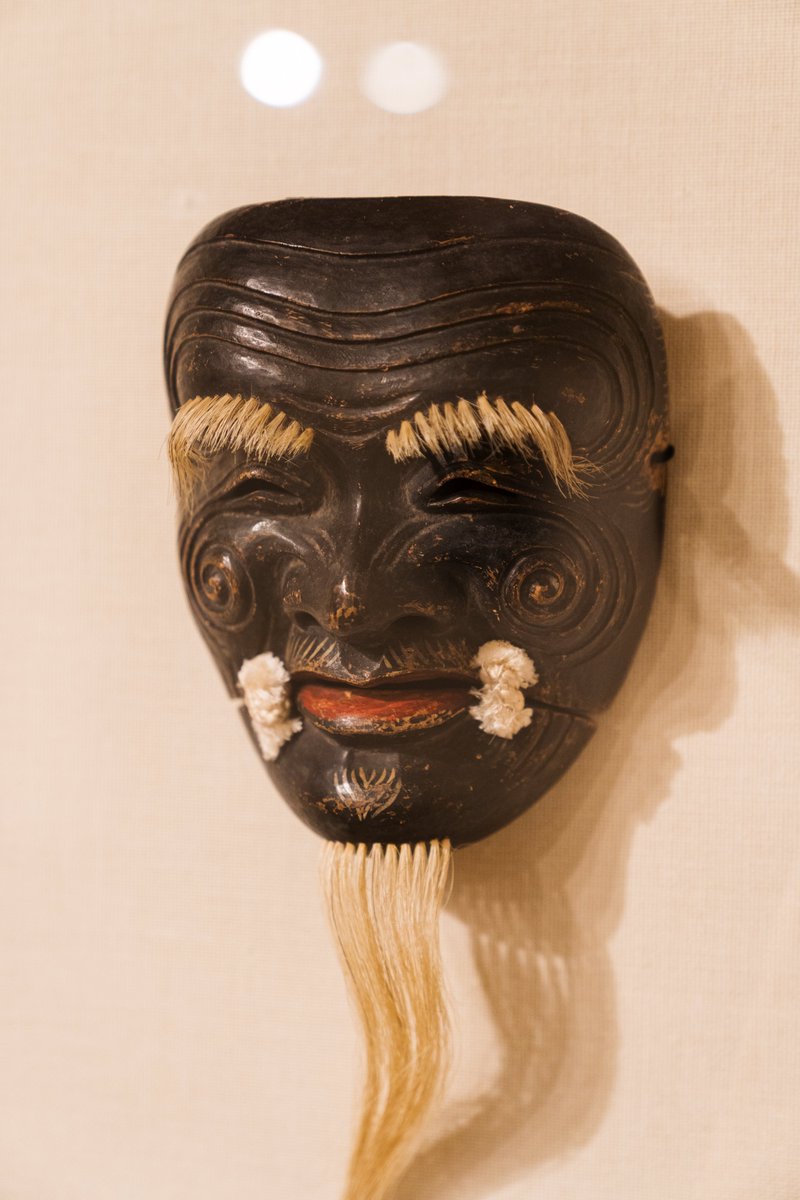
 Image: Eisei Bunko Museum, Tokyo
Eisei Bunko Museum in Tokyo has highlighted a group of Japanese Noh-related works spanning the Edo to Meiji periods, including masks and paintings linked to the traditional performing art. The museum’s post draws attention to a Sanbaso mask called 'Kokushikijo', dated to the 17th to 18th century, alongside a 19th-century Noh dance painting by Akahoshi Kani.
The selection places emphasis on the visual culture surrounding Noh rather than on a full performance history. Noh masks are central to the form’s stage identity, while paintings of dancers and ritual figures preserve aspects of movement, costume and presentation that can be studied outside the theatre. By grouping works from different moments of the Edo to Meiji transition, the museum points to the continuity of Noh imagery across changing historical periods.
The Sanbaso mask is identified as 'Kokushikijo', a name associated with one of the traditional roles in Noh-derived dance. The date provided by the museum places it in the 17th to 18th century, making it one of the older objects mentioned in the post. The other named work, a Noh dance painting by Akahoshi Kani, comes from the 19th century and extends the timeline into the later premodern era.
No exhibition dates or exhibition venue details were included in the source material beyond the museum’s own post, so the available information is limited to the works themselves and their historical range. The museum’s spotlight on these objects nonetheless reflects its focus on Japanese cultural heritage and on materials that preserve performance traditions in object form.
Eisei Bunko Museum is based in Tokyo, Japan. The institution’s website and public communications regularly present works from Japanese history and art, and this latest post continues that approach by bringing together a mask and a painting tied to Noh culture. The source material does not indicate whether the works are on display in a specific exhibition, whether they belong to a single collection, or whether additional related objects are included.
As presented by the museum, the grouping centers on two identified works: the 17th- to 18th-century 'Kokushikijo' Sanbaso mask and Akahoshi Kani’s 19th-century Noh dance painting. Both appear in the context of Edo to Meiji period Japanese art and offer different forms of evidence for the endurance of Noh imagery across the centuries.