
Daily Brief — 12 October 2026
Three exhibitions put close looking to work: one follows images through algorithms and internet culture, another traces the layered life of a Valencian wetland, and a museum in Naples prepares to add a rediscovered chapter of local sculpture to its collection.
At the Finnish Museum of Photography’s Kaapelitehdas venue in Helsinki, “Kuvan houkutus” examines how digital images attract, capture and direct attention. Produced by Fotomuseum Winterthur and curated by Marco De Mutiis, Doris Gassert and Alessandra Nappo, the exhibition runs through 28 February 2027. Fourteen artists, including Hito Steyerl, Sara Cwynar, Jon Rafman and Viktoria Binschtok, address social-media feeds, dating-app profiles, face filters, memes, AI-generated images and low-resolution screenshots. The exhibition also considers the algorithms and datasets behind these images, and the emotionally driven reactions that sustain the attention economy.
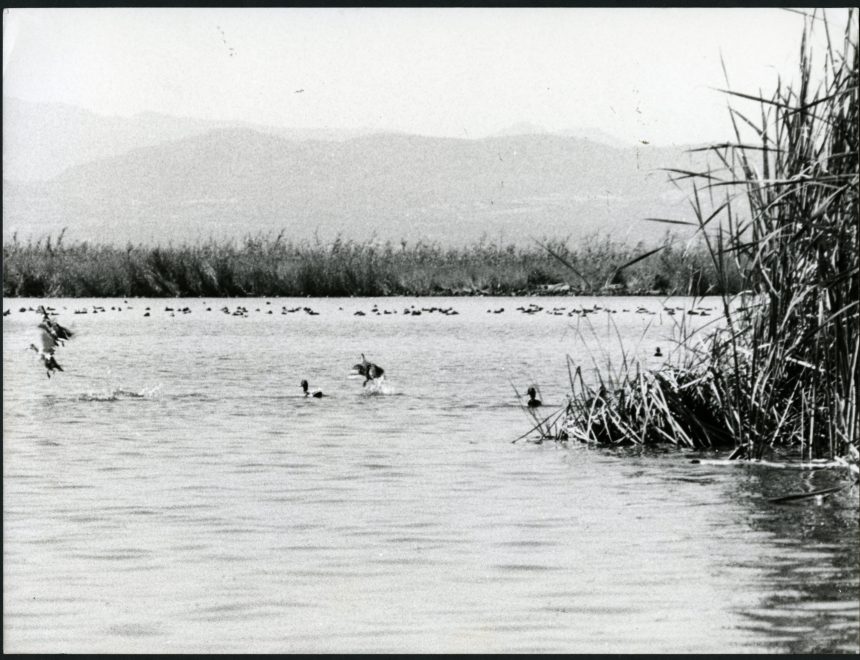 Image: Institut Valencià d'Art Modern, Valencia
IVAM’s ‘La Albufera’ Enters Its Final Week
IVAM’s “La Albufera” enters its final week at the Centre Julio González, where it remains on view through 18 October. The exhibition brings together art, photography and documentation by Bleda y Rosa, Paula García-Masedo, Lucía Loren, Teresa Marín García, Jorge Ribalta and Jorge Yeregui to examine the Valencian wetland’s historical, cultural and environmental layers. On 13 October, specialists in anthropology, sociology, environmental conservation and art will meet for conversations, a roundtable and an exhibition tour. A closing visit with curator Sandra Moros is scheduled for 15 October.
The Museo di Capodimonte will present “Torquato Tasso,” a terracotta effigy made around 1885 by Francesco De Matteis, on 15 October. Donated by British art historian and former National Gallery director Sir Nicholas and Lady Penny, the work documents an important early phase in the Neapolitan sculptor’s career, after his studies with Stanislao Lista and Gioacchino Toma and a period in Paris. Formerly in the collection of Sir Brinley Ford, the sculpture adds a previously unrepresented record of late-19th-century Neapolitan and southern Italian sculpture to Capodimonte. The presentation is part of the “Notizie da Capodimonte” cycle.