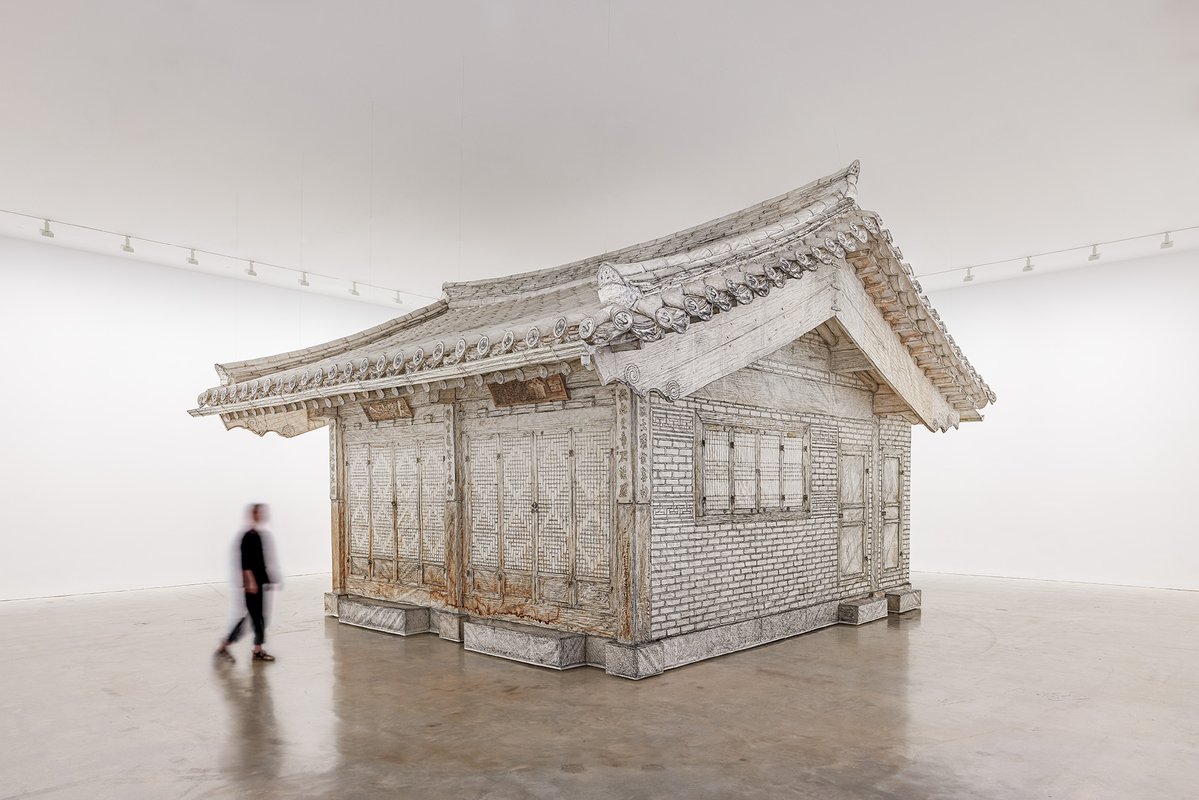
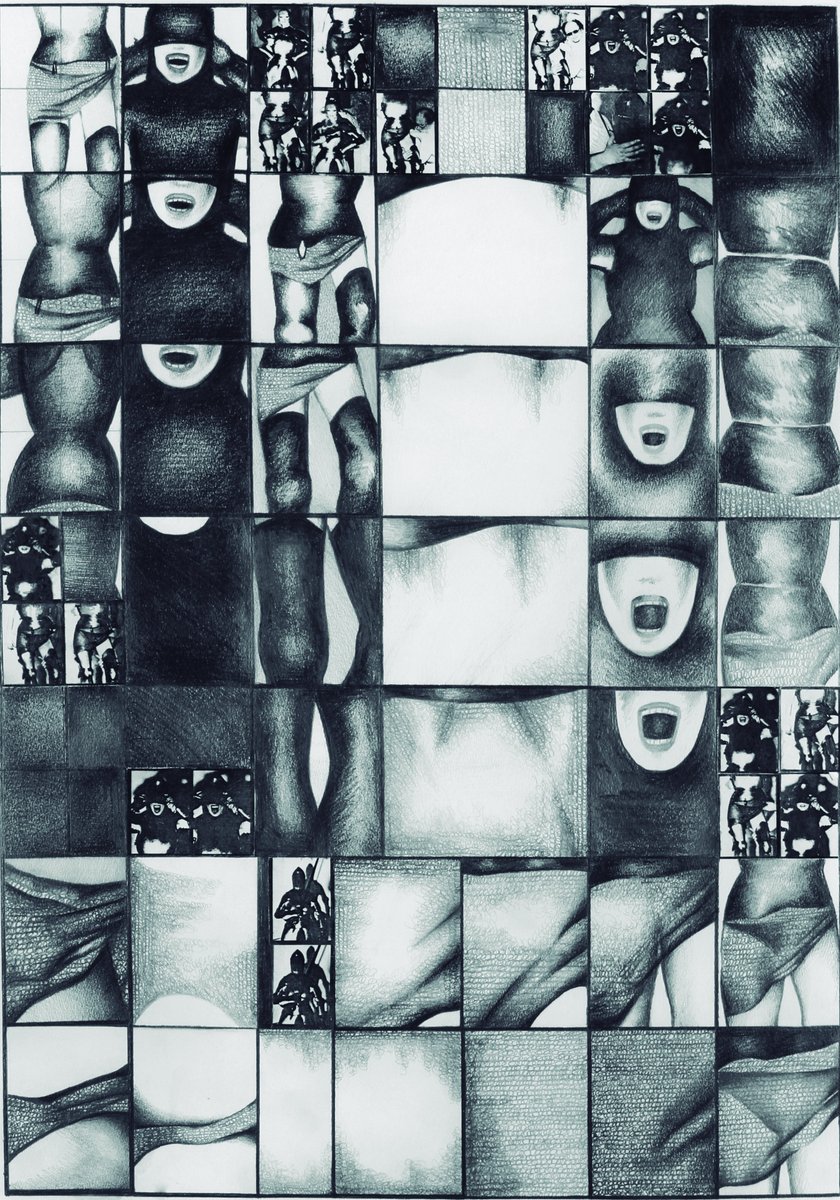
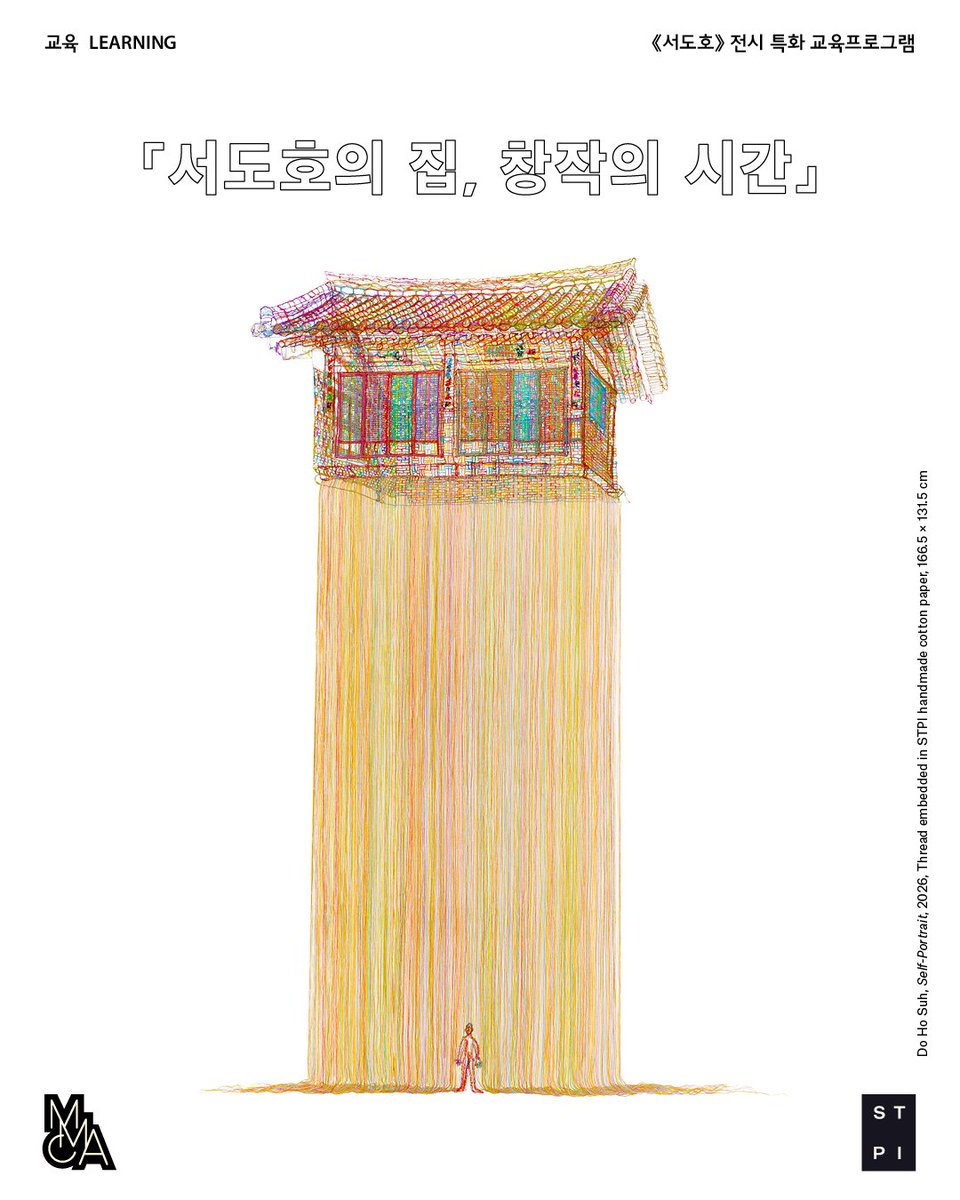
 Image: Programme poster for 「서도호의 집, 창작의 시간」, reproducing Do Ho Suh, 'Self-Portrait', 2026, thread embedded in STPI handmade cotton paper, 166.5 × 131.5 cm. Courtesy National Museum of Modern and Contemporary Art, Korea, and STPI, Singapore.
The National Museum of Modern and Contemporary Art, Korea, is holding a four-day education programme at MMCA Seoul from 27 to 30 August 2026, timed to the opening week of its Do Ho Suh survey. The museum's title, 「서도호의 집, 창작의 시간」, translates roughly as Do Ho Suh's House, Time of Creation.
The programme is tied to the drawing section of the exhibition and is built around the materials and printmaking techniques behind the works, so that visitors can try the processes themselves. It is run with STPI, the Singapore print and paper institute and contemporary gallery that has worked with Suh since 2009. Everything takes place in the public space beside Gallery 1 on the first floor of the exhibition wing, is free, is aimed at interested adults and requires advance booking through the museum's website.
It opens with the talk 「예술은 어떻게 만들어지는가? STPI와 서도호의 협업」 on Thursday 27 August, 14.00–15.30, in which STPI's executive director Emi Eu speaks with MMCA curator Chae Yeon about their long collaboration and about what experiment and shared authorship mean in contemporary art; 60 places, in English with consecutive Korean interpretation.
Two creative workshops follow, both led by STPI's paper and print specialists and limited to 15 people per session. 「실로 그리는 집」 runs on Friday 28 August, 11.00–13.00 and 15.00–17.00, and again on Sunday 30 August, 11.00–13.00; 「빛으로 기록하는 기억」 runs on Saturday 29 August, 11.00–13.00 and 15.00–17.00. Participants make work about their own homes, taking Suh's exhibited drawings as a starting point. The sessions of each workshop repeat the same content, so the museum asks applicants to book only one.
The exhibition itself, at MMCA Seoul from 27 August 2026 to 9 February 2027, is a large survey of the installation artist's work from early pieces to projects still in progress, organised around migration and dwelling, and around space, memory and identity.