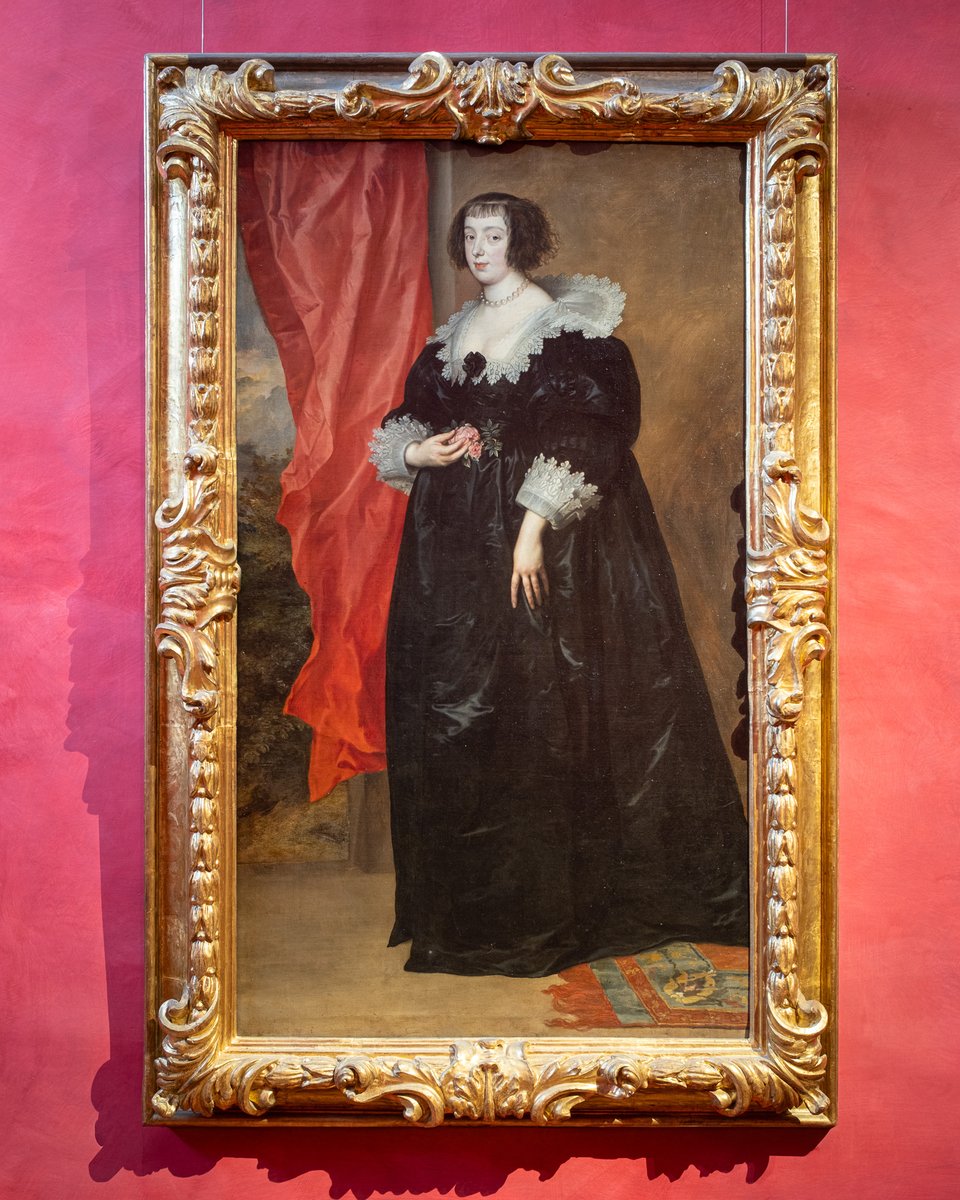
 Image: Anthony van Dyck, Portrait of Marguerite of Lorraine, Duchess of Orléans, 1634, on view at the Gallerie degli Uffizi, Florence
The Uffizi has highlighted Anthony van Dyck’s 'Portrait of Marguerite of Lorraine', a 1634 painting that captures a young noblewoman already entangled in high political drama. In the museum’s post, Marguerite of Lorraine is identified as the wife of Gaston d’Orléans, brother of King Louis XIII of France and a possible heir to the throne, and as someone who was exiled from the kingdom for a long period because of that marriage.
The Uffizi’s caption gives Marguerite’s age as 22 when van Dyck portrayed her. Her documented birth date, 22 July 1615 in Nancy, would instead place her at 18 or 19 in 1634, so the age given in the post does not match the standard biographical record. The image presents her not simply as a court portrait subject but as a figure caught in the pressures of dynastic politics. The museum’s note places the work within the orbit of French royal succession and marriage alliance, giving the portrait a historical frame that extends beyond its refined surface.
Van Dyck’s name remains closely associated with aristocratic portraiture, and the Uffizi’s post situates this painting within that reputation. The artist was known for rendering sitters with elegance and psychological presence, qualities that often made his portraits enduring records of status as well as likeness. In this case, the subject’s youth and political circumstances are central to the museum’s presentation of the work.
The Uffizi’s reference identifies the painting as dating from 1634 and locates it in the museum’s collection. No exhibition or loan context was given in the post, which instead functions as a focused spotlight on a single work from the galleries. The museum’s framing encourages attention to the intersection of portraiture, dynastic history and personal biography embedded in the image.
Marguerite of Lorraine’s identification in the post also underscores the wider court networks surrounding seventeenth-century European portraiture. As the spouse of Gaston d’Orléans and a figure connected to French succession politics, she appears here as both an individual sitter and a participant in a larger political story. Van Dyck’s portrait preserves that tension at the age of 22, in a work now associated with the Uffizi.