 Image: Getty Villa, Los Angeles
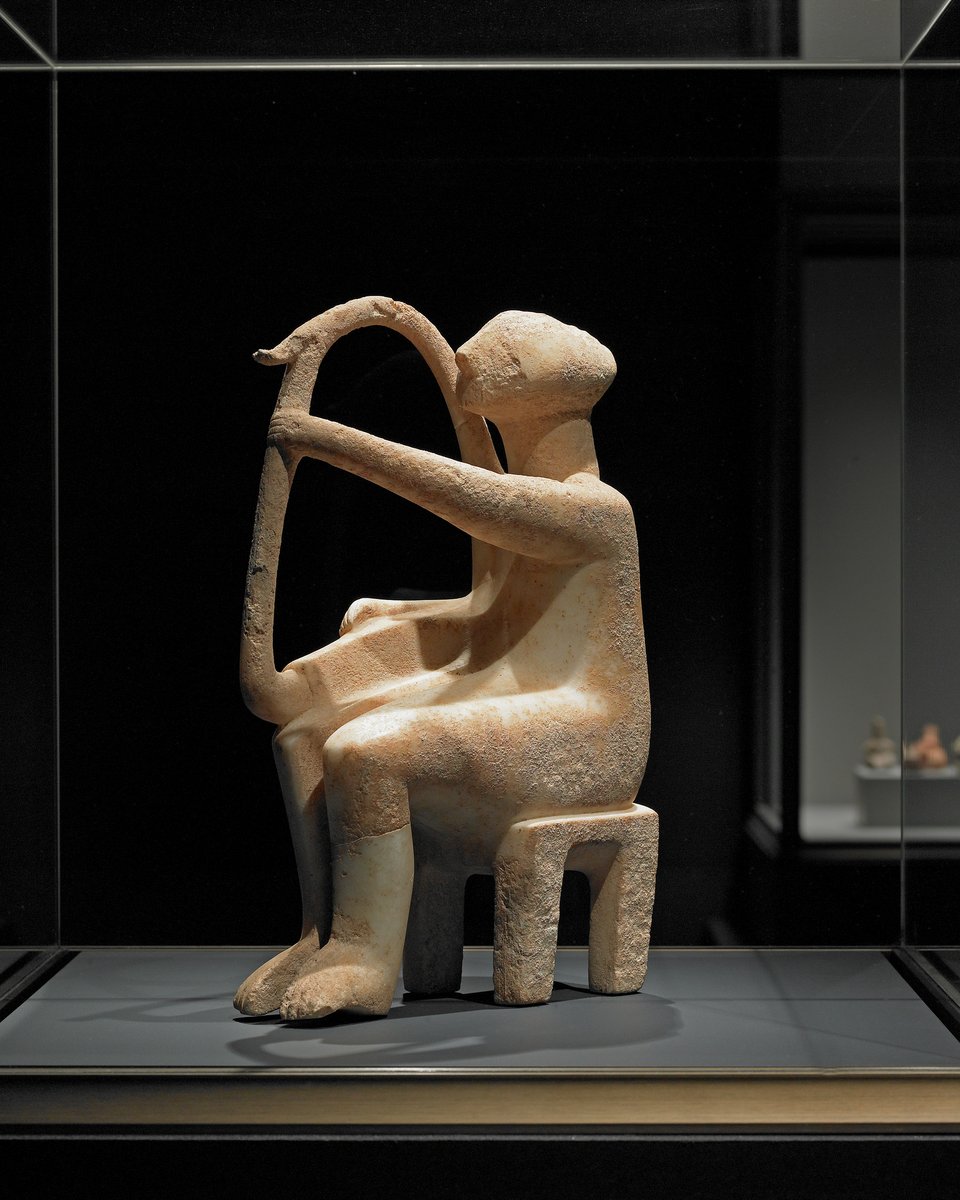
The Getty Villa is drawing attention to a marble sculpture of a male harp player from the Early Spedos type, dated to 2700–2300 B.C. The museum’s post presents the object as both a work of ancient craftsmanship and a prompt for interpretation, noting the way its simplicity invites viewers to look more closely.
The piece appears in the Getty collection under the title 'Male Harp Player of the Early Spedos Type.' According to the museum’s collection page linked with the post, it is a marble sculpture from the Early Cycladic period. The Getty’s social post frames the figure as an object that can open multiple readings, from its musical subject to its cultural meaning.
In the text accompanying the image, a viewer response from Edgar V. emphasizes that the sculpture’s restrained form “sparked my curiosity” and “creates room for imagination.” That reaction reflects the way the museum is presenting the object: not simply as an archaeological artifact, but as a work whose sparse features leave space for a personal encounter with ancient material culture.
The figure belongs to a broader body of Early Cycladic sculpture known for its distilled forms and careful carving. Within that context, the harp player stands out for combining musical subject matter with the smooth abstraction associated with the period. The Getty post does not add further provenance or display details, but it situates the work as an object worth close looking and reflection.
The Getty Villa, in Los Angeles, regularly uses its collection channels to spotlight individual works from antiquity. In this case, the museum’s focus is on a single marble sculpture rather than on a larger exhibition or event, with the emphasis placed on the object’s form, date and interpretive possibilities.
The collection entry for 'Male Harp Player of the Early Spedos Type' is available on the Getty website at the museum’s object page, which accompanies the social post and identifies the work as part of the Getty collection.