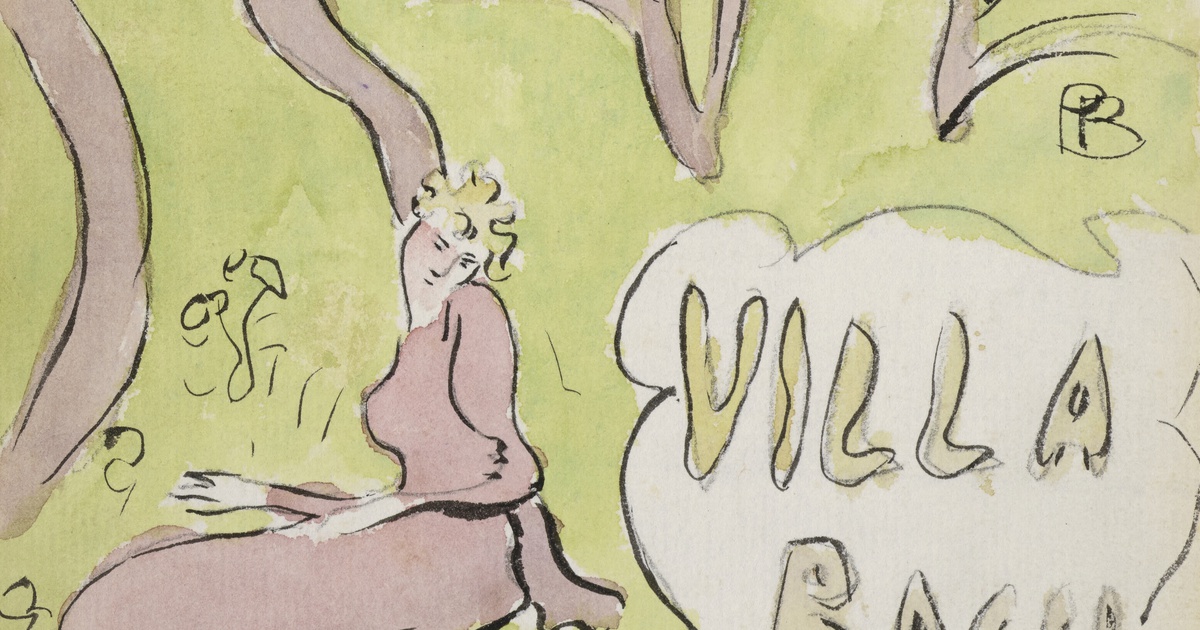
 Image: Waddington Custot, London
Waddington Custot will present 'The Nabi Shock' in London from 24 June to 12 September 2026, bringing together more than 20 paintings by leading figures of the Nabi movement alongside new works by contemporary artists. The exhibition draws on the gallery’s stated expertise in European modernism and is described as focusing on the Nabis’ fertile period between 1888 and 1900, when the group was actively working together in Paris.
The show includes paintings by Émile Bernard, Pierre Bonnard, Maurice Denis, Charles Filiger, Paul Ranson, József Rippl-Rónai, Ker-Xavier Roussel, Paul Sérusier and Édouard Vuillard. According to the gallery, the works date from that 12-year span and foreground the visual language for which the Nabis became known: flat planes of unmodulated colour, distinctive outlines and textured surfaces. The exhibition also places selected Nabi works in dialogue with paintings by Marcella Barceló, Ben Arpéa, Ian Davenport, Marcel Dzama, François Réau, Anne Rothenstein and Fabienne Verdier.
The gallery’s text frames the Nabis as a group that radically redefined painting in a short period, citing Maurice Denis’s view that a painting is essentially “a flat surface covered with colours, assembled in a certain order.” That idea sits at the centre of the exhibition’s argument, which links formal innovation to a broader shift in how painting could operate. Works cited on the gallery page include Bonnard’s 'Étude pour 'Le Corsage à carreaux'' (1892) and Vuillard’s 'La Chambre verte, rue Truffaut' (c.1900–01), both presented as examples of the movement’s rhythm, surface handling and compositional clarity.
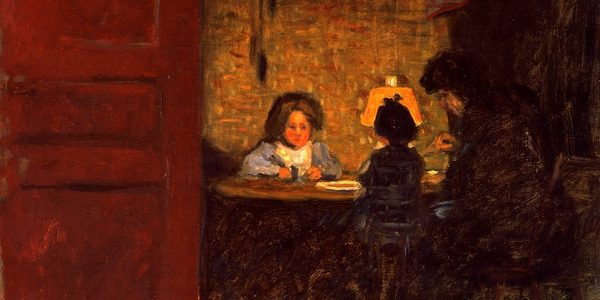
Waddington Custot also emphasises the Nabis’ interest in the subconscious and interior experience. The gallery notes that their work drew on early theories associated with Sigmund Freud and that, rather than depicting reality as it appeared, the artists sought to convey the feeling of being enveloped in the world. The Nabi subject matter was often intimate and domestic, with recurring depictions of sisters, wives, mothers and, occasionally, a celebrated stage actor. Works cited in the exhibition materials include Roussel’s 'Femmes au jardin' (c.1893–95) and Vuillard’s 'Femme lisant' (1895).
The exhibition extends beyond painting to the Nabis’ wider design interests. Waddington Custot says the group worked across theatre sets, posters and textiles, and the display includes Denis’s stained-glass design 'Le Cheval blanc' (1894), Bonnard’s illustrations for musical scores and concert programmes, and Ranson’s Japanese-inspired 'Le Grand Tigre' (1893), a work described as migrating from paper into carpets and painting. Contemporary works in the exhibition are presented as a way to foreground the continued relevance of Nabi colour, rhythm and interiority.
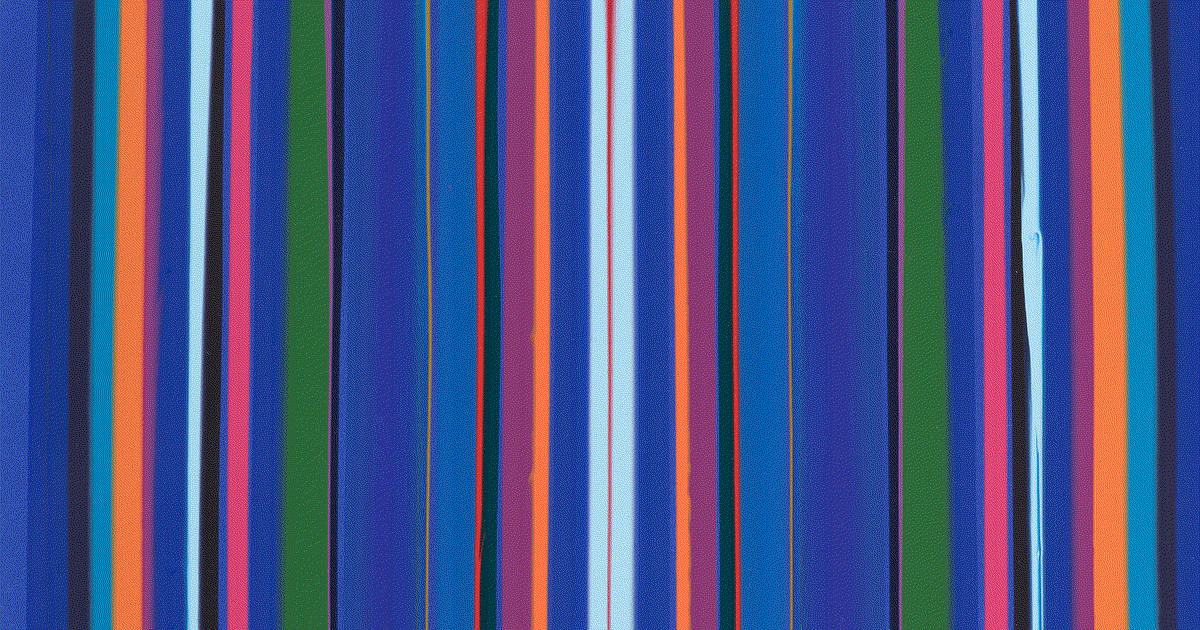
Among the contemporary parallels listed by the gallery are Barceló’s sinuous lines, which are said to recall Denis’s lampshade designs inspired by Japanese printmaking, and Dzama’s rich surfaces, which are compared with Nabi approaches to texture. Davenport’s attention to colour relationships is placed beside Filiger’s chromatic studies, while Arpéa and Rothenstein’s landscapes are linked to Vallotton’s paysage composé approach to sunsets and nocturnal scenes. Réau and Verdier are presented as extending Vuillard’s conception of a world in which interior experience and external reality remain in dialogue.
Waddington Custot says 'The Nabi Shock' continues a revival of interest in the movement, noting major museum exhibitions in Europe and the United States in recent years and the gallery’s own presentation of the Nabis at Frieze in London in 2024 and at the gallery in Paris in 2026. The London exhibition opens on 24 June and runs until 12 September 2026 at Waddington Custot, 11 Cork Street.