 Image: Hungarian National Gallery, Budapest
The Hungarian National Gallery will present 'A vágyott remekmű. Gruber Béla (1936–1963) művészete' from June 4 through August 30, 2026, in Budapest. The exhibition focuses on Gruber Béla, described by the museum as a standout talent in 20th-century Hungarian painting and one of the most promising figures of the generation that began working in the 1960s. The show is scheduled for the gallery’s third floor at Szent György tér 2.
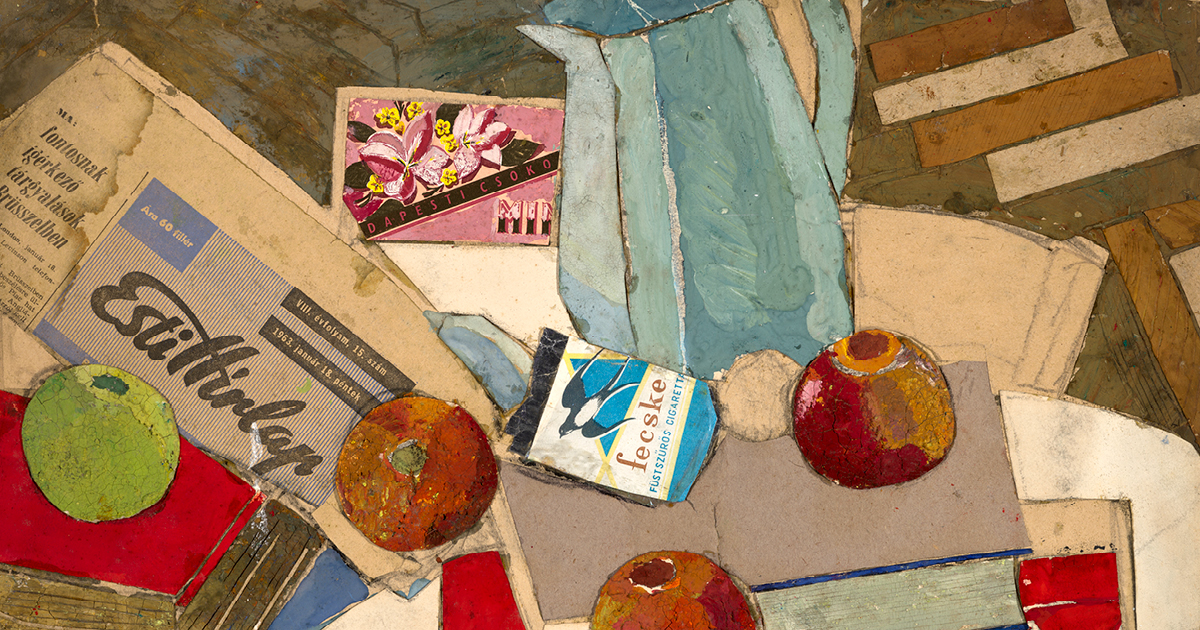
According to the museum’s exhibition materials, Gruber’s life was brief but intensely productive: he died young and left behind more than 1,000 works despite painting for only a few years. The exhibition brings together the strongest works preserved in the Hungarian National Gallery and supplements them with pieces from domestic public and private collections. The display is organized around still lifes, works depicting barges, portraits, self-portraits and the artist’s studio.
The museum says Gruber’s innovative working method influenced his contemporaries. His practice combined different techniques, from charcoal drawing and collage to pastel works. His formal language was described in his own time as “constructive,” a term the gallery uses to refer to the reduction of forms and compositions into spare geometric shapes. The artist’s palette and brushwork are also highlighted as central to his recognizable style, marked by vivid color.
At the center of the exhibition is Gruber’s diploma work, the large 1962 painting 'Festőműterem'. The museum describes the unfinished canvas as his main work, because it brings together the motifs that define his career: still life, the barge image, the placement of human figures within the composition, his distinctive painting technique and his characteristic use of color. The studio scene presents the artist’s models, relatives and friends as if on a stage, and the painting includes another work on an easel, making the image function as a painting within a painting.
The exhibition is divided into five thematic sections: 'Csendéletek', 'Modellek', 'Uszály', 'Önarcképek' and 'Festőműterem'. The museum’s text also notes that a previously unseen short film will be shown in which endocrinologist Endre Czeizel speaks about Gruber’s fate. In another recorded contribution, art historian Gábor Bellák has written on Gruber for the project materials.
The exhibition is curated by art historians Marianna Kolozsváry and Zsolt Petrányi. The gallery says the show can be visited with the MNG annual pass, and it is also accompanied by videos, short exhibition films and online ticketing information. Curatorial guided tours are being offered, with Marianna Kolozsváry leading the tour program associated with the exhibition.