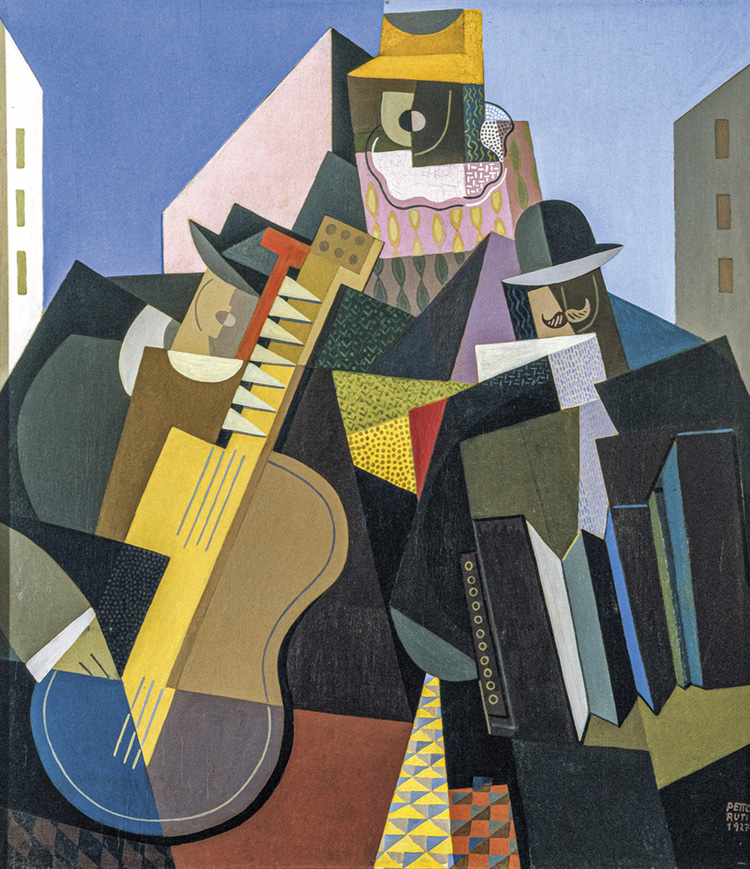
 Image: Emilio Pettoruti, 'The People’s Song' (1927). Museum of Latin American Art of Buenos Aires, Buenos Aires
Two works from the collection of the Museum of Latin American Art of Buenos Aires are featured in a new Google Arts & Culture story devoted to tango, placing Emilio Pettoruti and Pablo Curatella Manes at the center of a visual account of one of the Río de la Plata region’s defining cultural forms. The online feature, 'Emilio Pettoruti: Cubism and the popular tango tradition', is credited to MALBA and presents tango as a 19th-century cultural manifestation that emerged in Argentina and Uruguay through the fusion of Afro-American, Creole and European contributions.
The MALBA works highlighted are Pettoruti’s 'The People’s Song' (1927) and Curatella Manes’s 'The Guitar Player' (1924). According to the story, both artists engaged tango themes through modernist visual language, with Pettoruti especially interested in tango orchestras and Curatella Manes producing a series of sculptures dedicated to tango musicians. The feature places these works in dialogue with the broader history of tango imagery in regional art.
Google Arts & Culture describes the story as showing how the Argentine avant-garde captured what it calls the essence and origins of a folk passion. The text notes that tango scenes were portrayed by several important artists from the region, including Rafael Barradas and Antonio Berni, situating Pettoruti and Curatella Manes within a wider artistic tradition rather than as isolated examples.
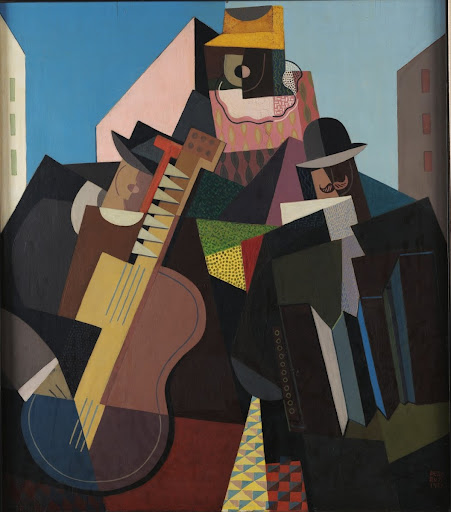
Pettoruti, born in La Plata in 1892 and later based in Paris, is represented in the story through 'The People’s Song', where, the text says, a trio of guitarist, bandoneon player and singer appears against an urban backdrop. The work is described as combining accentuated geometrisation of forms with flat colors, a formal language the story links to Cubist practice and to Pettoruti’s affinity with Juan Gris, whom he met in Paris in 1924.
Curatella Manes, born in La Plata in 1891 and later based in Buenos Aires, is identified in the story as having made a series of tango-related sculptures, including 'The Accordion Player' (1922). Alongside 'The Guitar Player', the work underscores the feature’s focus on how tango circulated through sculpture as well as painting, and how popular music motifs entered avant-garde form.
The story is hosted on Google Arts & Culture and attributed to MALBA – Museo de Arte Latinoamericano de Buenos Aires. It sits within the platform’s wider Tango project, which the museum’s own announcement identifies as the section 'El Abrazo: el Alma del Tango', and which presents tango as a phenomenon that reshaped Argentine and global culture before being recognised as Intangible Cultural Heritage of Humanity. The related-theme section frames the dance through its street roots, global impact and living heritage, while the featured MALBA materials remain centered on the collection works and their place in Argentine modern art.