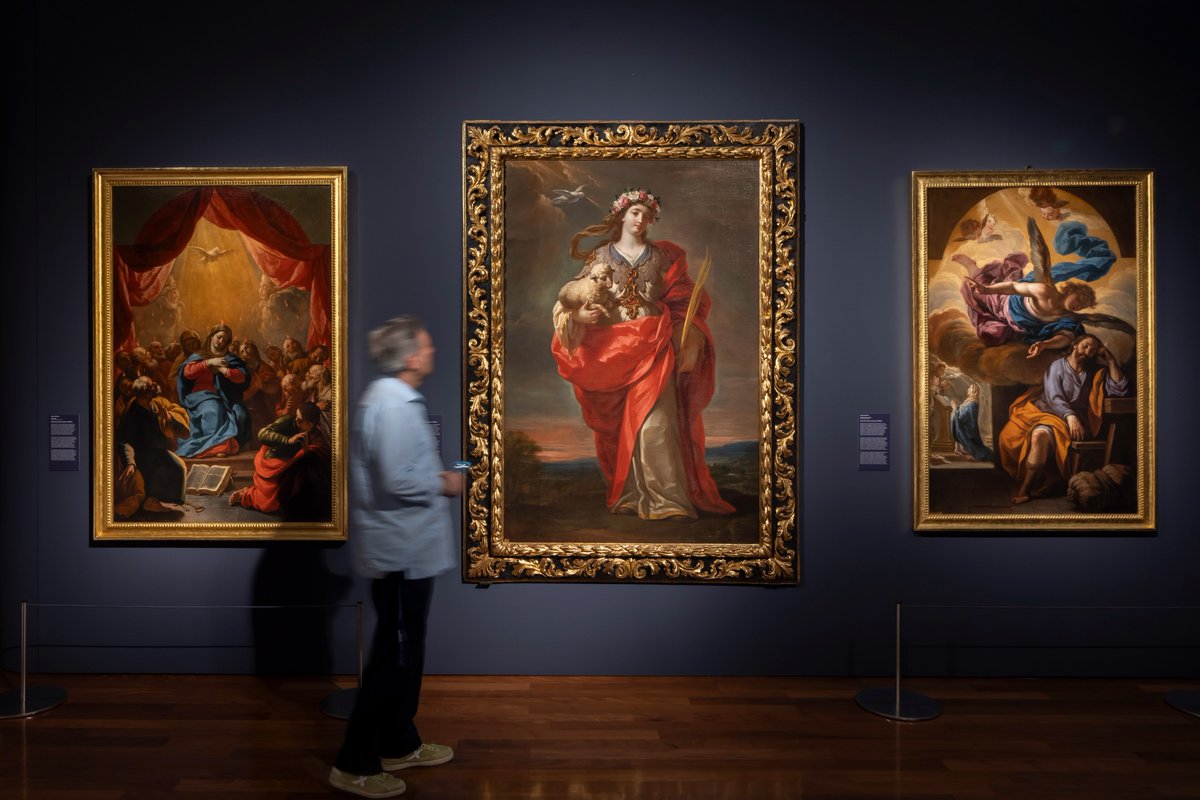
 Image: Museu de Belles Arts de València, Madrid
Museu de Belles Arts de València has presented 'Antonio Palomino i la nit barroca', described as the first monographic exhibition devoted to the pictorial and intellectual work of Antonio Palomino, the Baroque painter and treatise writer. The museum’s announcement positions the project as a focused look at an artist better known for his frescoes, while highlighting the exhibition’s emphasis on his easel painting.
The institution’s communication says the show vindicates, in particular, the easel painting of the Cordovan master. That focus gives the exhibition a distinct scholarly and curatorial angle: rather than centering only on the works for which Palomino is most widely recognized, it draws attention to the broader range of his production and to his role as both artist and thinker in the Baroque period.
Palomino’s reputation has often been tied to large-scale fresco decoration, and the museum’s framing suggests that 'Antonio Palomino i la nit barroca' is intended to rebalance that perception. By placing his pictorial output alongside his intellectual contribution, the exhibition presents him not only as a practitioner of the Baroque but also as a writer whose ideas formed part of the period’s artistic culture.
The presentation took place through the museum’s social media announcement, which identified the exhibition as a major first for the institution. No further exhibition details, dates, or accompanying programme information were included in the source material provided, and the museum’s statement did not specify the venue beyond the institution itself.
Even in that brief form, the announcement marks a notable institutional effort to reassess a significant Baroque figure through the lens of painting as well as theory. The title 'Antonio Palomino i la nit barroca' signals that the project is framed around both the artist and the cultural atmosphere of the Baroque, with the museum using the presentation to foreground Palomino’s easel paintings within that broader historical context.