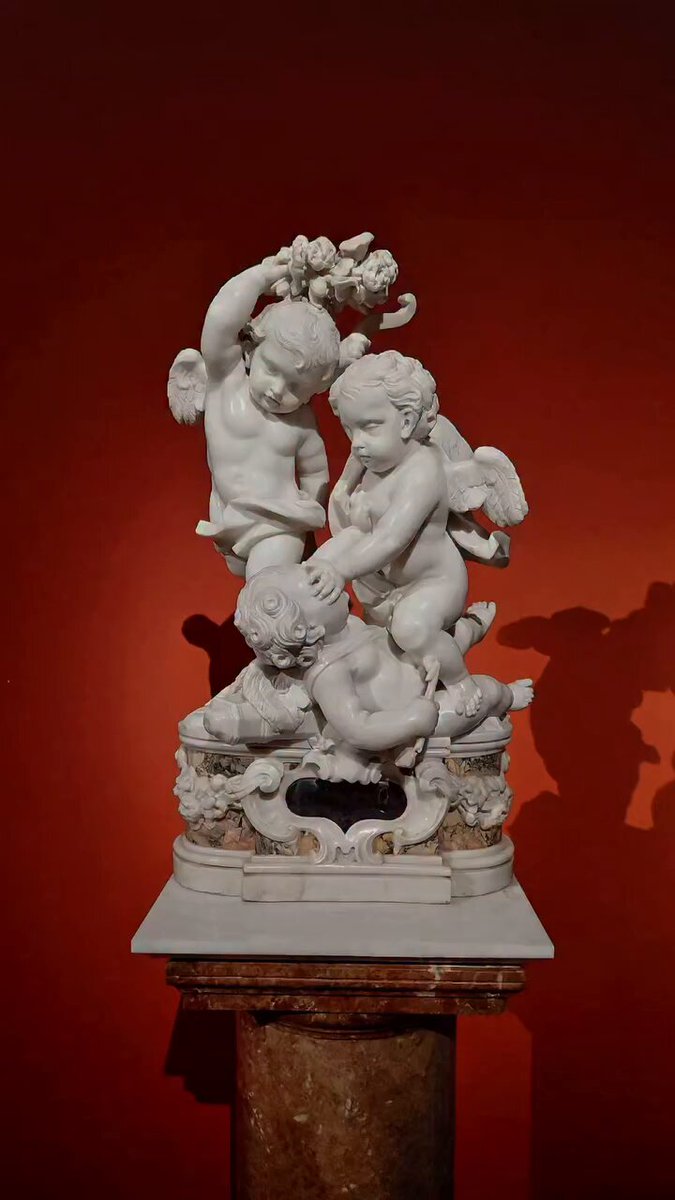
 Image: Museo di Capodimonte, Naples
Museo di Capodimonte has drawn attention to a lesser-known side of Giuseppe Sanmartino, the sculptor best known for the dramatic ‘Cristo velato’, by spotlighting ‘Amorini in lotta’ (also described as ‘Lotta di putti’), a work in the museum’s collections dated circa 1765 to 1770. The museum framed the piece as an example of “pure Rococo grace,” contrasting its lightness with the monumental intensity associated with Sanmartino’s most famous sculpture.
The institution’s post presents the work as part of Capodimonte’s holdings rather than as a temporary exhibition announcement. No separate event, display opening or public programme is specified in the source material, but the museum’s emphasis places the sculpture back into view as an important example of Sanmartino’s range. In the brief caption, Capodimonte underlines that the artist’s hand could produce not only imposing marble works but also an “anima leggera e virtuosa,” or light and virtuosic spirit.
Sanmartino is one of the major figures of eighteenth-century Neapolitan sculpture, and references to his ‘Cristo velato’ have long tended to dominate public recognition of his work. Capodimonte’s message shifts that focus to a more playful Rococo idiom, using the title ‘Amorini in lotta’ to identify a group of putti locked in struggle. The museum gives the date range as circa 1765-1770, situating the piece toward the later phase of the artist’s career.
The post does not add curatorial interpretation beyond that contrast, nor does it specify the sculpture’s medium, dimensions or current installation context. Even so, the wording makes clear that the work belongs to the museum’s collection and is being presented as evidence of Sanmartino’s versatility. By invoking both the dramatic and the graceful, the museum sets up a concise reading of the artist that extends beyond a single celebrated masterpiece.
Capodimonte’s note is brief, but it places the sculpture within the broader identity of the museum’s collection, which includes works that help map the diversity of Neapolitan art and sculpture. Here, the emphasis is squarely on Sanmartino’s ability to move between the monumental and the delicate, with ‘Amorini in lotta’ standing as the example offered to viewers.
The work is identified by the museum as ‘Amorini in lotta’ or ‘Lotta di putti’, dated around 1765-1770, in the collections of Museo di Capodimonte.