 Image: Getty Villa, Los Angeles
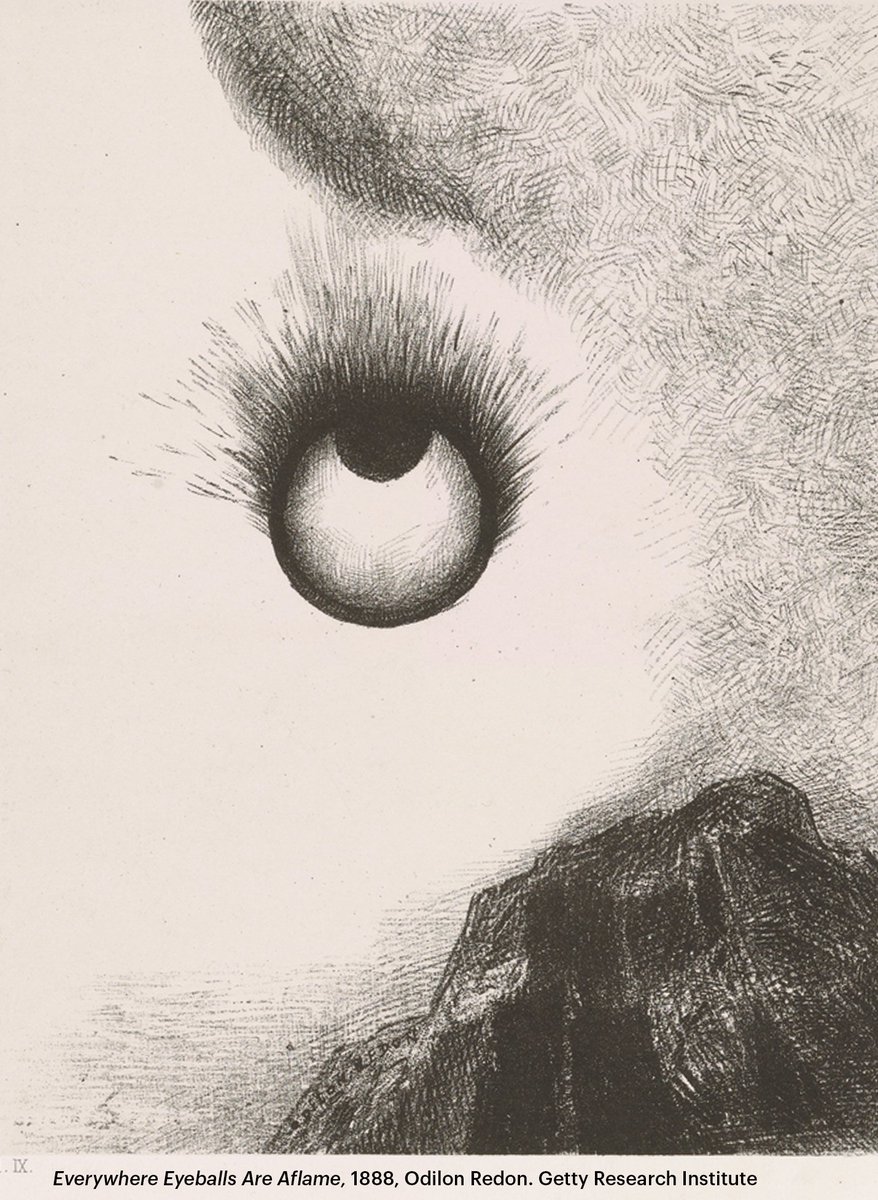
The Getty Villa has highlighted the early career of Odilon Redon, the French artist whose shadowy charcoal drawings and black-and-white lithographs helped define a distinctive body of work he called 'noirs'. In a social post, the museum described Redon (1840–1916) as a precursor to the Surrealists and pointed to the fantastical, dark imagery that marked his beginnings as an artist.
Redon’s early work occupies an important place in the history of modern art because it bridges 19th-century symbolism and later avant-garde experimentation. The Getty Villa’s brief note focuses on the atmospheric qualities of those early drawings and lithographs, emphasizing the contrast between the black-and-white format and the imaginative subjects Redon pursued. By identifying him as a precursor to the Surrealists, the museum places those works within a longer art-historical lineage that reaches into the 20th century.
The museum’s reference to Redon’s 'noirs' also underscores the significance of medium in his practice. Rather than beginning with brightly colored canvases, Redon gained recognition through works built from charcoal, lithography, and a restricted tonal range. That black-and-white language gave his imagery a dreamlike quality that has remained central to how his art is discussed and collected.
The Getty Villa, part of the Getty Museum in Los Angeles, often uses its social channels to present focused reminders of artists, objects, and art-historical ideas. In this case, the post is centered on Redon alone, without announcing an exhibition, loan, or public program. The institution’s message serves as a concise spotlight on an artist whose early production is frequently cited for its haunting mood and inventive visual imagination.
Redon was born in 1840 and died in 1916, and the Getty Villa’s framing situates his career in relation to the broader shift from 19th-century artistic traditions toward modernist approaches. The emphasis on his charcoal drawings and lithographs suggests an interest in the foundations of his reputation rather than on his later work in color, which came after the black-and-white phase that he named 'noirs'. The museum’s note keeps the focus on those formative years and the aesthetic vocabulary they established.
No exhibition dates or related events were included in the post, which instead offered a compact art-historical cue about Redon’s early practice and its place in the development of modern art.