 Image: MUŻA, Valletta
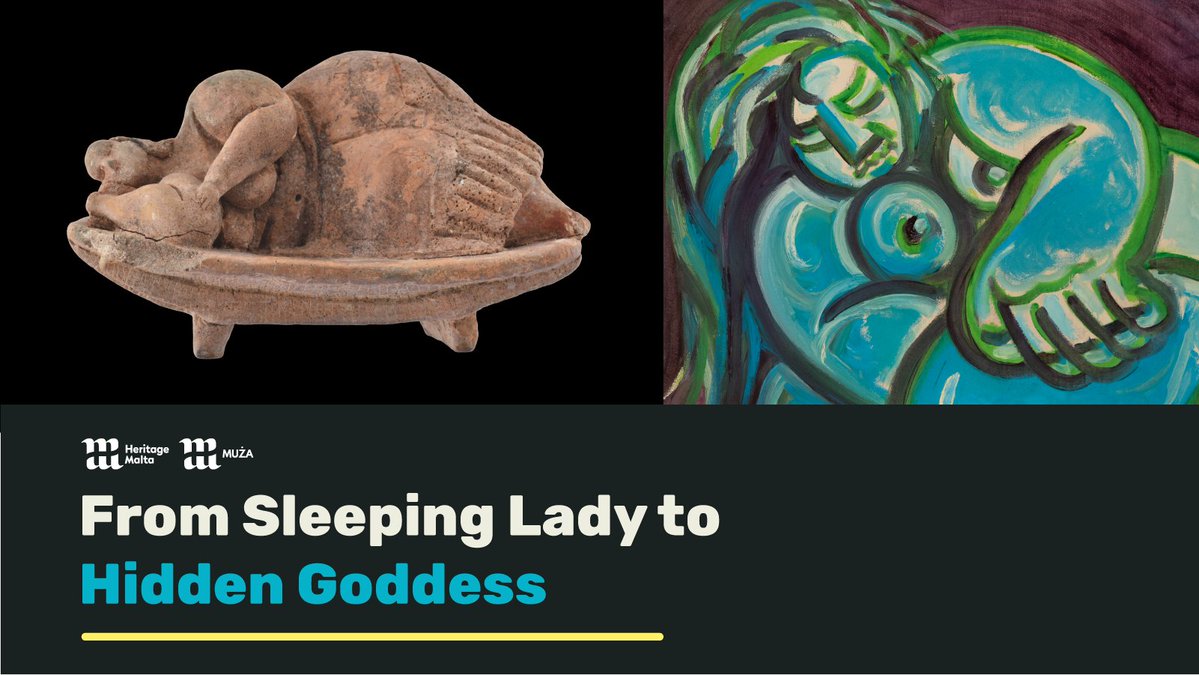
A new exhibition at Malta’s National Museum of Archaeology is presenting Giorgio Preca’s artistic response to one of the island’s best-known ancient figures, the clay figurine commonly called the ‘Sleeping Lady’ from the Ħal Saflieni Hypogeum. The museum is showing ‘Hidden Goddesses – Unseen Paintings by Giorgio Preca’, which focuses on Preca’s transformation of that prehistoric image into a modern artistic vision.
The announcement frames the exhibition around the encounter between archaeology and painting, placing Preca’s work in direct conversation with the symbolic power of the ‘Sleeping Lady’. The figurine, described in the source text as an iconic clay object from the Ħal Saflieni Hypogeum, has long been among Malta’s most recognizable ancient artefacts, and the exhibition takes that familiar form as the starting point for Preca’s reinterpretation.
Little additional detail is provided in the source material about the selection of works, display design or the curatorial structure, but the exhibition title itself indicates a focus on paintings that have not previously been widely seen. The phrasing ‘Unseen Paintings’ suggests an opportunity to encounter material from Preca’s practice that is being brought into public view through the museum presentation.
MUŻA, the National Community Art Museum, is the institution associated with the news item, but the exhibition notice itself identifies the National Museum of Archaeology as the venue. On the basis of the supplied material, the event should be understood as taking place at that archaeological museum rather than at MUŻA.
Preca’s reinterpretation is presented as a contemporary artistic vision shaped by an ancient Maltese object, linking the country’s prehistoric heritage with later visual culture. The source material does not provide biographical background on the artist or explain when the works were made, so the exhibition can only be described from the information given: a focused presentation of paintings inspired by the ‘Sleeping Lady’.
The notice invites visitors to see how Giorgio Preca transformed the ancient figure into a new pictorial form at ‘Hidden Goddesses – Unseen Paintings by Giorgio Preca’, on view at the National Museum of Archaeology.