 Image: New Orleans Museum of Art
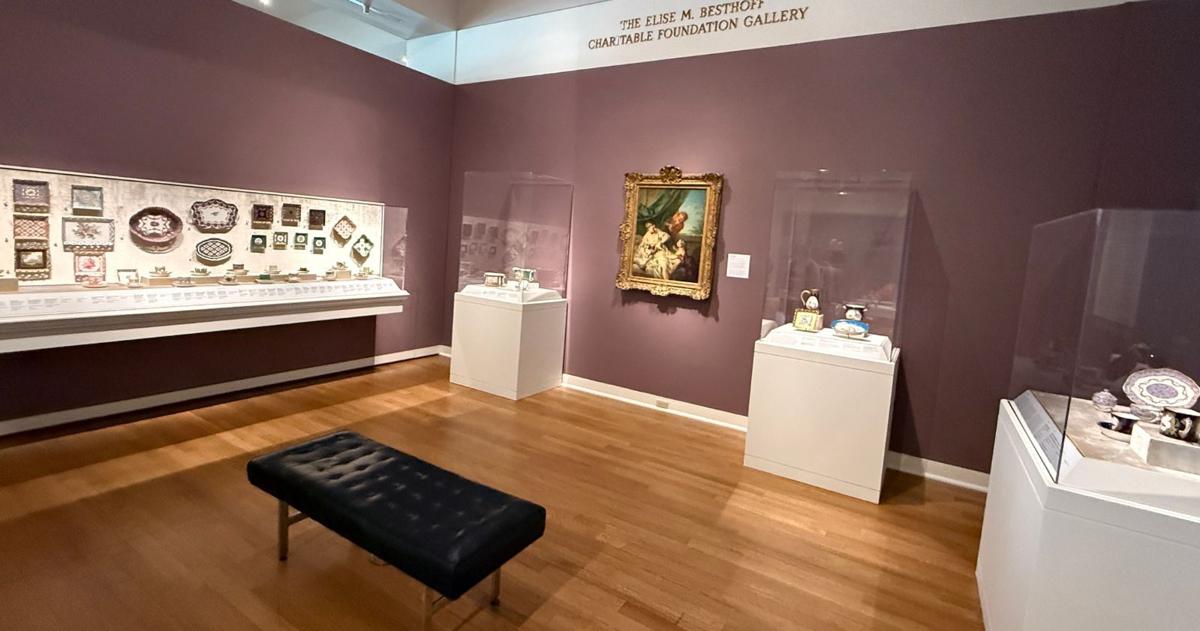
The New Orleans Museum of Art is using a private collection to tell a broader story about French royal taste, craft and survival. “Sèvres Magnifique: French Porcelain from the Collection of Thomas B. Lemann” remains on view at NOMA through Jan. 3, 2027, presenting 75 pieces from the celebrated French porcelain factory that were made for France’s royal household in the mid-18th century and somehow survived the French Revolution.
The exhibition brings together trays, tea sets, plates and bowls produced by the Sèvres factory between 1758 and 1766, a period when the Vincennes-based workshop had moved closer to Versailles and gained royal patronage. According to NOMA curator Mel Buchanan, the factory’s rise helped turn it into a defining emblem of France, with King Louis XV and, more directly, Madame de Pompadour playing an important role in its support. The show frames these porcelain works not just as luxury objects, but as evidence of the court culture in which they were used.
That context matters because the objects were made for daily life at court, even if daily life in that setting was highly ritualized. Buchanan described them as “used objects” within an elite world, a reminder that porcelain was both functional and ceremonial. Their survival across more than two centuries is central to the exhibition’s appeal: the factory endured the Revolution, the works endured political upheaval, and the firm still operates today. For museum visitors, the survival of the pieces gives the exhibition a direct material link to the ancien régime and its collapse.
A notable feature of the display is the way it restores individual artistic credit to the people who painted and gilded the porcelain. Thanks to meticulous factory records, many of the Sèvres artists can be identified in the exhibit text, a rare circumstance for objects made in a workshop system. Buchanan noted that when visitors turn the ceramics over, “the answer is on the back,” referring to the marks that identify the factory and, at times, the artist. Those records have also made it possible to consult the factory archive today, where pay schedules for workers in the 1760s can still be examined by appointment.
The show also reflects the collecting priorities of Thomas B. Lemann, a New Orleans native whose collection was donated to NOMA after his death in 2023 at age 97. Buchanan said Lemann valued pristine condition, and that concern aligns closely with museum standards for preservation. His interest in Sèvres appears to have been shaped in part by the factory’s documentation, which Buchanan suggested may have appealed to him as a historian because the makers were, in effect, their own historians. The collection has been displayed at NOMA before, but anonymously; this presentation gives it a named collector, a defined historical focus and a fuller interpretive frame.
Lemann’s biography, as cited by Buchanan, adds another layer of significance. She described him as a codebreaker during World War II, a lawyer by profession and a voracious reader, traveler and art historian in spirit. The exhibition therefore joins object history with collecting history, showing how a New Orleans figure assembled works with deep ties to French court culture and then ultimately made them public. In a museum field that increasingly values provenance, documentation and the social lives of objects, “Sèvres Magnifique” offers all three in a single display.
The exhibition is on view at NOMA, which is located at One Collins C. Diboll Circle in City Park, New Orleans. Its long run through January 2027 gives the museum an extended opportunity to situate decorative arts within wider narratives of French history, craftsmanship and collecting. For a regional museum with a national and international audience, the show underlines how a private Louisiana collection can illuminate the circulation of elite European art objects and the endurance of the institutions that made them.