 Image: MUŻA, Valletta
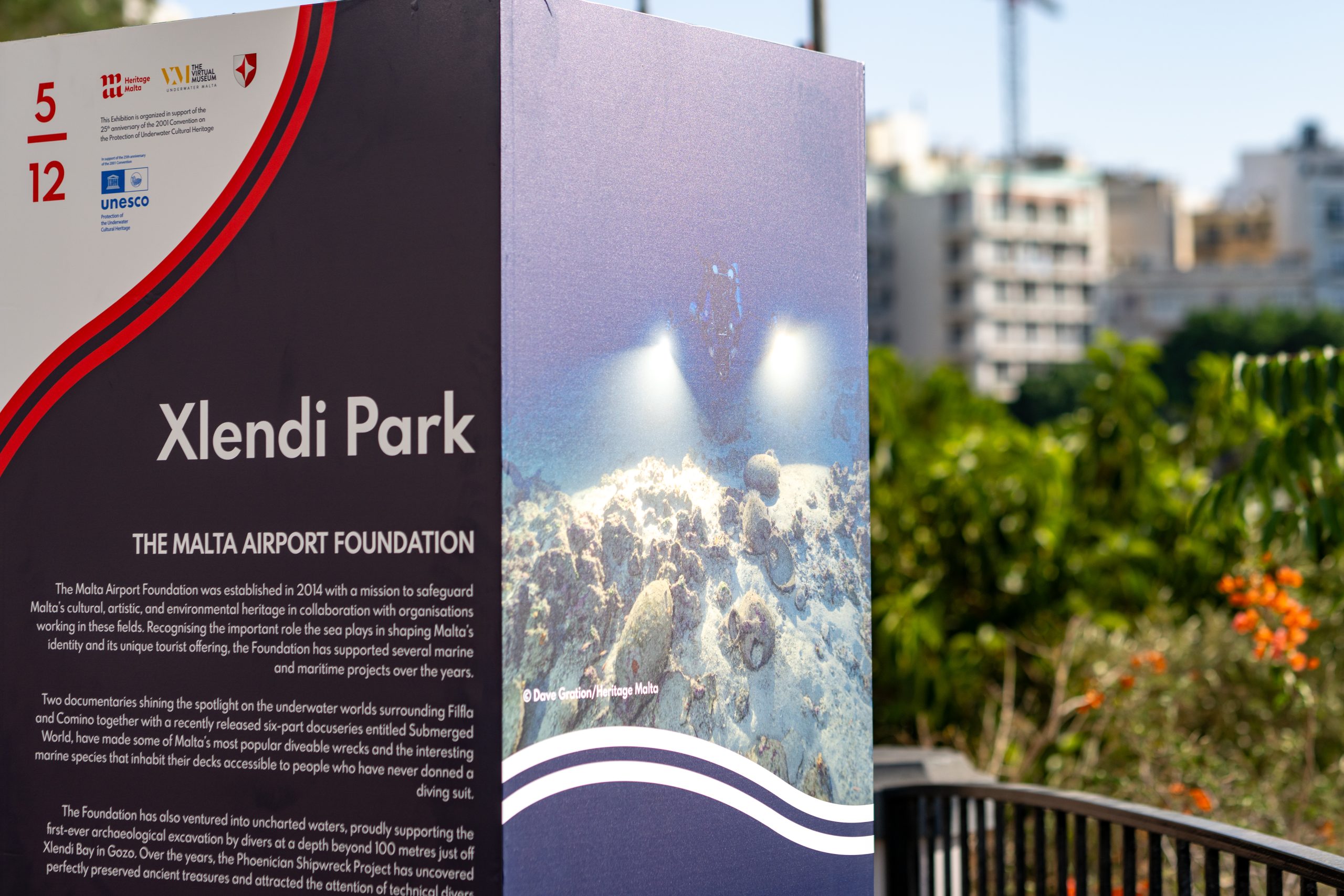
Heritage Malta has opened a new outdoor exhibition on the Sliema waterfront focusing on Malta’s underwater cultural heritage, bringing shipwrecks, aircraft, artefacts and marine ecosystems into public view through the summer. The display, titled 'Celebrating Malta’s Underwater Cultural Heritage', runs until the end of September 2026 and is presented by Heritage Malta’s Underwater Cultural Heritage Unit.
The exhibition marks two anniversaries at once: 25 years since the UNESCO Convention on the Protection of the Underwater Cultural Heritage entered into force, and five years since Malta ratified the convention. Heritage Malta says the project invites visitors to explore how the island protects and studies its submerged heritage, using the waterfront setting to frame the sea as part of the country’s archaeological record.
According to the museum authority, the exhibition traces Malta’s engagement with underwater remains from the 17th-century observations of Ġan Franġisk Abela to more recent milestones in underwater archaeology. Among those milestones is the establishment of what Heritage Malta describes as the world’s first deep-water archaeological park off Xlendi Bay in Gozo. The display also links research history to present-day practice, presenting underwater archaeology as a field shaped by long-term study, fieldwork and conservation.
The material on view includes artefacts recovered from beneath the waves that illustrate the range of material preserved underwater. Heritage Malta highlights 1st- and 2nd-century B.C. amphorae and their stoppers, once used to transport wine and oil across the Mediterranean; a decorated 'albarello', a tin-glazed earthenware jar associated with apothecaries and salvaged from an early 15th-century Gozo shipwreck; and First World War perfume bottles that were still holding their scent after a century underwater. The exhibition uses these objects to point to trade, everyday life and conflict in Malta’s maritime past.
The display also addresses threats to underwater cultural heritage, including coastal development, dredging, ghost gear and pollution. Heritage Malta sets out responses such as systematic recording and deep-water diving for less invasive research, and points to the WreckLife project as an example of innovation and public engagement supporting site protection.
The exhibition was officially launched by Heritage Malta, with Chief Operations Officer Kenneth Gambin saying it reflects the agency’s commitment to the sea as a cornerstone of Maltese identity and signals a stronger presence in the region. Professor Timmy Gambin, head of Heritage Malta’s Underwater Cultural Heritage Unit, said the convention anniversary should also be seen in the context of collaboration, shared expertise and research that shaped Malta’s role in underwater archaeology. From Friday 31 July to Sunday 2 August, between 6pm and 11pm, the unit will also have an information kiosk on site offering answers to visitor questions and 360-degree virtual reality dives into underwater heritage sites around Malta and Gozo.