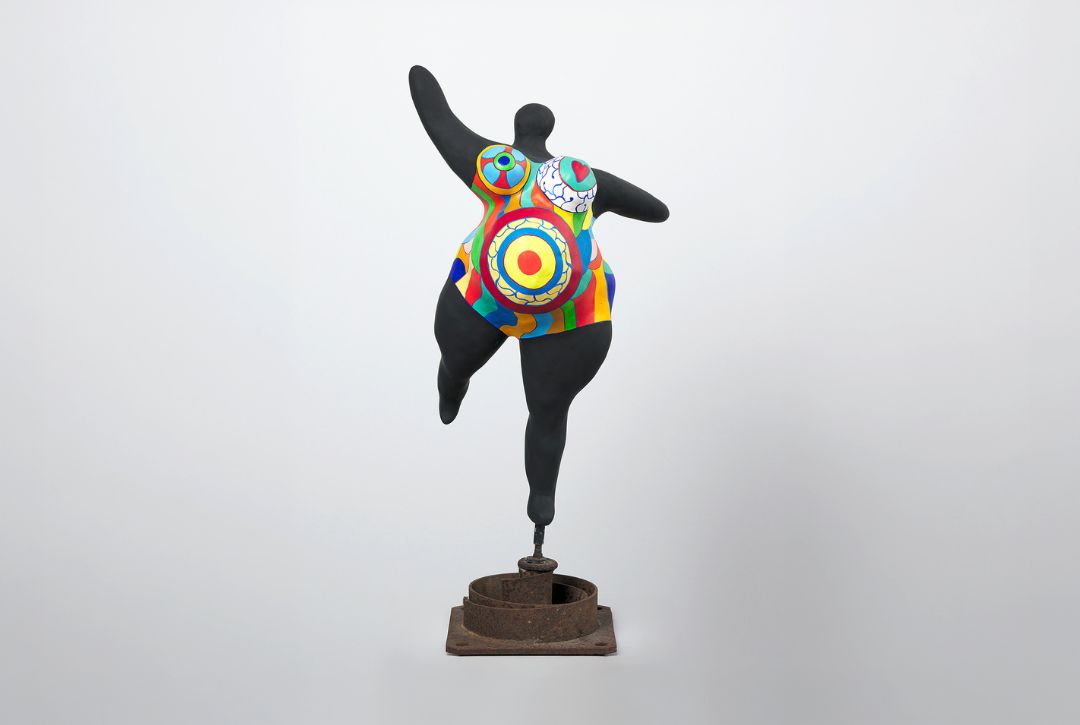
 Image: Kunsthalle Mannheim, Mannheim
Kunsthalle Mannheim is presenting a new exhibition, “Radikal. Real.,” that traces the development of Nouveau Réalisme in the 1960s through works by some of the movement’s best-known artists. The show brings together key pieces by Arman, César, Yves Klein, Mimmo Rotella, Daniel Spoerri, Niki de Saint Phalle, and Jacques Villeglé, offering an overview of a movement that deliberately blurred the boundary between art and reality.
The exhibition focuses on how these artists transformed everyday materials, objects, and gestures into art, and how their work embraced effects such as colorful explosions and frozen moments. By gathering figures associated with Nouveau Réalisme under one roof, Kunsthalle Mannheim is framing the movement not simply as a historical chapter, but as a force that reshaped artistic language in the 1960s.
Nouveau Réalisme emerged at a moment when artists were increasingly responding to the textures of contemporary life rather than traditional studio practice alone. The works named in the exhibition announcement point to that shift: found materials, mass culture, bodily presence, destruction, and accumulation all become part of the artistic field. In that sense, “Radikal. Real.” positions the movement as an early and influential challenge to inherited ideas of what an artwork could be.
The exhibition runs from July 3 to October 11, 2026. Alongside the display, Kunsthalle Mannheim is planning public programs that include guided tours, workshops, a film screening, and a French-language tour, extending the exhibition beyond the gallery space and into a broader educational and public-facing context.
For today’s art world, the show matters because Nouveau Réalisme remains a key reference point for later practices that work with objects, recycling, performance, and the visual culture of everyday life. A focused presentation at a major museum such as Kunsthalle Mannheim gives audiences a chance to revisit the movement’s central ideas and to consider how its radical merging of art and reality still resonates in contemporary debates about materiality and representation.
By foregrounding artists such as Klein, Spoerri, Villeglé, and others, Kunsthalle Mannheim is also highlighting the international scope and diversity of the movement’s approaches. “Radikal. Real.” places historical works in an institutional setting that invites comparison, reflection, and renewed attention to a period when European art was actively redefining its relationship to the world around it.