 Image: Carmen Thyssen Museum, Málaga
The Museo Carmen Thyssen Málaga will open its summer programme to flamenco with two courtyard performances on July 10 and July 31, both scheduled for 9 p.m. Under the title Flamenco. Vuelta a las raíces, the museum is framing the concerts as a return to the core forms of the genre, with a programme built around some of flamenco’s most recognisable palos, including martinete, bulerías, tangos and alegrías.
The announcement places the performances in the museum’s Patio, turning one of the institution’s public spaces into a seasonal stage for live dance and music. According to the museum, the evenings are part of its summer programming and are designed as a “passionate journey” through flamenco’s essence, with references to the sound of castanets and a solo of footwork accompanying the main styles on view. The museum says schedules and tickets are available on its website.
The performances will feature the flamenco company of Antonio de Verónica and Saray Cortés, a group the museum describes as established since 2005. In its event notice, the institution notes that the company has shared stages with several well-known flamenco artists, including Canales, La Farruca, Estrella Morente, Antonio El Pipa and Farruquito. That lineage signals the museum’s intention to place the evenings within a recognised professional flamenco context rather than a general entertainment programme.
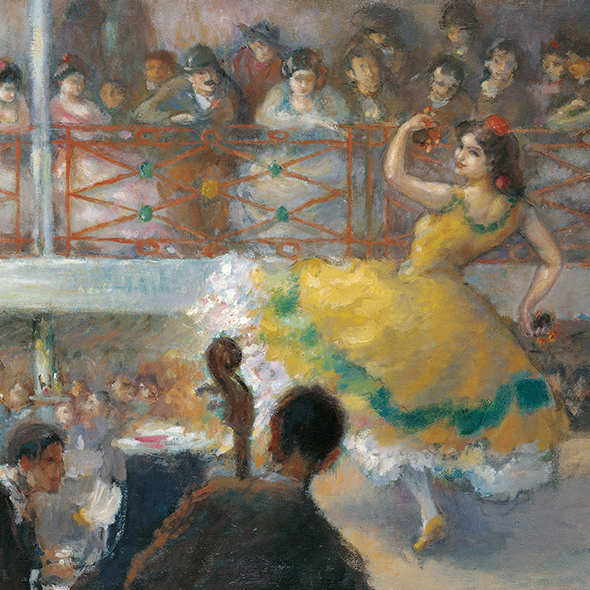
The choice of flamenco also resonates with the museum’s collection. The event page points to Ricard Canals’ Baile Flamenco, a work in the Carmen Thyssen-Bornemisza Collection, as related content. By linking the live performances to an artwork in the permanent collection, the museum is underscoring a dialogue between its exhibition programme and Spain’s performing arts heritage, using the courtyard event to extend the collection beyond the galleries.
For the Carmen Thyssen Museum, which regularly combines visual art with cultural programming, the flamenco nights reinforce a broader institutional role: not only preserving and displaying paintings, but also activating heritage forms in public space. The courtyard setting matters because it keeps the event rooted in Málaga while also making the museum a site of live cultural production, rather than a purely contemplative venue.
The two dates may also be read as part of a wider museum trend in Spain, where institutions increasingly use summer events to connect collections, place, and audience through performance. Here, the emphasis on “returning to the roots” gives the programme a curatorial frame: flamenco is presented not as a detached spectacle, but as a living tradition that can be approached through its foundational forms and their relationship to the museum’s own holdings.