 Image: Museo Diocesano Carlo Maria Martini, Milan
Chiostri di Sant’Eustorgio in Milan is presenting ‘Werner Bischof. Point of View’, a major survey of the Swiss photographer whose work is described by the museum as one of the most important bodies of photojournalism of the 20th century. The exhibition runs from 19 May to 18 October 2026 and is presented by the Museo Diocesano Carlo Maria Martini in Milan. It marks 110 years since Bischof’s birth and brings together 200 original vintage photographs, along with contact sheets and a documentary.
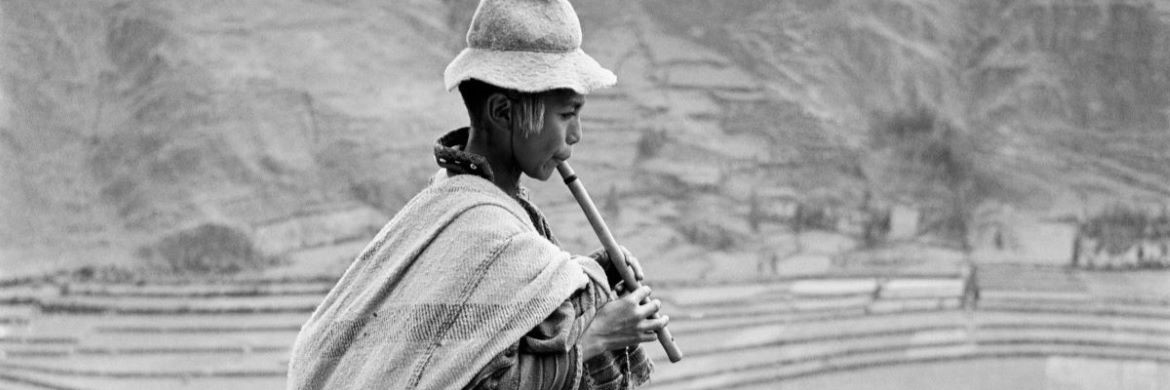
The exhibition is structured around four chronological sections that trace the key phases of Bischof’s career. ‘Svizzera 1932-1944’ focuses on his formation and early experiments. ‘Europa 1945-1950’ gathers images documenting a Europe devastated by the Second World War, a subject that deeply shaped his outlook and practice. ‘Asia 1949-1953’ includes reportage made in India, Japan, Korea, Hong Kong and Indochina. The final section, ‘Nord e Sud America 1953-1954’, covers the last phase of his work and his visual explorations in the American continents.
According to the museum, Bischof joined Magnum Photos in 1949 and developed a strongly humanistic approach to photojournalism, combining documentary rigour with poetic intensity. The exhibition text emphasizes the empathy, attention and respect for human dignity that shaped his images, and notes that his photographs continue to feel strikingly current. His practice also extended beyond the camera: the exhibition notes that he kept notes, made quick sketches and drawings, and used these to enter into closer understanding with the places, events and people he photographed.
The presentation places particular weight on Bischof’s formal discipline. The museum describes his work as characterized by immediate expressive force, balanced compositions and carefully graded black-and-white tones. These qualities helped earn him critical recognition during his lifetime and, unusually for a photojournalist, the label of an “artist.” The exhibition frames that status through the range of material on view, moving from finished vintage prints to contact sheets and moving image material.
The show’s title, ‘Point of View’, also signals the curatorial emphasis on perspective as both a visual and ethical issue. Rather than isolating individual images, the display follows Bischof across regions and years, allowing visitors to see how his approach evolved from Switzerland to postwar Europe and then across Asia and the Americas. The museum’s account presents that sequence as the backbone of a career compressed into just over two decades, from his birth in Zurich in 1916 to his death in Trujillo, Peru, in 1954.
Practical information published with the exhibition notes that, for the summer period, the display is accessible in evening hours only, Monday to Sunday from 5.30pm to 10.30pm, with last entry at 10pm, via Corso di Porta Ticinese 95. During these evening hours, admission is offered through the special formulas listed by the museum, including the option combining first drink and exhibition entry. The exhibition is part of the 2026 programme at Chiostri di Sant’Eustorgio and is presented under the curatorship of M. Bischof, A. Holzherr and T. Kuhn.