 Image: Museo delle Porcellane, Florence
The Uffizi is spotlighting Sassetta’s 'Madonna della Neve'.
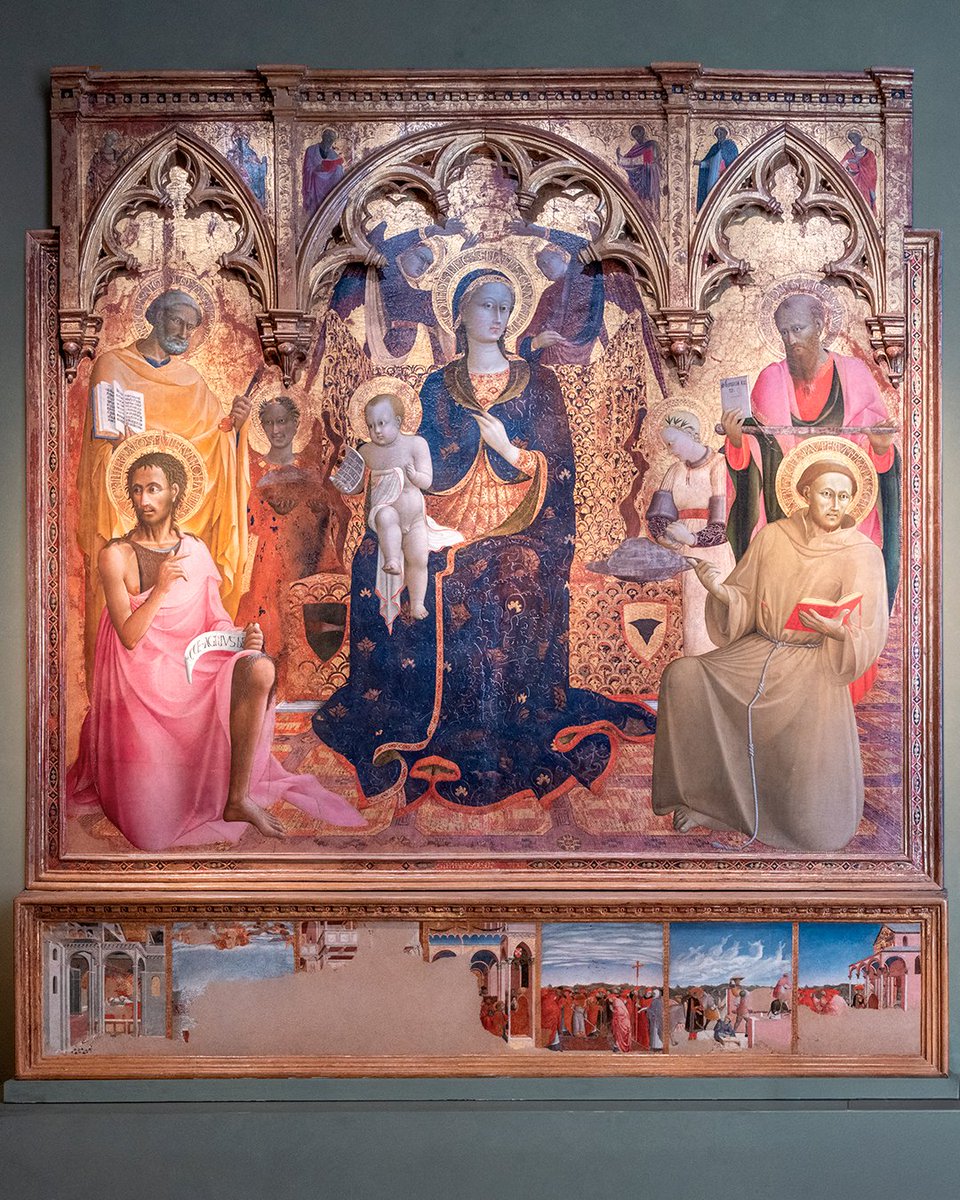
The painting depicts the Virgin enthroned with the Christ Child and crowned by two angels; behind them, one angel holds a tray of snow while another forms a snowball. Its seven-part predella narrates the miracle of the Madonna della Neve, traditionally connected with the founding of Rome’s Basilica of Santa Maria Maggiore after Pope Liberius traced the church’s perimeter in the snow.
Sassetta made the panel in 1432 and is described as one of the most notable Sienese painters of the 15th century. Destined for the Chapel of San Bonifacio in Siena Cathedral, the large altarpiece is described by the Uffizi as a significant example of Sienese Renaissance art and as a transition from the traditional triptych to the square panel, combining echoes of Simone Martini’s Gothic refinement with Masaccio’s Renaissance approach.
The painting was commissioned by Ludovica Bertini, a wealthy widow of the Sienese Turino di Matteo. After her husband’s death, Bertini entered the Franciscan Order, while the two coats of arms on the throne’s base refer to her family and her husband’s family.
From the late 16th century, the painting moved among sites in the Sienese area, including San Galgano and Chiusdino, before the Contini Bonacossi family acquired it in 1936.