 Image: Arthur M. Sackler Gallery, Washington, D.C.
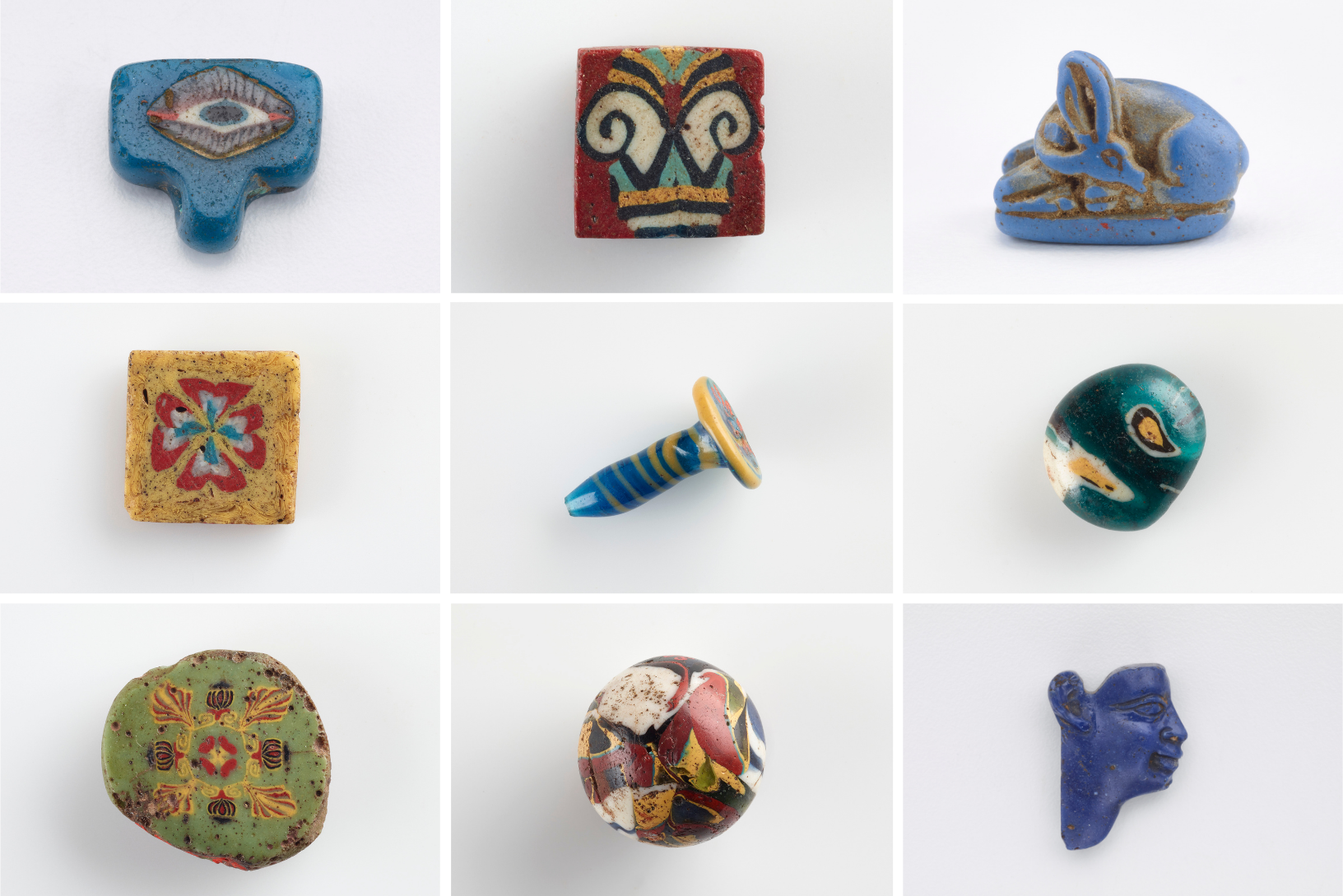
The National Museum of Asian Art has put its ancient Egyptian collection in focus through a digital spotlight that highlights more than one thousand objects spanning as early as 2500 BCE. The museum’s new presentation ranges from tiny glass beads smaller than a centimeter to a portable shrine that carried the god Horus and the royal head of a pharaoh’s statue, underscoring the variety of materials and forms represented in the collection.
Issued under the banner of Arthur M. Sackler Gallery / National Museum of Asian Art, the online feature frames ancient Egypt as a place where many cultures met, including Persian, Greek and Roman. The collection note does not announce a new exhibition in a physical gallery; instead, it directs readers to the museum’s digital resources and object records, using selected artworks and interpretive prompts to introduce the scope of the holdings.
Among the collection themes is the color blue, which the museum says appears frequently in Egyptian material culture. The text explains that ancient Egyptians associated blue with the universe, the sky, water and infinity, and that wearing a blue amulet or using the color was believed to carry special significance. The museum also notes that Egyptians developed the world’s first synthetic blue pigment, turning the spotlight toward the technical sophistication of ancient artisans as well as the symbolic role of color.
The feature also draws on the legacy of museum founder Charles Lang Freer, inviting visitors on a virtual tour of Egypt. According to the museum, Freer learned about ancient Egyptian art during his travels and built a network of connections with art dealers and experts. The digital tour follows his journey with archival photographs and postcards showing major tourist destinations of the early 20th century, and it is paired with a free digital book titled 'A Collector’s Journey: Charles Lang Freer and Egypt'.
Another online section turns to a portable shrine identified in the collection as Egyptian, 305–30 BCE. The museum says priests would use such shrines to carry images of deities inside and outside the temple, and adds that this example was likely assembled from parts of other ancient objects. The text says the shrine was examined with scientific methods to determine how it was made and how it was restored over time.
That examination is presented through X-ray and multispectral imaging, offering a behind-the-scenes look at the object’s construction and later treatment. The shrine is one of several collection items used in the digital feature to connect viewers to scientific analysis, conservation questions and the museum’s holdings of ancient Egyptian art.
The spotlight also points to the visual appeal of Egyptian glass, describing how artisans used it to make beads, ear studs and amulets in a wide range of colors, patterns and shapes. Alongside images of objects such as the 'Head of a king', a 'Bowl with Design of Fish and Lotus', a 'Two-Handled Vessel' and the 'Portable Shrine', the museum invites visitors to explore the collection online and browse the ancient Egyptian art area on its website.