 Image: Casa natal de Pablo Ruiz Picasso, Málaga
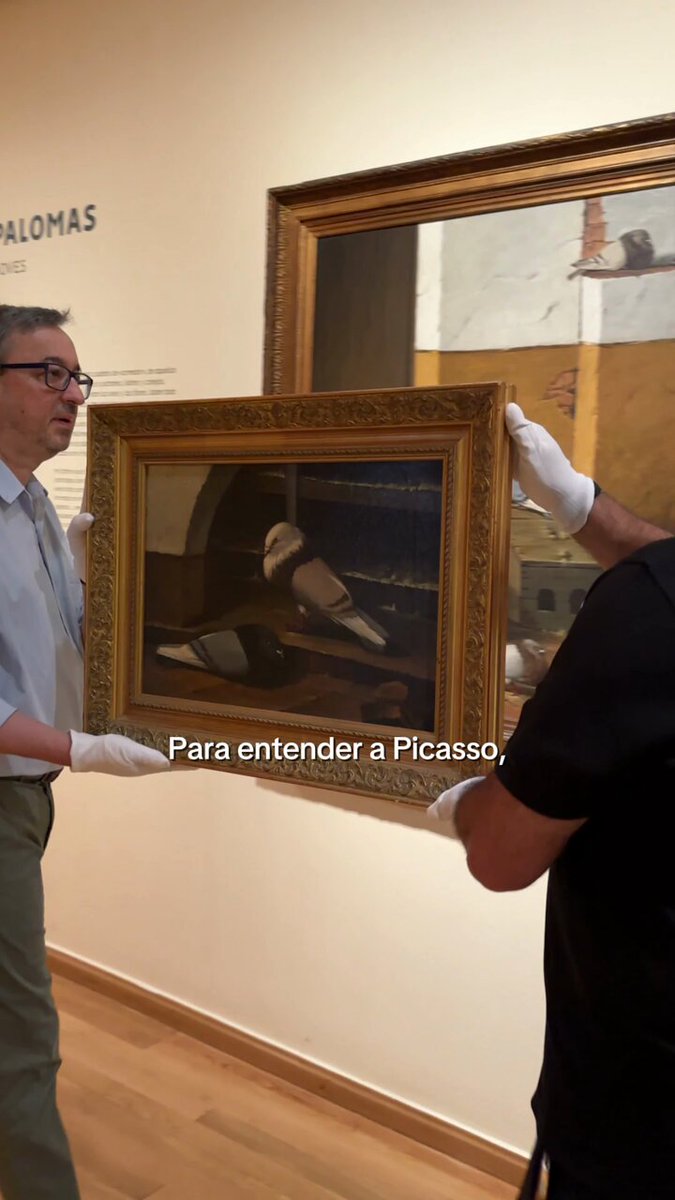
The Casa natal de Pablo Ruiz Picasso has announced the incorporation of 'Dos palomas en un palomar', a painting by José Ruiz Blasco, into its collection. In a brief post, the institution noted that Ruiz Blasco, Picasso’s father, painted pigeons throughout his life and that his son inherited that fascination, later turning the bird into a symbol of peace in 1949.
The acquisition adds a work by a figure closely tied to Picasso’s early environment and family background. José Ruiz Blasco is identified in the announcement as the artist behind the new addition, and the subject of the painting fits a motif the museum says was present throughout his practice. The post frames the work not only as a family-linked object but also as part of a visual lineage that can be traced from father to son.
The museum’s message is concise, but it places the painting within a broader Picasso story. By highlighting Ruiz Blasco’s long-running interest in pigeons, the institution connects the new work to a recurring image that later became significant in Picasso’s own career. The reference to 1949 points to the moment the bird became associated with peace in Picasso’s work, underlining the motif’s later resonance without adding any further details about the circumstances.
No exhibition opening, loan arrangement or display schedule was included in the announcement. The post simply states that the painting has been incorporated into the collection, marking a collection update rather than a public event. The shared image and text present the work as a newly held object within the institution’s holdings.
For a museum dedicated to Picasso’s birthplace, the addition extends the family and artistic context surrounding the artist. The announcement draws attention to an inherited subject that links José Ruiz Blasco’s painting practice to Picasso’s imagery, while keeping the focus on the single work now entering the collection.
The work added is 'Dos palomas en un palomar' by José Ruiz Blasco.