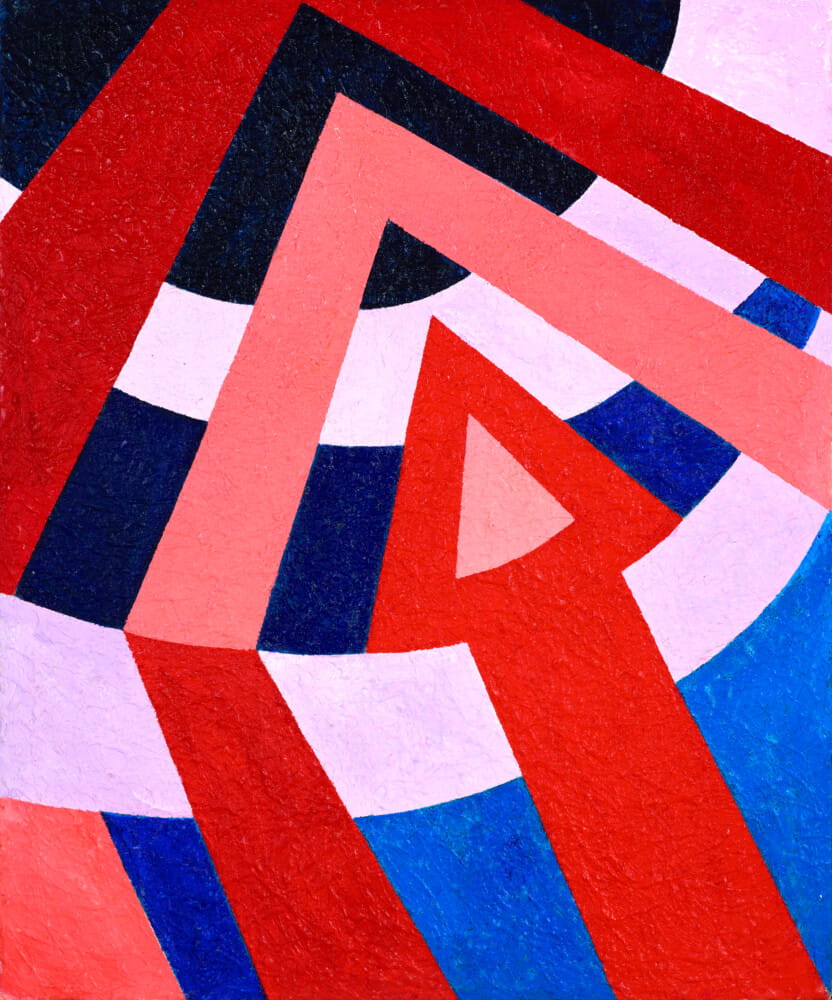
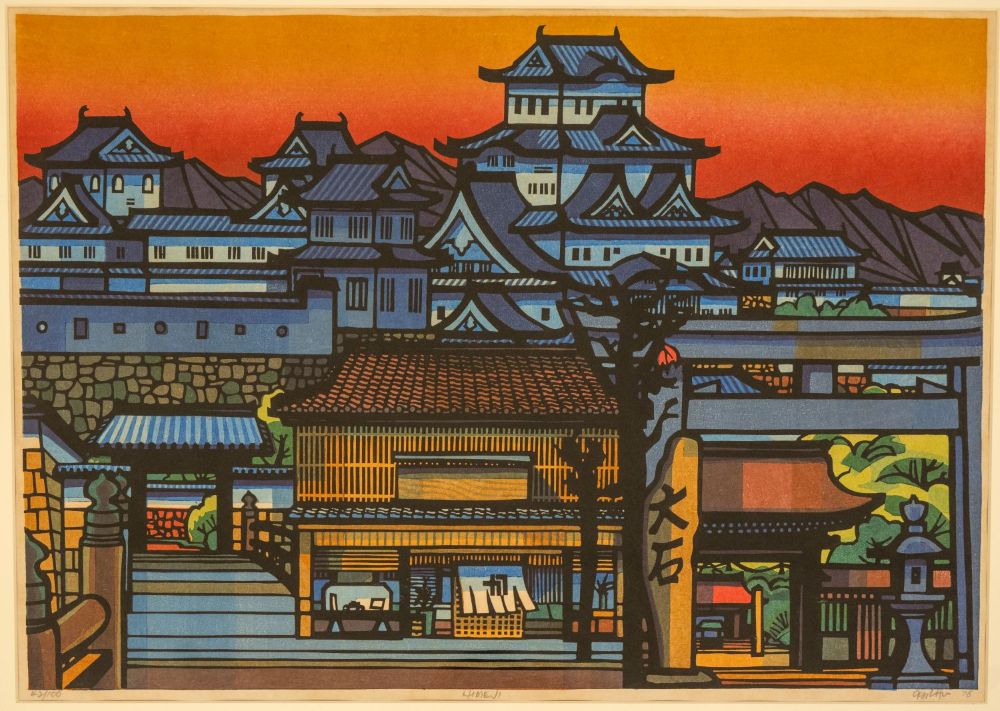
 Image: Clifton Karhu, Himeji “White Heron” Castle in Himeji, dated 1978. Woodblock print; ink and colors on paper. Gift of Mr. and Mrs. Mike Marcus, 1995.018.030
The Morikami Museum and Japanese Gardens in Delray Beach, Florida, is showing "Clifton Karhu: An American in Kyoto" from Friday, September 18, 2026, to Sunday, January 17, 2027. Drawn entirely from the museum's collection, the exhibition brings together woodblock prints, ceramics and stone works by the artist.
Karhu (1927–2007) was born in Duluth, Minnesota. After service in the U.S. military that included two years at the naval base in Sasebo, on Kyushu, he went back to Japan years later as a missionary. Disillusioned with that role, he soon returned to studying art.
He became the first non-Japanese artist admitted as a member of the Japan Print Association, and his work sheds particular light on sosaku, the creative print movement of modern Japan. Karhu was also respected as a player of the shakuhachi, the Japanese bamboo flute, and made a habit of wearing kimono every day.
The museum frames the show around the contribution of an American who lived and worked in Japan and who, in its account, enriched American art by introducing techniques and viewpoints drawn from Japanese culture.
The museum illustrates the exhibition with two prints from its holdings. "Himeji 'White Heron' Castle in Himeji," dated 1978, and "Watanabe Geisha Residence in Kyoto," dated 1980, are both woodblock prints in ink and colors on paper from the Shōwa period, given to the museum by Mr. and Mrs. Mike Marcus.
Other exhibitions at the Morikami this season include "Dancing Brush: The Art of Calligraphy," on view until November 16, 2026, and "Mending Cracks in Time: Kintsugi Art of Naoko Fukumaru," which opens on October 17, 2026, and runs to February 28, 2027. The kintsugi show looks at the Japanese technique of repairing broken ceramics with lacquer and gold as a metaphor for accepting damage, change and imperfection.