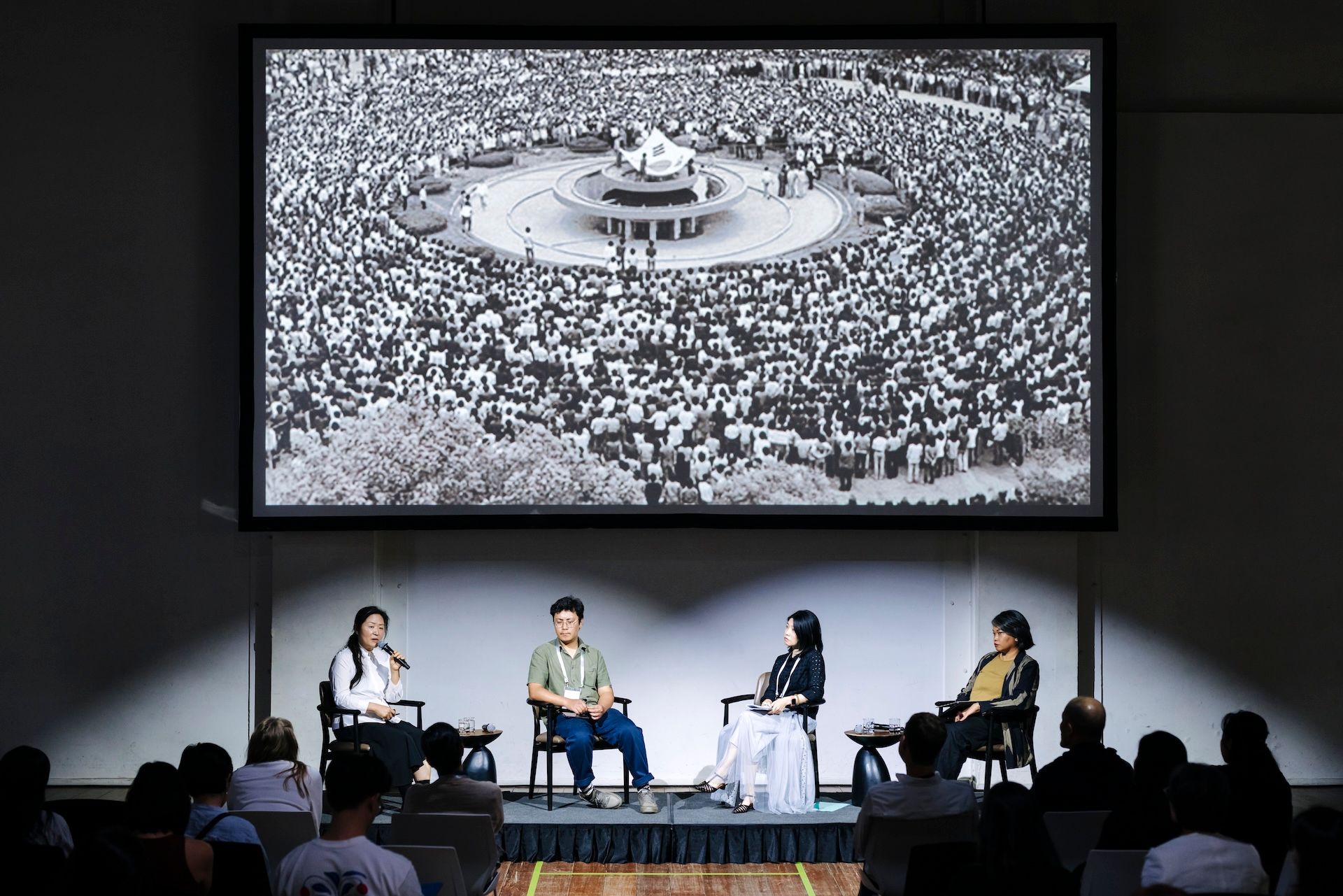
STPI – Creative Workshop & Gallery in Singapore has published an edited transcript of a talk by the curator Sook-Kyung Lee on the Malaysian art collective Pangrok Sulap and its work for the 2023 Gwangju Biennale. Lee, who served as the biennale's artistic director, gave the presentation in January 2026 during "Radical Printmaking in Asia," a panel held as part of STPI's annual Print Show & Symposium under the title "The Politics of Print: elephant in the room." The text appears in STPI's "One Work" series, which looks closely at a single work or series.
Lee explains that the 2023 biennale took its title, "soft and weak like water," from Laozi's Dao De Jing, and was organized around four sub-themes: Luminous Halo, Transient Sovereignty, Ancestral Voices and Planetary Times. For her, water served as both metaphor and method for how art can address world issues on an everyday level.
She ties the event to its origins. The Gwangju Biennale was founded in 1994 in response to the student-led Gwangju Uprising of May 18, 1980, a chapter of Korean history that, she notes, many Koreans learned about only after it was made public in the 1990s.
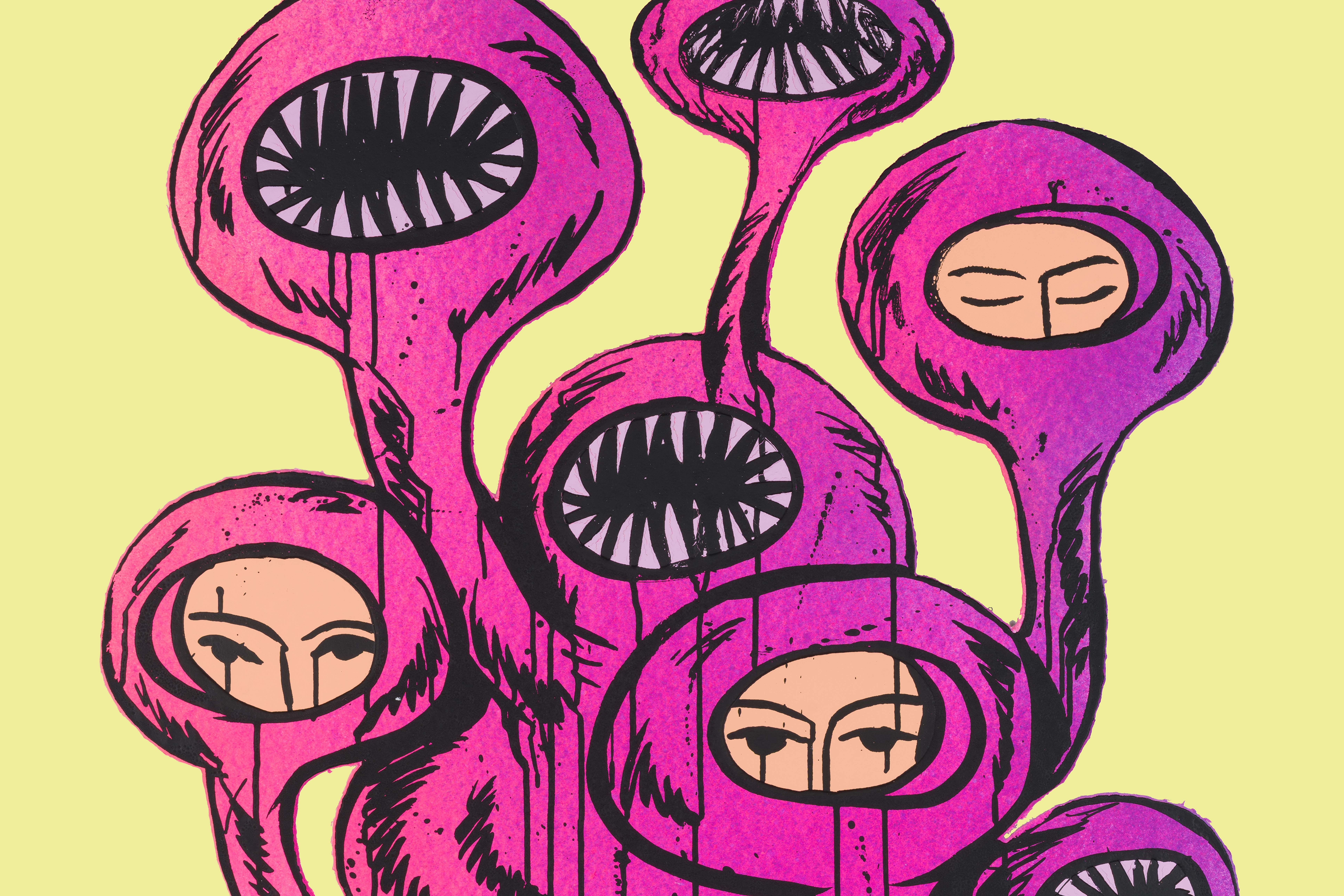
Pangrok Sulap was founded in 2010 in Ranau, Sabah, and brings together artists, curators, writers, researchers, activists, designers, musicians and entrepreneurs. Lee highlights its practical use of woodblock printing as an accessible way of working with communities and political situations. The same technique mattered to the Uprising generation: activists circulated woodblock prints to tell the story of Gwangju while it was suppressed, and O Yoon, whose prints from the 1970s and 1980s Lee included in the biennale, was a leading figure in that movement.
Drawing on those historical images, the collective produced "Gwangju Blooming" (2023), commissioned by the biennale: eight large woodcut prints on pink, grey and purple dyed blackout cotton, depicting resistance, solidarity and mourning connected to the May 18 Democratic Movement alongside scenes of daily life in Gwangju.
Lee also points to artists who lived through the Uprising and remain active, among them Yeon-Gyun Kang, whose "Petrified Wood" series (2017–2023), five map-like black-ink prints on Fabriano paper, was shown at the biennale. She connects this continuing tradition to recent street protests in South Korea, where posters and placards again played a role.