 Image: Getty Villa, Los Angeles
Getty has published a summer-style feature that draws hair inspiration from works in its collection, pairing art history with practical fashion ideas. Posted on July 9, 2026, the piece, 'Seven Art-Inspired Hairstyles to Try This Summer,' looks to depictions of women across paintings, sculpture, drawings and photographs as a source of ideas for seasonal social events.
The article opens with a simple premise: if fashion repeats itself, then an art museum’s collection can offer a ready archive of styles to borrow from. Getty’s writers note that the women represented in the collection wear a wide range of hairstyles, from updos and curled tresses to soft waves topped with floral wreaths. In the examples cited, hair is not treated only as ornament. The feature explains that such coiffures could signal contemporary fashion, carry symbolic meaning, or indicate a subject’s social position.
Rather than presenting a single historical survey, the Getty article organizes its material into seven recurring looks. Among them are 'Floral Accessories,' 'The Venus Bow,' 'The Blue Ribbon Look,' 'Straight and Sleek,' 'Curly Girl Era,' 'The Wreath Look' and 'Hats, Hats, Hats.' Each category is illustrated with objects from the Getty collection, linking specific artworks to broader visual habits that recur across periods and regions.
The examples range widely. Under 'Floral Accessories,' the article cites 'Young Woman with Fan' by Kusakabe Kimbei, 'Sudanese Woman from the French Colonies' by Charles-Henri-Joseph Cordier and Francisco Goya’s 'Portrait of the Marquesa de Santiago.' The text describes floral decorations as a style that can be seen in imagery from Japan, Sudan and Spain, with the museum suggesting contemporary uses for outdoor events such as a music festival, baby shower or wedding.
Other sections connect hairstyle to mythological or social meaning. In 'The Venus Bow,' Getty points to the many depictions of Venus in which hair is arranged into a bow-like shape, including the second-century Roman 'Statue of Venus (the Mazarin Venus)' and John Deare’s 'Venus Reclining on a Sea Monster with Cupid and a Putto.' The article describes Venus’s hair as part of an idealized image of femininity in art.
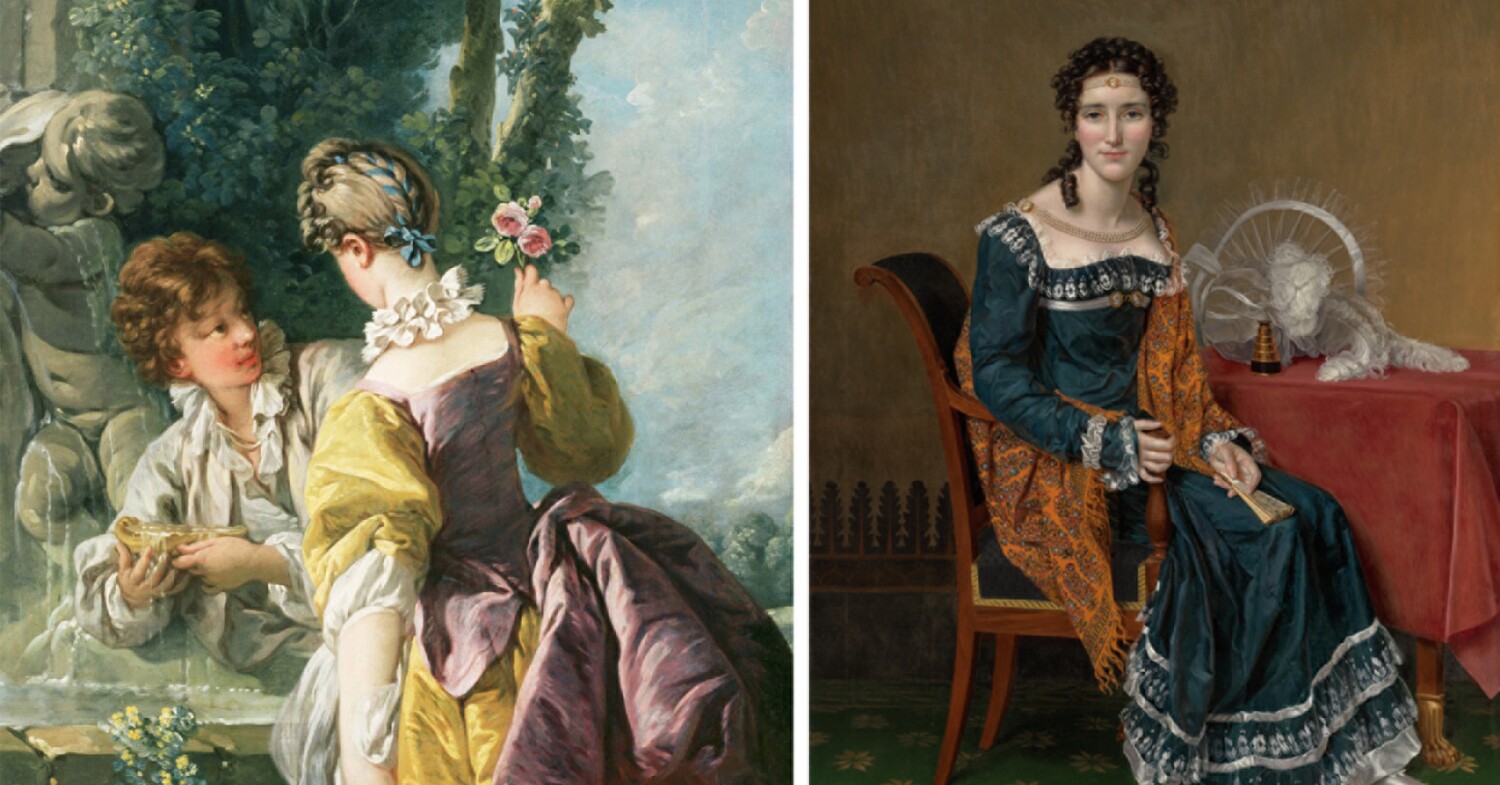
The feature also highlights a pair of François Boucher paintings, 'The Bird Catchers' and 'The Fountain of Love,' for 'The Blue Ribbon Look.' Getty notes that both works belong to a series of cartoons for tapestries known as the Noble Pastoral, and that the paintings were later cut into sections and sold separately. Elsewhere, the article places 'Straight and Sleek' hair in the context of mid-19th-century Victorian fashion and uses works such as Jean-Hippolyte Flandrin’s 'Portrait of Marie Legentil' and Franz Xaver Winterhalter’s 'Portrait of Leonilla, Princess of Sayn-Wittgenstein-Sayn' to show how the style appeared in portraiture.
The final sections move through curls, wreaths and hats, with references including Jan Mytens’s 'Portrait of a Woman,' François-Xavier Fabre’s 'Portrait of Marie-Louise Joubert, nee Poulletier de Perigny,' Lawrence Alma-Tadema’s 'Spring' and Édouard Manet’s 'Jeanne (Spring).' The article closes by pointing readers to a video in which Oscar-winning hairstylist Yolanda Toussieng styles Getty video producer Jessie Hendricks using inspiration from three Getty paintings.