 Image: San Diego Museum of Art
An exhibition is scheduled for September 5, 2026–August 15, 2027. It examines religious images in the Greek and Russian traditions, including icons from southwestern territories of the former Russian Empire, mainly Ukraine.
Icon painters worked in two dimensions, focusing on symbolic representations rather than illusions of space and volume. Icon scenes are situated beyond earthly time and space, with gold representing both light and landscape, while the icons’ physical characteristics are often designed for portability, reflecting the needs of everyday religious practices.
The exhibition traces the first Russian icons to the 1100s, when monks in Kyiv, the capital of the vast realm of Kievan Rus, painted works based on earlier examples from Byzantium, Kyiv’s main economic partner.
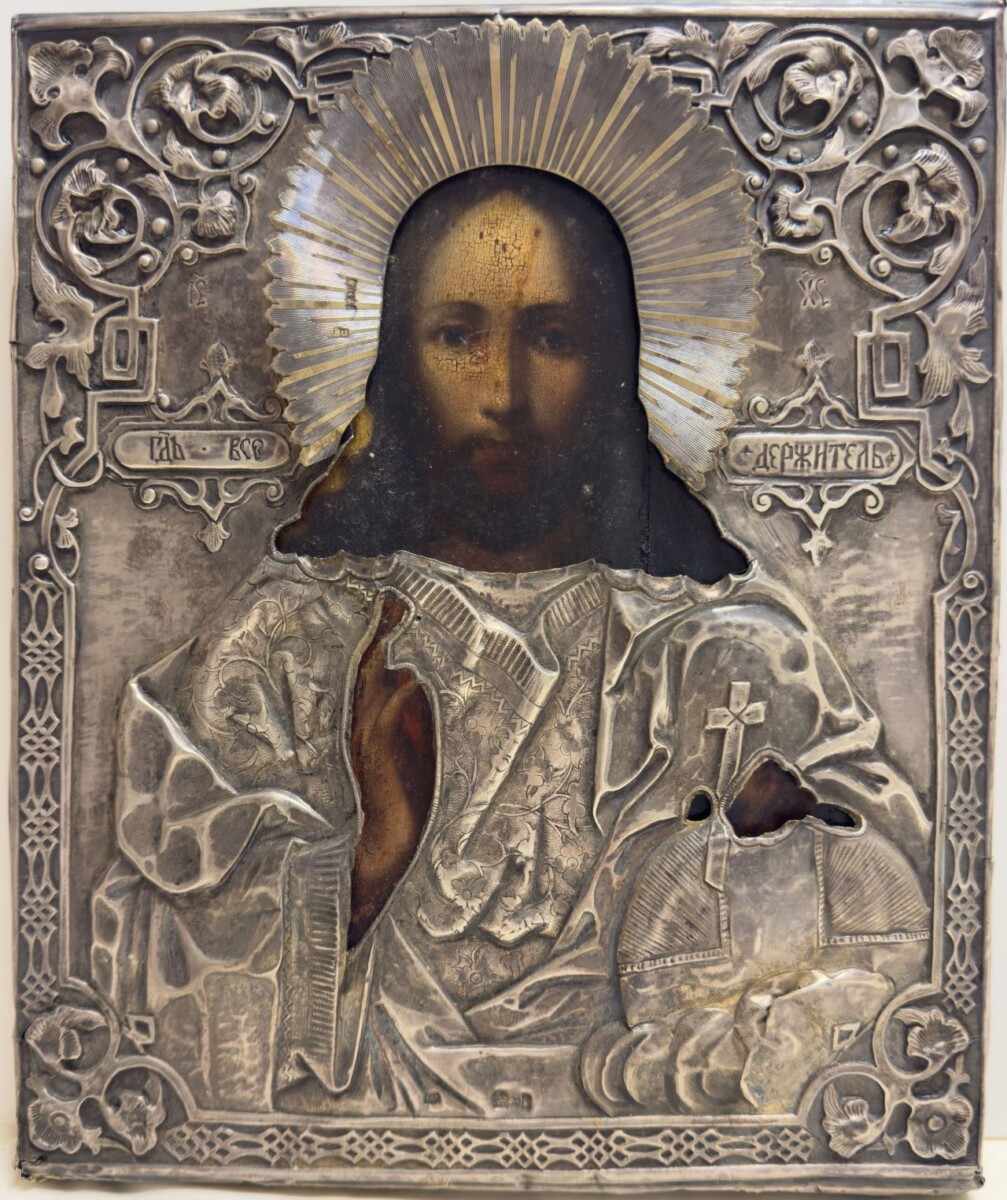
Among the works is Unknown artist (Ukraine), 'Christ the Redeemer' (detail), from the 19th century, made with oil and tempera with a silver oklad, or chased and repoussé metalwork. Some later icons show traces of Western Christian styles, including shading and modeling of faces, while traditional features such as the oklad, or sculpted metal facing, often coexisted with those techniques.
The exhibited icons come from southwestern territories of the Russian Empire, identified as about 1721–1917, mainly Ukraine, and played an integral role in daily life; here, they offer an immersive and contemplative experience for all visitors.