 Image: Galicia Contemporary Art Center, Santiago de Compostela
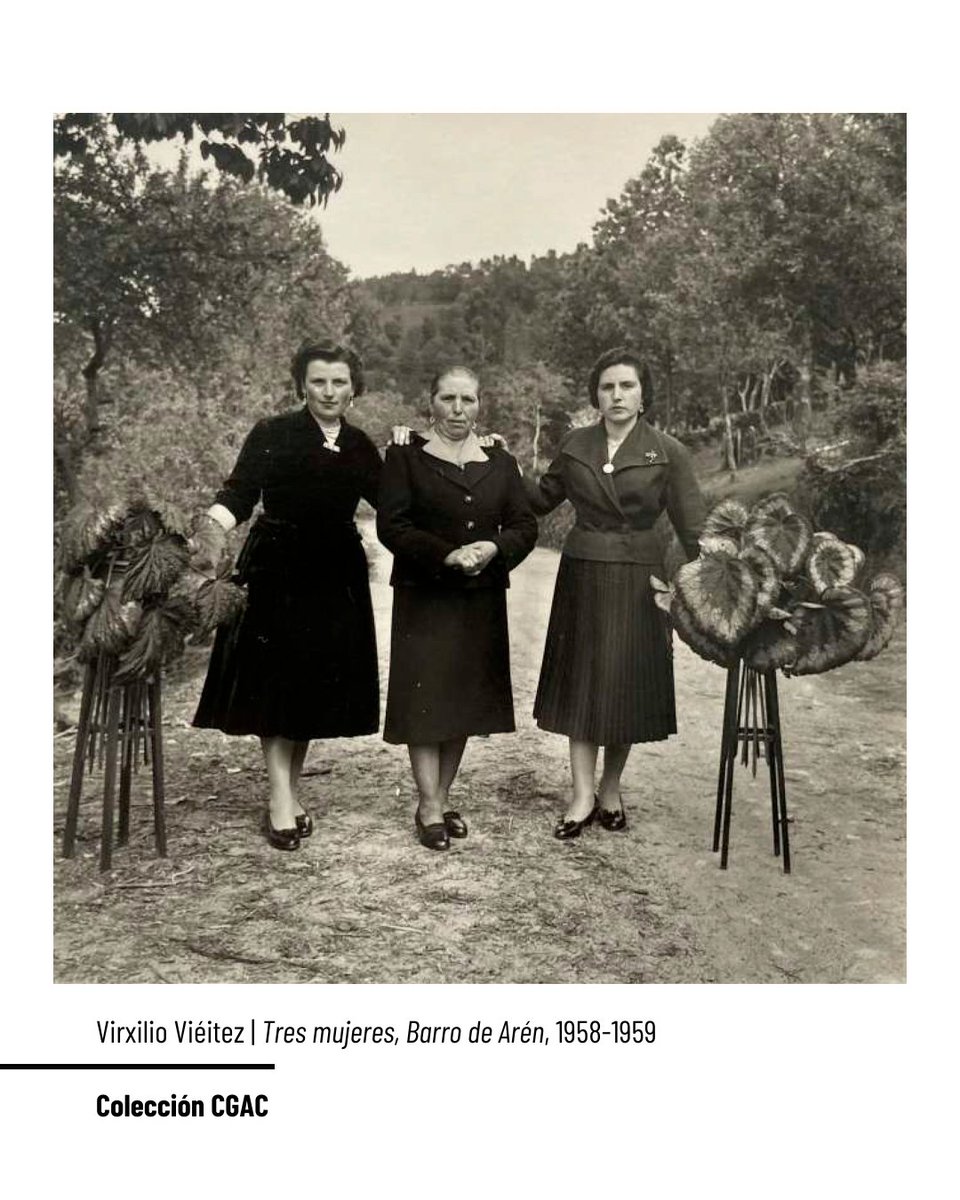
Galicia Contemporary Art Center has marked Día de Galicia by highlighting a photograph by Virxilio Viéitez, ‘Tres mujeres, Barro de Arén’ (1958-1959). In a post dated 25 July 2026, the museum framed the image as part of the visual memory that shapes the region, saying it celebrates “the looks that form the memory of our country.”
The institution’s message places Viéitez’s work within a specifically Galician cultural context rather than presenting it as a standalone archival image. The photograph is described as turning the simplicity of everyday life into an image of “extraordinary strength,” while sensitively portraying Galicia of its time. No exhibition or public programme was announced in the post, and no venue details beyond the museum’s own communication were provided.
Viéitez’s ‘Tres mujeres, Barro de Arén’ dates from 1958-1959, a period the museum identifies directly in its tribute. The title points to the photograph’s subject and place reference, while the institution’s wording underscores the work’s connection to ordinary life and regional memory. The post does not add further biographical details about the photographer or the circumstances of the image’s making.
The museum shared the tribute in Galician on its official social media account, CGACSantiago, alongside the hashtag for Día de Galicia. The text situates the photograph as a representative image for the holiday, aligning it with a broader reflection on identity and memory in Galicia. The center did not announce any acquisition, loan, display change or related event in the available material.
Founded as a contemporary art museum in Santiago de Compostela, Galicia Contemporary Art Center regularly uses its channels to draw attention to works in its orbit and to frame them within regional and artistic contexts. In this case, the source material presents ‘Tres mujeres, Barro de Arén’ as a work through which the museum chose to acknowledge the day, emphasizing its historical setting and its emotional force rather than any formal exhibition context.
The post offers a brief but direct reading of the photograph: a depiction of everyday life that becomes visually powerful while remaining rooted in Galicia’s social memory. It is the museum’s own tribute, published on 25 July 2026, for Día de Galicia.