 Image: Museo delle Porcellane, Florence
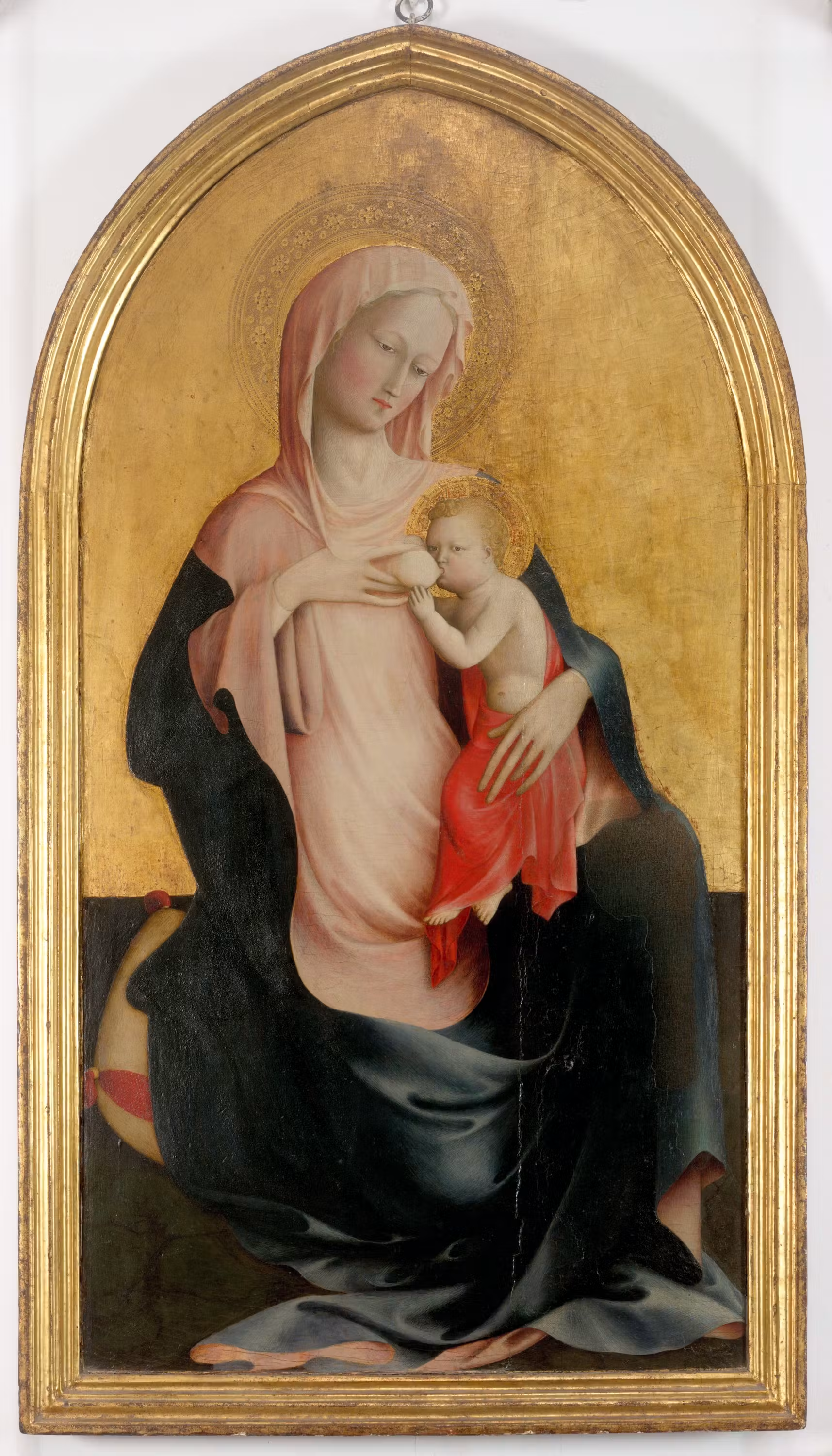
The Uffizi has published a collection entry for Masolino’s 'Madonna dell’Umiltà', drawing attention to a small-scale early fifteenth-century panel now in the museum’s painting collection. The work is identified on the Uffizi site as 'Madonna dell’Umiltà', by Tommaso di Cristofano Fini, known as Masolino, and is dated to around 1415. The museum’s social post described the panel as a modestly sized painting of the Virgin nursing the Child, presented as a mediation between the divine and the earthly.
According to the Uffizi’s record, the painting is tempera on panel with a gold ground and measures 113 by 63 centimetres. Its placement in the collection is listed as the painting section, among works associated with Masaccio, Beato Angelico and Paolo Uccello. The site also notes that the image follows the iconographic model of the Madonna of Humility, in which Mary sits directly on a cushion on the ground, paired here with the Madonna of the Milk tradition as she feeds Christ.
The Uffizi’s description places the work within a devotional context. The museum writes that the subject was especially suited to private devotion and to a small oratory or a secondary altar in a church, a reading supported by the painting’s relatively modest dimensions. The panel’s restrained format matches that purpose, presenting the Virgin and Child without a monumental setting and emphasizing the closeness of the exchange between mother and child.
The museum record also provides a conservation note. It says the panel is damaged on the right side, where the support shows a modern insertion at the top and there is extensive restoration to the gold ground and painted surface. Even with that condition, the image of the Madonna and Child remains legible, with the museum highlighting the flowing drapery of the late Gothic style and the softness of the figures’ flesh tones.
The Uffizi says that most scholars attribute the work to Masolino and that it would be one of the earliest surviving works known by the artist. Masolino, identified in the entry as Tommaso di Cristofano Fini, was born in Panicale, San Giovanni Valdarno, in 1383 and died in Florence around 1440.
The museum also traces the painting’s documented modern history. Its original provenance is unknown, but it came from the English antiquarian market and was purchased in the 1930s by Alessandro Contini Bonacossi. Around 1942 he sold it to Hermann Göring. The painting was located in Germany by Rodolfo Siviero in 1947, returned to the Italian state in 1954, and assigned to the Uffizi in 1988.