 Image: Weng Contemporary, Zug
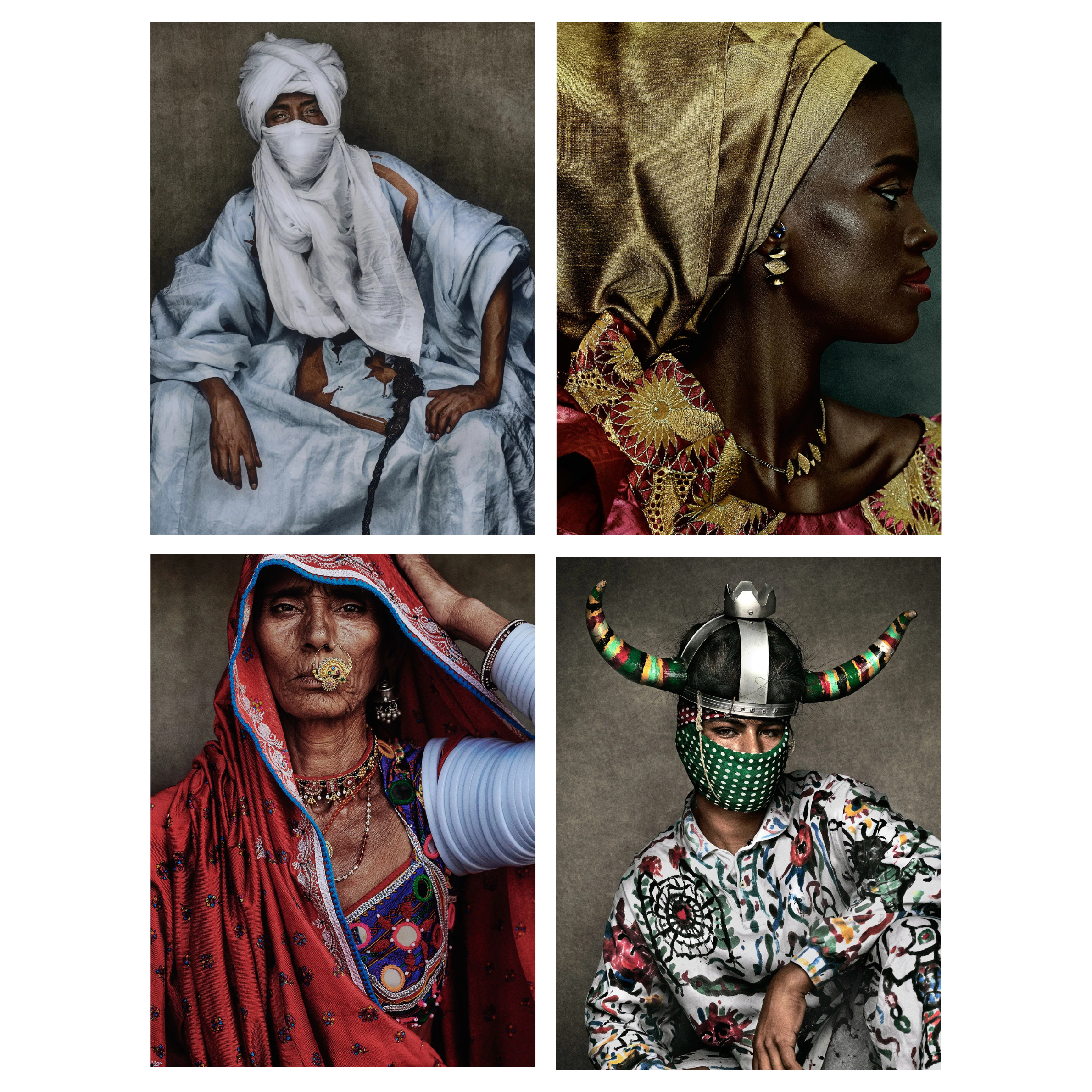
Weng Contemporary is presenting Mario Testino’s complete 2024 portfolio ‘A Beautiful World’, bringing together four portraits made between 2018 and 2023 in Morocco, Senegal, India and Guatemala. The set draws on a wider body of photographs in which Testino has documented cultural identity as it is expressed through traditional dress.
The portfolio comprises ‘A Sahrawi, Dakhla Morocco 2019’; ‘A Woman of Senegal, Dakar Senegal 2022’; ‘A Woman of the Rabari, Rajasthan India 2018’; and ‘A Man in Costume as El Diablo Blanco de Rabinal, Antigua Guatemala 2023’. Each identifies a particular sitter and tradition, while the titles retain the locations in which the photographs were made.
Testino photographs all four subjects against the same neutral backdrop. The decision removes landscape and other geographical markers, foregrounding the craftsmanship, symbolism and individual presence embodied in the portraits. Garments, jewellery, embroidery and ceremonial objects carry meanings beyond personal adornment: they can convey community, social roles, spirituality and inherited forms of making.
The repeated studio format gives the group a shared visual structure, defined by frontal encounters and an absence of surrounding context. Colour, texture, gesture and dress distinguish the sitters within that structure. Testino’s long career across fashion editorials, advertising campaigns and portraiture is evident in the attention paid to posture, expression and self-presentation, without detaching clothing from the people who wear it.
The project began in Testino’s native Peru in 2007, with photographs of traditional Peruvian dress, and subsequently extended across more than 30 countries. Working with a portable studio, he developed a consistent photographic setting for people from different communities and traditions.
‘A Beautiful World’ arrives as an edited selection from that broader undertaking. The four images bring attention to forms of dress that remain connected to place and community amid an increasingly shared global visual culture, while preserving the specificity of each sitter, location and title.