 Image: Photo: D. Dunkelberg, © Nolde Foundation Seebüll
The Nolde Stiftung Seebüll has received an exceptionally rare first state of Emil Nolde’s etching ‘Junge Frau’, completing the institution’s set of all four states of the 1906 print. The sheet was presented to the foundation at this year’s summer dinner hosted by the Friends of the Nolde Stiftung Seebüll.
Nolde made four successive states of ‘Junge Frau’, each representing a different stage in the development of the same printing plate. The first state is known in only two examples, according to the museum’s announcement. By contrast, between 10 and 20 impressions were printed from each of states II, III and IV. The newly acquired sheet had previously been absent from the foundation’s holdings.
The image depicts Ada Nolde seated in the couple’s small living room as she sews. In the first state, the figure is defined more strongly by an outline-like etched line, while the background remains lighter and more restrained than in the later versions. The differences allow the group to be viewed not only as a set of impressions, but also as a record of the print’s technical development.
The work joins a collection held by the Stiftung Seebüll Ada und Emil Nolde, the private foundation responsible for the museum in Seebüll, northern Germany. The foundation says it receives no financial support from Germany’s federal or state governments and relies on donations, gifts and memberships. The Friends of the Nolde Stiftung Seebüll, an association founded in 2011, supports the foundation’s artistic and cultural work and helps preserve Nolde’s former home, studio and garden.
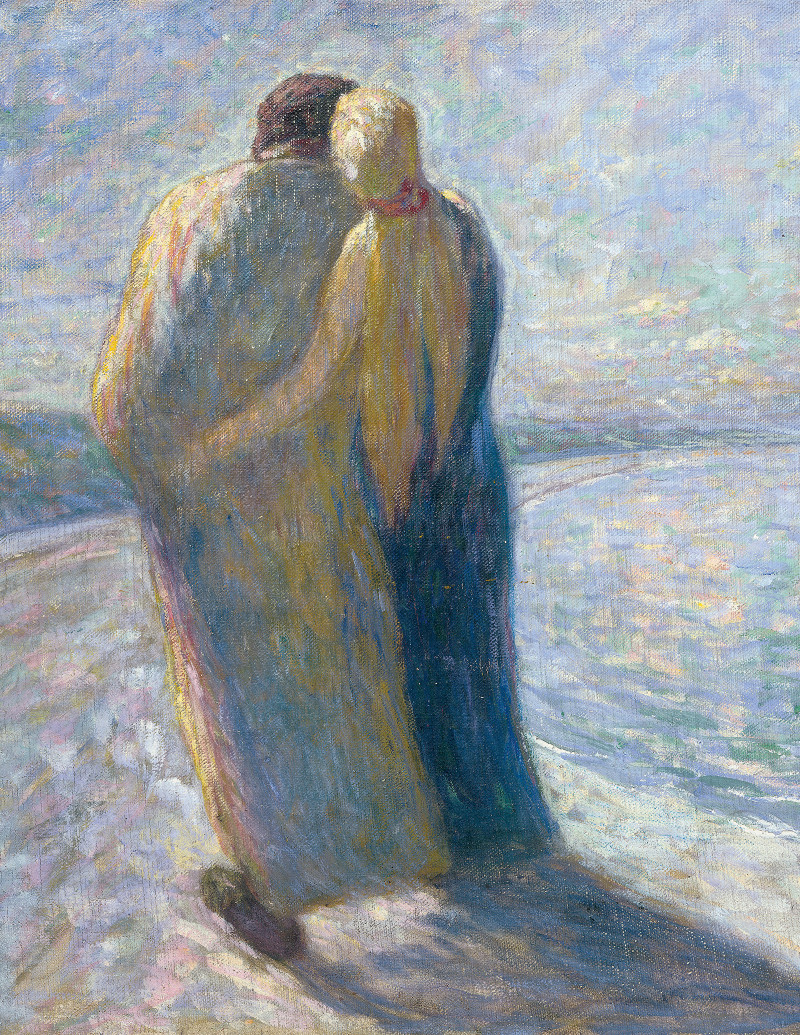
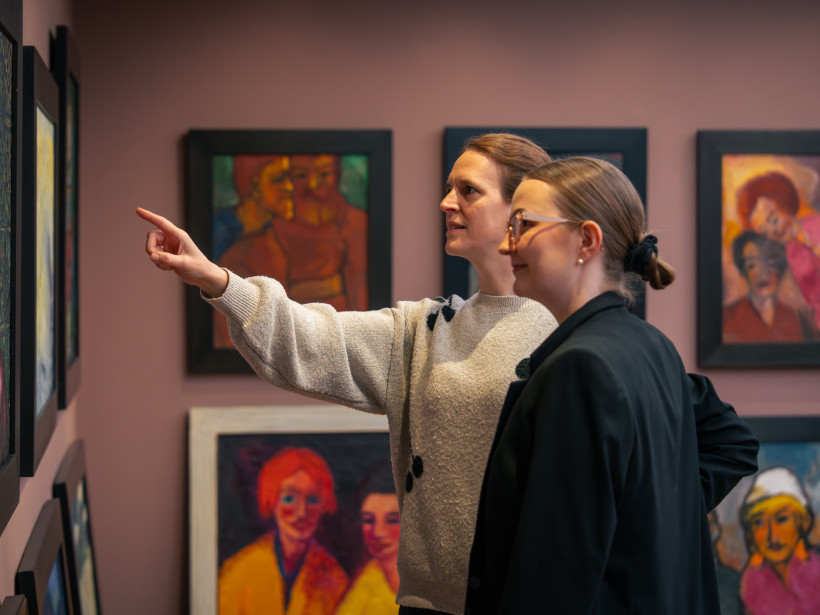
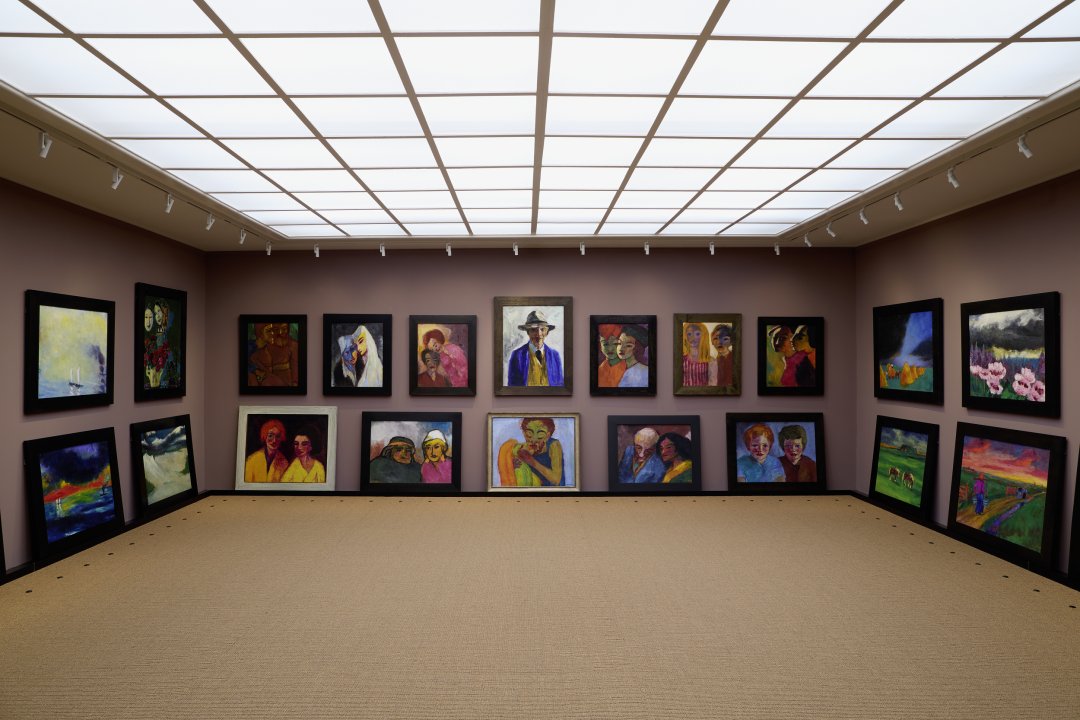
The acquisition comes as the museum presents its 70th annual exhibition, ‘Emil Nolde – Beziehungen zwischen Menschen, Natur und Kunst’ (‘Emil Nolde – Relationships Between People, Nature and Art’), from 1 March through 31 October 2026. The exhibition surveys the relationship between people, nature and art across Nolde’s paintings and watercolours, while also including prints and less frequently shown works from the artist’s estate. The museum identifies Emil Nolde (1867–1956) as a major Expressionist; the foundation administers the artist’s extensive estate at Seebüll, his former home and studio.
One related work currently on view is ‘Herbstblumen (A)’, a 1931 painting shown as a permanent loan from a private collection. It depicts sunflowers, gladioli and dahlias gathered from the garden at Seebüll and arranged in a basket before being painted by Nolde. The museum’s 2026 season ends on 31 October, when it will offer two public art tours at 2pm and 3pm, alongside the free ‘KreativZeit’ programme in the Seebüll art school from 2pm; advance registration is required because places are limited.