 Image: Art Gallery of Western Australia, Perth
The Art Gallery of Western Australia will open ‘Chivalry is dead?’ on 5 September, bringing together works from its State Art Collection to examine the recurring appeal of medieval imagery. The exhibition, which runs through 21 February 2027, focuses on medieval revivalism, courtly love and faerie tales, with particular attention to nineteenth-century art and the ways romanticised visions of the past have been used to address the pressures of modern life.
Presented at the Art Gallery of Western Australia in Perth, the display considers medieval revival—or Medievalism—as a recurring cultural response to periods of rapid social and technological change. The gallery’s account notes that images of the medieval can function as a stand-in for the “not now”: an imagined alternative to the conditions of an emerging modernity. The exhibition connects that pattern to current popular culture, where medieval references continue to circulate in entertainment, fashion and contemporary rhetoric.
The nineteenth century forms the exhibition’s central historical focus. During the industrial era, visions of medieval life and an alleged golden age of chivalry proliferated through literary sources including Arthurian romances and Edmund Spenser’s ‘The Faerie Queene’. These images often promoted a return to supposed artistic and moral purity, while reflecting values that were themselves distinctly nineteenth-century in origin.
‘Chivalry is dead?’ also addresses the instability of the ideals it presents. According to the gallery, the concept of chivalry has repeatedly been adapted for purposes including propaganda and empire building. The exhibition therefore treats medieval revival not as a neutral return to history, but as a retro-historicist fantasy and a political apparatus that can be reshaped to serve different personal and national agendas.
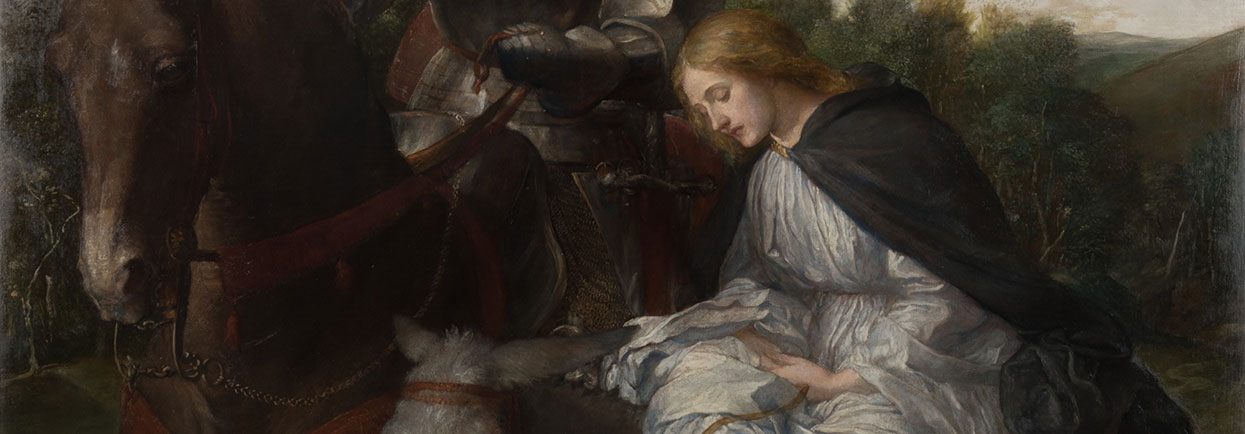
The selection spans several centuries of material in the State Art Collection. Artists include G.F. Watts, Hans Burgkmair, Käthe Kollwitz, Aubrey Beardsley, Frederick Sandys, the Dalziel Brothers, Colin Lanceley and John Dollman. Featured works include Watts’s ‘Una and the Red Cross Knight’ (1869), Burgkmair’s woodcut ‘Triumphzug Kaiser Maximilians I.: Geschifft Rennen’ (1516–1518), Dante Rossetti’s ‘Lady Lilith’ (1867), Walter Crane’s ‘Illustration for The Yellow Dwarf’ (1875) and Sandys’s ‘Until her death’ (1862).
The exhibition is curated by Karl Sagrabb, AGWA Associate Curator of Historical Art. Its title refers to the familiar expression “chivalry is dead,” while questioning whether the ideal it invokes was ever a stable reality. The gallery links that question to Edmund Burke’s declaration that “the age of chivalry is gone” in 1790, following the French Revolution, and to the concept’s continued influence on English society into the twentieth century. ‘Chivalry is dead?’ will be free to visit and will offer guided tours at 1pm on Thursdays from 10 September.