
 Image: Galerie für Zeitgenössische Kunst, GfZK Leipzig ; VG Bild-Kunst, Bonn
Heidi Specker will present a solo exhibition at the Galerie für Zeitgenössische Kunst Leipzig’s GfZK Altbau, examining the life and work of Jewish avant-garde photographer Aenne Biermann (1898–1933). Titled ‘DamenzimmerHerrenschnitt. A homage to Aenne Biermann’, the exhibition will run from 5 September 2026 to 10 January 2027, with an opening on 4 September at 7pm. It will bring together works by Specker and Biermann, tracing how a contemporary artist can approach a fragmented photographic legacy through research, reconstruction and reinterpretation.
The project is the result of Specker’s long-term engagement with Biermann’s biography and practice. Drawing on public and private collections, memories shared by Biermann’s descendants and historical research into the family’s flight, Specker reconstructs a history shaped by the political upheavals of the 20th century. The exhibition is curated by Franciska Zólyom, with Hanar Hupka as curatorial assistant.
Biermann was a prominent figure in the cultural life of Gera during the 1920s, when the city was described by GfZK as a cosmopolitan centre of modernist culture. An autodidact, she became an important representative of avant-garde photography within a few years. Her work is associated with the ‘New Vision’ approach, characterised by close attention to the immediate environment and unconventional perspectives on people and objects. The exhibition’s title refers both to Biermann’s short haircut, described as a “gentlemen’s cut,” and to her ‘ladies’ room’, an interior that forms part of Specker’s investigation.
Loss is central to Specker’s research. Biermann’s work ended abruptly following her early death after an illness, while a large part of her photographic estate was seized by the National Socialists or remains missing. Specker travelled to Gera, Trieste and Vienna during the project and contacted Biermann’s grandchildren. In photographic juxtapositions, she reinterprets Biermann’s themes and compositions, translating them into the present rather than presenting them solely as historical documents.
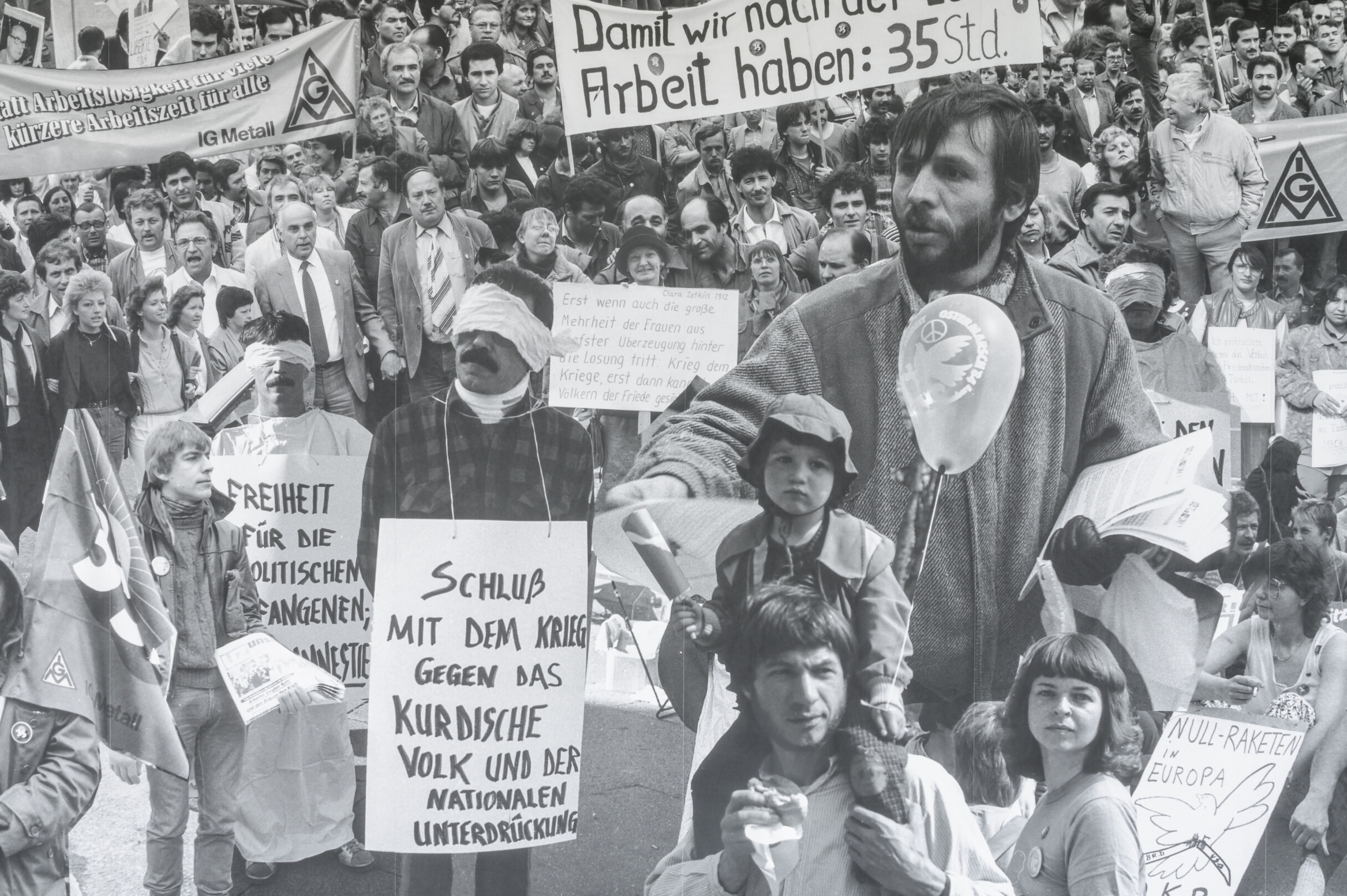
Two video works extend that process of looking back. In ‘Amnesia Gera’, Specker contrasts the city’s former cosmopolitan urban life with present-day marches organised by right-wing groups. ‘Wien Vienna’ considers the significance of material traces for memory. Specker also developed the exhibition architecture and an edition with the design duo BLESS, drawing on the historical furnishings of Biermann’s ‘ladies’ room’. The exhibition’s graphic design is by Müller & Wesse, with Stephan Müller.
A German-language publication will accompany the exhibition, featuring texts by Specker and Ronya Othmann, alongside contributions by Claudia Tittel, Daria Brasca, Anneliese Schallmeiner and Albena Zlatanova. The programme includes a book presentation with Specker and Othmann at the GfZK Auditorium on 13 October at 6pm, and an artist talk and tour with Specker and Zólyom at the GfZK Villa on 28 November at 3pm. The exhibition will be supported by the Cultural Foundation of the Free State of Saxony, the City of Leipzig and ‘Tacheles – The Year of Jewish Culture in Saxony 2026’.

!['Là où elle pose' to open at the Théâtre de Privas in October [f1, f2, f9]](/uploads/newsletter-12933-85cae116dafc.jpg)