 Image: Jerusalem Print Workshop
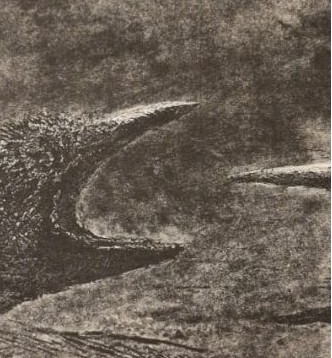
Jerusalem Print Workshop will open 'Sasha Okun: Between Line and Suspension' on July 31, presenting years of the artist’s etching work in a show that foregrounds process, repetition and open-ended making. The workshop’s announcement says the exhibition focuses on “states of making” rather than finished pieces, drawing from a long period during which dozens of etching plates and hundreds of trial prints were produced.
According to the workshop, Okun’s work there unfolded over several years and became a sustained inquiry into material, formal and spiritual questions. The project was not framed as a search for a single completed work, but as an extended engagement with what an image might become. The exhibition’s title, 'Between Line and Suspension', points to that emphasis on etching as a medium that holds time, hesitation and revision within its own making.
The announcement describes etching here not simply as a printmaking technique, but as “a space of time” shaped by repetition, correction and refusal to settle into one final form. Rather than showing unfinished works in the conventional sense, the exhibition is said to present moments within the process: pauses, working states and open propositions. That framing places attention on the working methods behind the prints and on the visible trace of their development.
'Between Line and Suspension' is curated by Arik Kilmenik. The Jerusalem Print Workshop has identified the exhibition as one of two new shows opening on the same day, alongside 'Greater Than the Sum of Its Parts: Artist’s Books from the Collection of the Jerusalem Print Workshop'. The workshop’s materials present the two exhibitions separately, with the Okun show listed as the first of the pair.
The venue named in the source material is Jerusalem Print Workshop, also identified as the Djanogly Center for Printmaking, at 38 Shivtei Israel St. in Jerusalem. The opening for 'Sasha Okun: Between Line and Suspension' is scheduled for Friday, July 31, 2026, at 12:00 PM, with the workshop’s announcement presented in Hebrew and English.
The source material does not provide a fuller biographical note on Okun, but it does make clear that the exhibition grows out of a substantial body of printmaking developed at the workshop over time. By highlighting trial prints, repeated revisions and an insistence on process, the presentation situates the etchings within the workshop’s broader printmaking context and its long-running activity as a site of artistic production.