 Image: Kolonial. Globale Verflechtungen der Schweiz, Château de Prangins – Swiss National Museum, Prangins
The exhibition ‘Kolonial. Globale Verflechtungen der Schweiz’ is examining Switzerland’s involvement in colonial systems through historical documents, objects, artworks and photographs at Château de Prangins, the Swiss National Museum’s site in Prangins. The exhibition runs from 29 March to 11 October 2026 and is being presented in an adapted form after its 2024 showing at the Landesmuseum Zürich.
Although Switzerland did not possess colonies of its own, the exhibition documents the involvement of Swiss individuals, companies and institutions in European colonial expansion from the 16th century onward. Its subjects include participation in the transatlantic slave trade, profits made from colonial commodities produced through the exploitation of enslaved people, missionary activity and Swiss involvement in settlement colonies.
The presentation also addresses the military and intellectual dimensions of these connections. Swiss mercenaries served in European armies involved in colonial conquest, while specialists from Switzerland supplied expertise to colonial powers. The exhibition examines how reports and images from colonised regions shaped public perceptions in Switzerland, including the circulation of racist stereotypes. It also considers the role of the universities of Zurich and Geneva in developing and disseminating racial theories that helped legitimise colonial rule.
The exhibition is divided into two sections. The first follows Swiss participation in colonial contexts across the Americas, Africa and Asia, with particular attention to figures and institutions connected to French-speaking Switzerland. Among those highlighted are Carl Vogt, David de Pury, the Mission romande, the de Meuron mercenary regiment and the abolitionist S. B. L. Frossard. The display draws on loans from institutions including Mission 21 in Basel, the Museum der Kulturen Basel, the Musée d’ethnographie de Genève and the Swiss Federal Archives.
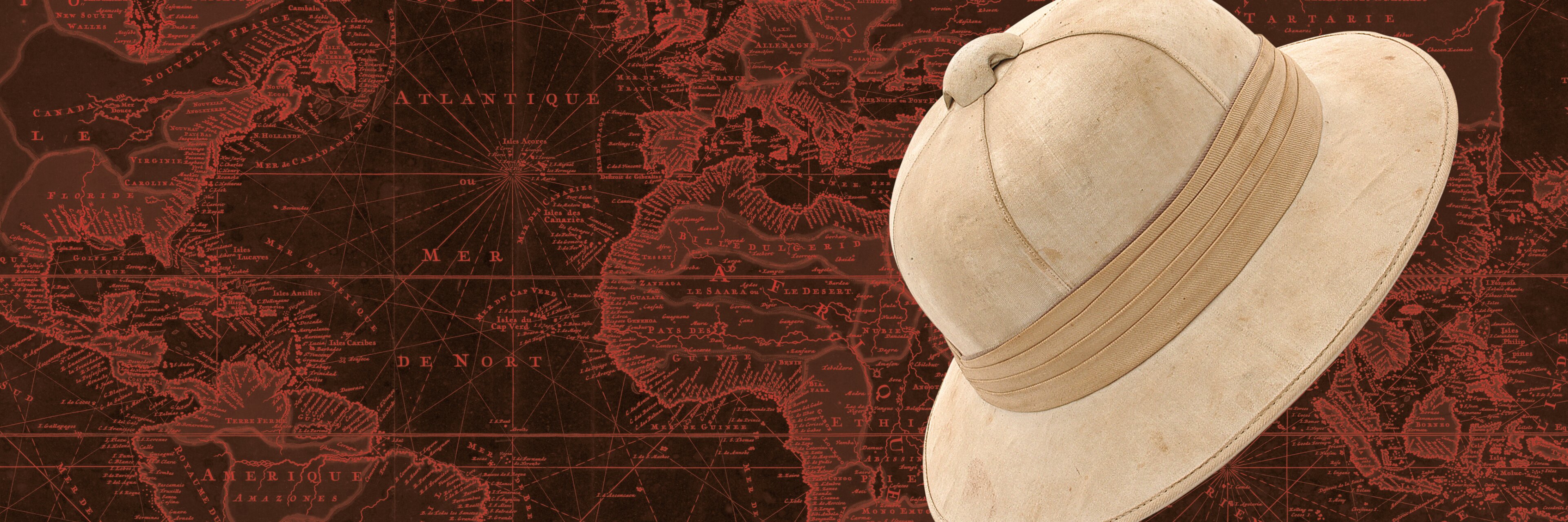
Artworks are presented alongside the historical material. The works listed by the museum include Cian Dayrit’s ‘Et hoc quod nos nescimus’ (2018), an embroidery on fabric; Mathias C. Pfund’s bronze ‘Great in the concrete, ex. 2/5’ (2022); and a video by Shyaka Kagame titled ‘Problèmes d'héritage’. The exhibition also includes a colonial helmet, probably from the Congo and dating to the late 19th century, as well as foot and hand restraints from the Basel Mission’s collection, made in West Africa before 1900.
The second section turns to the continuing consequences of colonial history in Switzerland and elsewhere. It addresses structural racism, unequal distribution of wealth and environmental problems, while linking historical cases to contemporary debates over contested statues in public space and other forms of colonial continuity. Visitors are invited to reflect on these questions and to record their views. The exhibition’s curatorial and conceptual team comprises Marina Amstad, Pascale Meyer, Raphael Schwere and Marilyn Umurungi, with scientific advice from Bernhard Carlos Schär and an advisory board that includes Carine Ayélé Durand, Noémie Étienne, Kwamou Eva Feukeu and Patricia Purtschert.