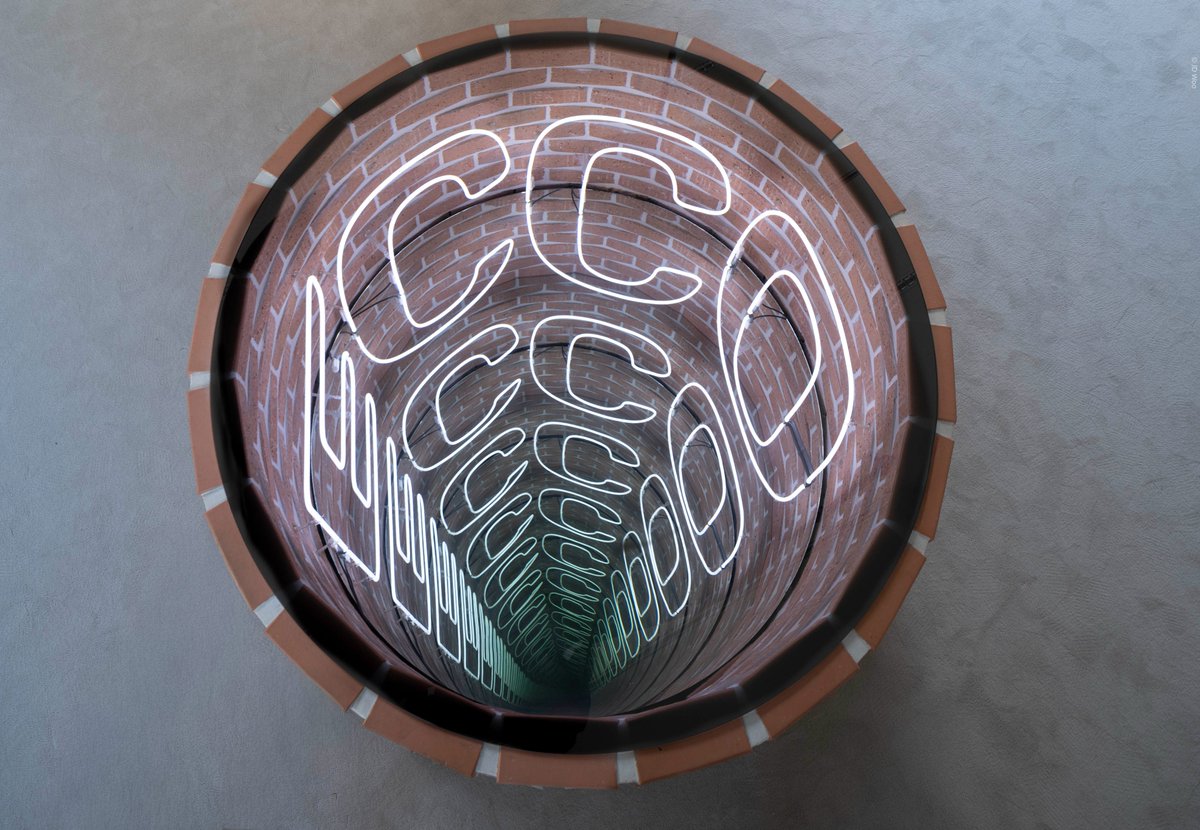
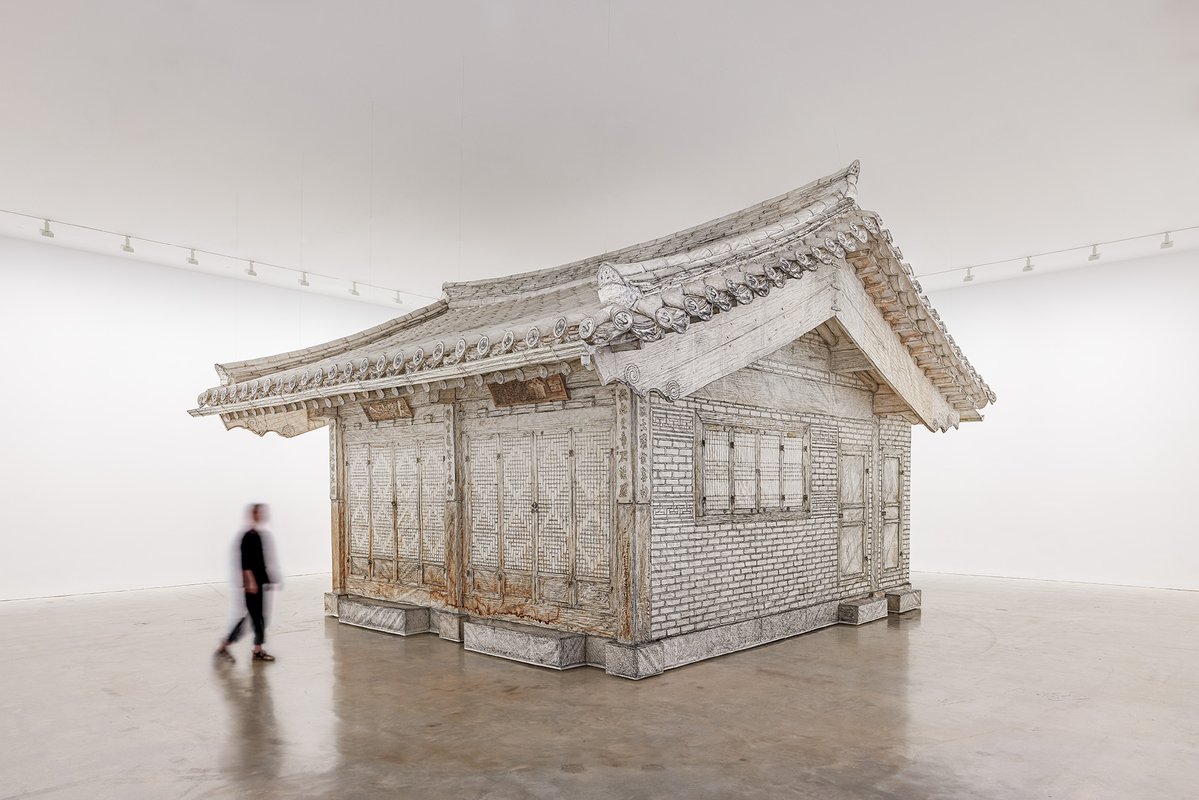
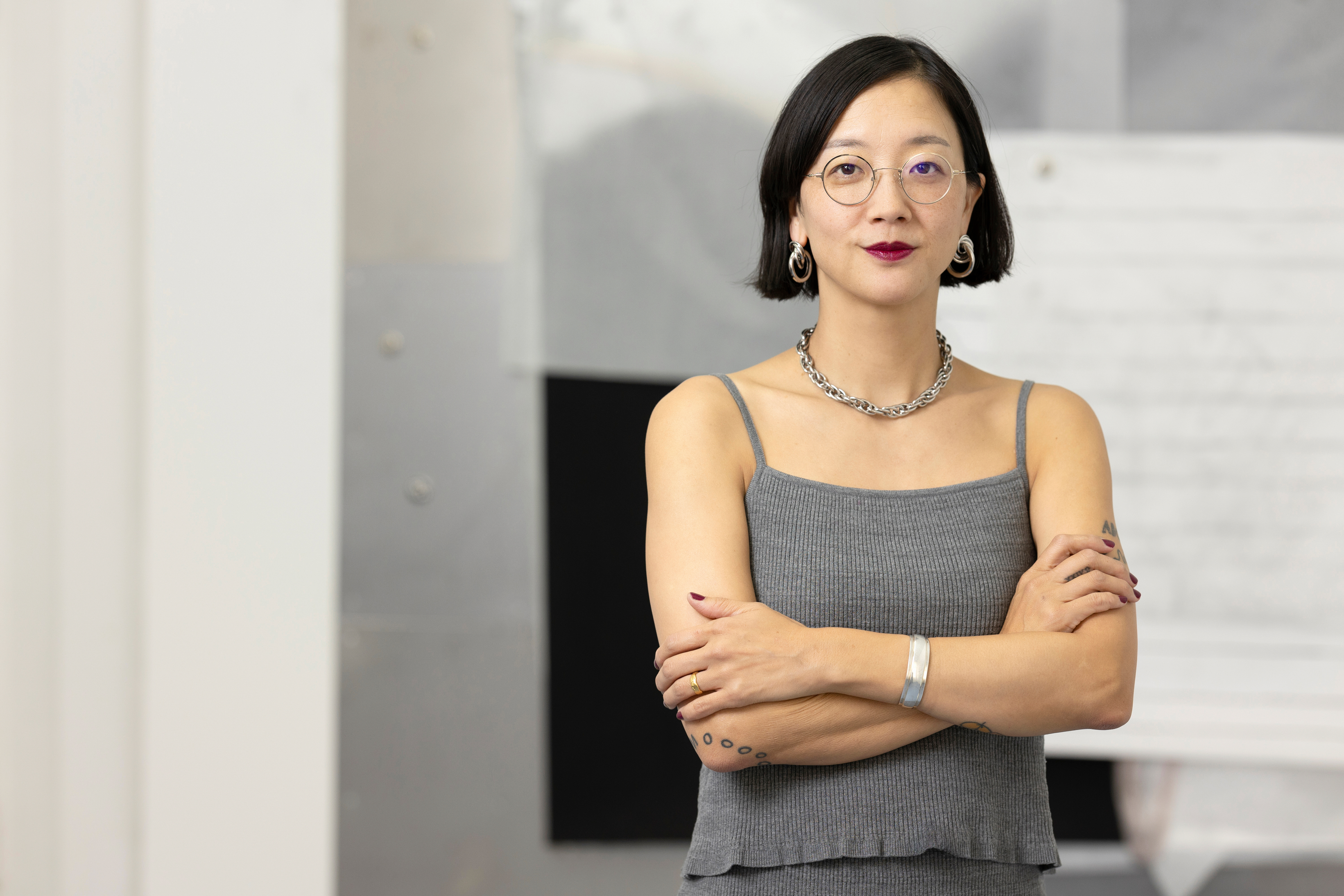
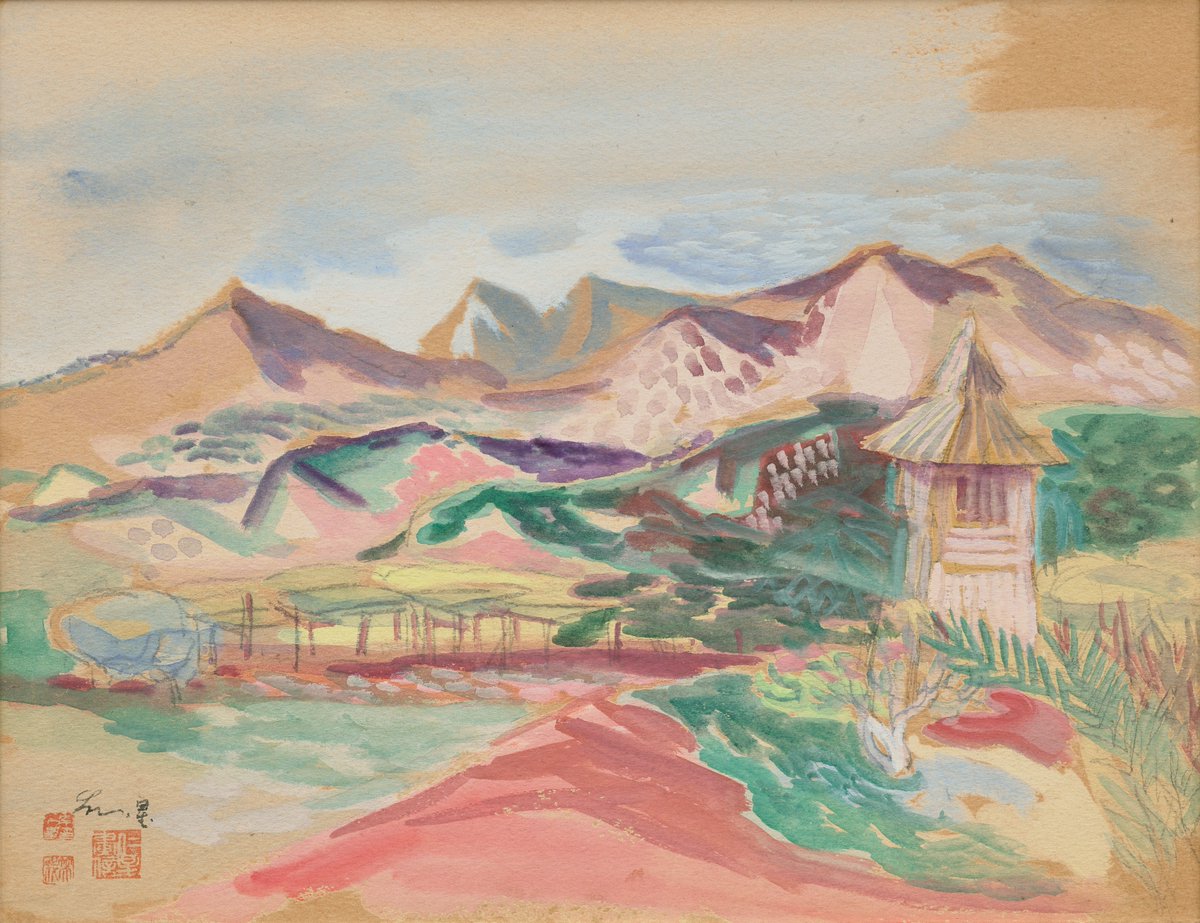
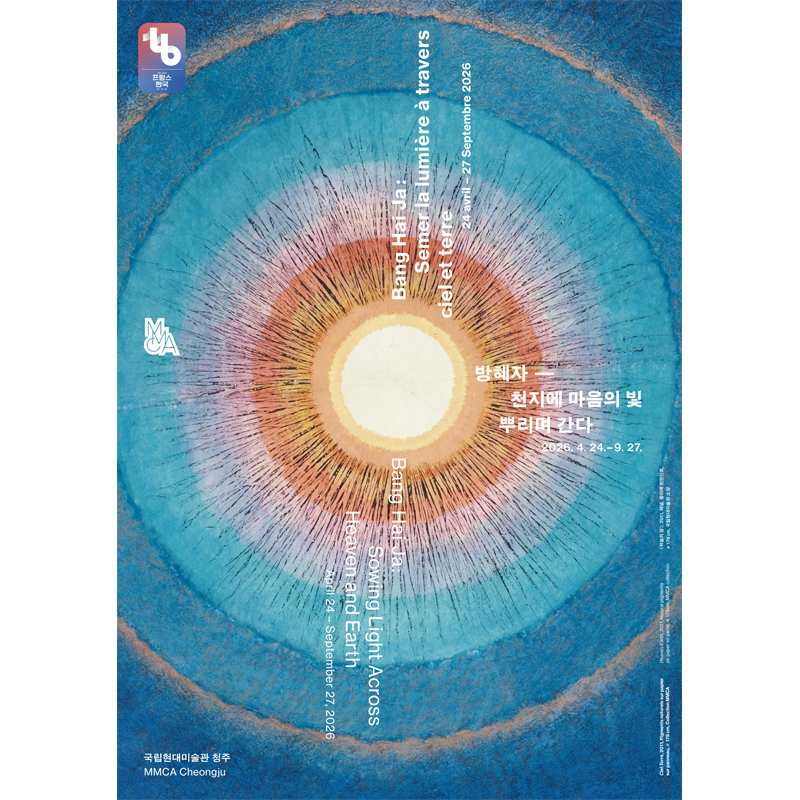
 Image: Exhibition poster for Bang Hai Ja: Sowing Light Across Heaven and Earth, MMCA Cheongju. Artwork: Bang Hai Ja, Heaven-Earth, 2011, natural pigments on paper on panel, ⌀ 179 cm, MMCA collection
Bang Hae-ja’s exploration of light extended beyond the canvas into stained glass, according to a recent post from the National Museum of Modern and Contemporary Art, Seoul. The museum described the Korean artist’s stained-glass practice as an expansion of her expressive field, focused on the relationship between light and architectural space.
The project was connected to Chartres Cathedral in France, a major historic site known for its stained-glass windows. According to the museum’s account, a series by Bang was ultimately selected in 2018 through a competition for stained-glass production at the cathedral. The post also links the project to Chartres Cathedral in 2022, identifying the building as a world cultural heritage site.
The announcement presents the stained-glass works as a continuation of Bang’s interest in ‘light,’ rather than as a departure from her painting. In this account, light is not treated solely as a subject represented on a surface. It becomes an active element shaped by transparency, color and the surrounding structure, allowing the work to be experienced through changing spatial conditions.
Bang’s move from painting into stained glass also places her work in dialogue with the architectural setting of Chartres Cathedral. The museum characterizes the project as an investigation of a new form of art created where light and space meet. It does not provide further information about the series’ title, its number of panels, the specific location of the installation, or the production process.
The National Museum of Modern and Contemporary Art, Seoul, presented the information as an artist-focused account of Bang’s practice and its international architectural context. The available announcement concerns the stained-glass project associated with the cathedral and does not announce a new exhibition or event at the Seoul museum.