 Image: Museo delle Porcellane, Florence
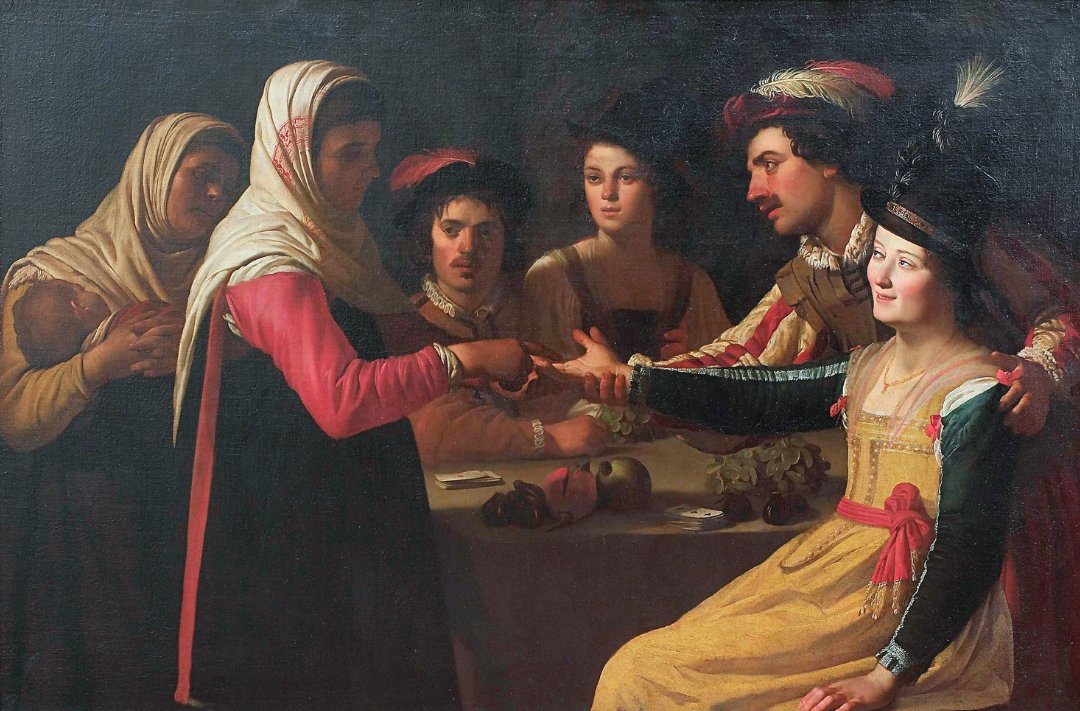
The Uffizi has highlighted Gerrit van Honthorst’s ‘The Fortune Teller’, a painting dated to around 1617, in a social-media post focused on one of the most recognizable subjects associated with Caravaggesque painting: a fortune teller reading the future of a young woman.
The work shows the fortune teller engaged with her client, whose hoped-for knowledge of what lies ahead becomes the subject of the museum’s brief commentary. The Uffizi asks whether the future she expects to discover might be less bright than she imagines, leaving the painting’s narrative suspended between curiosity and apprehension.
Van Honthorst’s choice of subject places the scene within a broader seventeenth-century interest in fortune tellers, street life and encounters between figures from different social worlds. The museum’s Italian-language description identifies the fortune teller as a ‘zingara’—a term used in the original post—and presents the motif as one especially loved by painters working in the Caravaggesque tradition.
The reference to Caravaggio’s followers provides the principal art-historical context supplied by the Uffizi. Rather than announcing a new exhibition, acquisition or discovery, the post draws attention to an individual work and its subject, using the encounter between the two women to invite speculation about destiny and deception.
The painting is identified by the Uffizi as part of its holdings and is dated approximately to 1617. The museum’s post was published on August 23, 2026, and does not provide additional details about the work’s commission, provenance, dimensions, display location or conservation history.